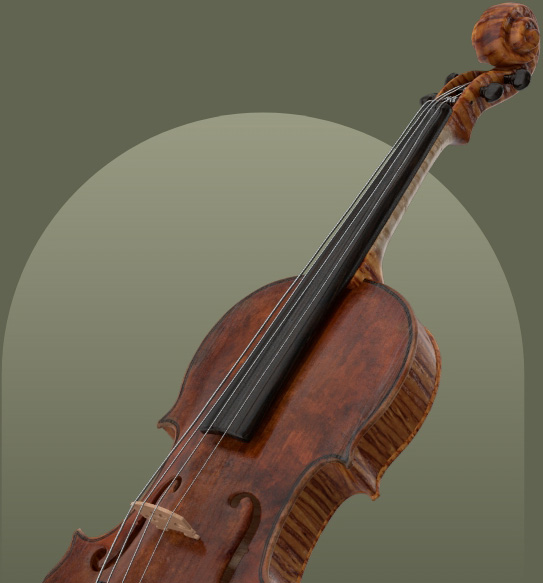
Camillus Camilli
Mantua, c.1704–1754
Camillus Camilli (circa 1704-1754) was a refined and prolific Mantuan luthier who worked from approximately 1739 to 1750. He is known for following the Stradivari pattern, using high-quality wood, and applying a distinctive clear orange-red varnish. His craftsmanship includes wide, short sound-holes and neatly wrought heads, adhering to Cremonese construction principles. While his training is debated, possibly under Stradivari or influenced by Pietro Guarneri and Antonio Zanotti, his style effectively blends Amati and Guarneri characteristics.
Request an expert valuation or learn how our global auctions achieve the highest prices for your instruments.
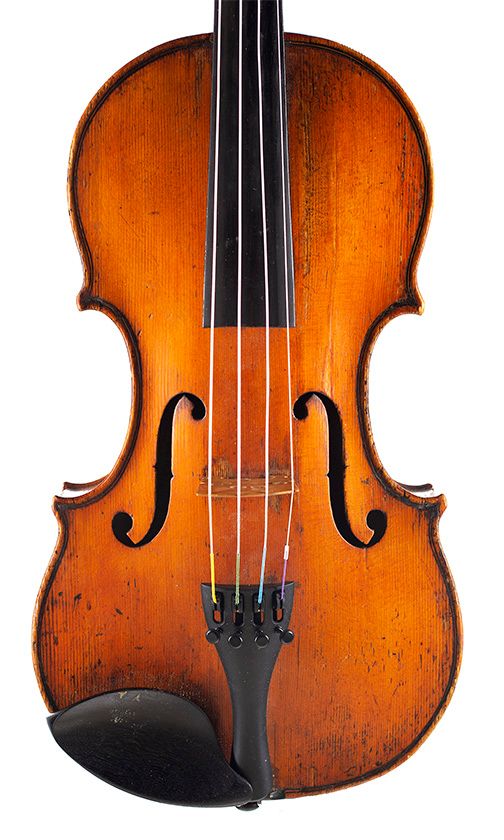
Instruments
Auction Price History
Highest auction price
34 results
| Type | Details | Auction house | Sold | Price |
|---|---|---|---|---|
| Violin | Labelled Camillus Camilli fecit, Mantuae 1749 Lot 95 | Tarisio | March 2026 | £144,000est. Estimate £ 70,000-100,000 |
| Violin | Labelled Camillus Camilli fecit Mantua 1740 Lot 193 | Tarisio | November 2023 | £85,672est. $ 100,000-150,000 |
| Violin | Labelled Camillus Camilli Fecit Mantuae 1745 Lot 171 | Ingles & H. | October 2023 | £156,000est. £ 100,000-150,000 |
| Violin | Labelled Camillus Camilli Fecit Mantue 1736, lower bass rib replaced, head later Lot 102 | — | June 2023 | £123,323est. $ 150,000-220,000 |
| Violin | Labelled Camillus Camilli Fecit Mantuae 1742 Lot 173 | — | March 2022 | £84,000est. £ 60,000-90,000 |
| Violin | Labelled Camillus Camilli fecit Mantua 1739, head later Lot 136 | — | July 2021 | £252,847est. $ 250,000-400,000 |
| Violin | A violin by Camillus Camilli, Mantua, circa 1750 Lot 46 | Amati | March 2019 | £50,560est. £ 40,000-60,000 |
| Violin | Labelled Camillus Camilli fecit, Mantua 1745, head of the period but possibly not original to the violin Lot 177 | — | March 2018 | £114,000est. £ 80,000-120,000 |
| Violin | Labelled Camillus Camilli fecit Mantue anno MDCCXLI die sexto ... Lot 188 | — | October 2016 | £151,900est. £ 135,000-185,000 |
| Violin | Labelled Camillus de Camillis, Fecit Die XXV, Augusti, Anno Dni MDCCLI, Mantua Lot 252 | — | October 2016 | £212,173est. $ 220,000-350,000 |
| Violin | Labelled Camillus Camilli fecit ... 1742 Lot 369 | — | November 2012 | £112,350est. $ 150,000-220,000 |
| Violin | 35.6 cm Mantua, 1750 c. | — | March 2011 | £108,000 |
| Violin | 35.2 cm Mantua, 1736 | — | November 2008 | £59,871 |
| Violin | 35.3 cm Mantua, 1750 c. | — | May 2008 | £30,108 |
| Violin | 35.4 cm Attributed to | — | March 2008 | £9,600 |
| Violin | 35.0 cm Mantua, 1750 c. | — | October 2007 | £68,538 |
| Violin | 35.3 cm Mantua Attributed to | — | February 2007 | £8,400 |
| Violin | 35.5 cm Mantua, 1739 | — | May 2006 | £91,975 |
| Violin | Mantua, 1739 | — | November 2005 | £84,000 |
| Violin | 1750 c. | — | July 2003 | £62,400 |
| Violin | 1740 | — | June 2002 | £81,260 |
| Violin | 1760 c. | — | November 2001 | £19,309 |
| Violin | 1723 | — | May 2000 | £34,334 |
| Violin | 1745 | — | March 2000 | £23,000 |
| Violin | 1739 | — | November 1998 | £80,500 |
| Violin | 1747 | — | November 1997 | £36,700 |
| Violin | 1740 c. | — | October 1997 | £24,150 |
| Violin | 1751 | — | March 1996 | £58,700 |
| Violin | 1749 | — | May 1994 | £69,742 |
| Violin | 1742 | — | June 1990 | £44,000 |
| Violin | 1745 c. | — | November 1986 | £28,600 |
| Violin | 1742 | — | December 1984 | £29,580 |
| Violin | 1730 | — | March 1981 | £18,343 |
| Violin | 1736 | — | March 1980 | £4,180 |
No results match those filters.
Maker Overview
Life
Camillus Camilli (circa 1704-1754) worked in Mantua, Italy, from about 1739-50, and was born circa 1704, dying in 1754. He is described by John Dilworth as a very refined and prolific maker.
Characteristics
- Pattern
- He followed the Stradivari pattern, and his form partakes of that of Stradivari.
- Wood
- He used carefully selected wood, usually of excellent quality.
- Varnish
- His instruments have a beautiful tone and are varnished pale red, somewhat similar to Landolfi's instruments, though George Hart notes it is less brilliant. John Dilworth describes his distinctive varnish as a clear orange-red, slightly chippier and harder than Cremonese finishes.
- Sound-holes
- The sound-holes are wide and short, and, not generally fluted.
- Head
- He produced a very neatly wrought head, which is a consistently charming aspect of his work.
- Construction
- His work conforms with Cremonese construction principles.
- Backs
- He often used quite plain backs in one piece.
- Camillo de Camilli
Fece in Mantova, 1734John Dilworth - Camillus Camilli
Fecit Mantuae.1739John Dilworth
Influence and legacy
- Training: Sources contain conflicting information about his training., he is considered a pupil of Stradivari, whom he skillfully imitated. However, John Dilworth states that he acquired a Cremonese technique from Pietro Guarneri, and possibly another contemporary Mantuan maker, Antonio Zanotti, who may have been a pupil of Girolamo Amati II.
- Style: His work is an attractive combination of Amati and Guarneri styles.
Further Information
- Labels: He used various labels, including "Camillo de Camilli / Fece in Mantova, 1734" and "Camillus Camilli / Fecit Mantuae.1739". A similar label is dated 1750.
Biographies
The overview above is drawn from the following published accounts. Read them in the original:
John Dilworth+
CAMILLI, Camillus Born circa. 1704, died 1754 Mantua Italy. A very refined and prolific maker. Acquired a Cremonese technique from Pietro Guarneri, and possibly another contemporary Mantuan maker, Antonio Zanotti, who may have been a pupil of Girolamo Amati II. His work is an attractive combination of Amati and Guarneri styles with a very neatly wrought head; a consistently charming aspect of his work. His distinctive varnish is a clear orange-red, slightly chippier and harder than Cremonese finishes. Often used quite plain backs in one piece. Soundholes not generally fluted, but otherwise conforms with Cremonese construction principles. Camillo de Camilli / Fece in Mantova, 1734 Camillus Camilli / Fecit Mantuae.1739
George Hart+
The form partakes of that of Stradivari; wood usually of excellent quality. The sound-hole is rather wide and short. The varnish resembles that of Landolfi, but less brilliant.
Cecie Stainer+
(Camilus di Camila). Worked in Mantua about 1739-50. He followed the Stradivari pattern, and used carefully selected wood; his violins have a beautiful tone, and are varnished pale red, somewhat similar to Landolfi’s instruments; the sound-holes are wide and short.
a similar label is dated 1750.
Willibald Leo Lütgendorff+
Er gilt als ein Schüler von Stradivari, den er geschickt nachahmte. Seine
Instrumente kommen jetzt immer mehr in Aufnahme. Schöner Ton, gutes Holz, hellrother Lack, der an Landolfi erinnert, weite, kurze F-Löcher kennzeichnen
seine Geigen. Er verwendete verschiedene Zettel.
Sell your instrument with Amati
Get started by uploading photos of your instrument for our experts to review.
Sell your instrument with Amati
Get started by uploading photos of your instrument for our experts to review.