Antonio Zanotti (Zanoti)
Mantua, worked 1706–1745
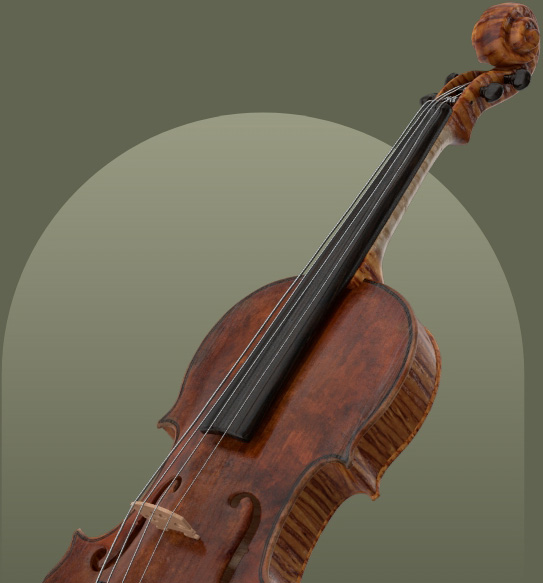
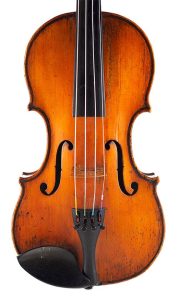
Antonio Zanotti (Zanoti) was an Italian violin maker active in Lodi and Mantua from approximately 1706 to 1745. He is noted for his characterful work, which shows Cremonese influence and is sometimes compared to Pietro Guarneri. Sources suggest he may have been a pupil of Hieronymus (II) Amati. His instruments feature an Amatisé outline, distinct scrolls, and varied varnish colors, with some examples including inlaid decoration. While some sources describe medium arching, others note very low arching, indicating some variation in his output.
Request an expert valuation or learn how our global auctions achieve the highest prices for your instruments.
Auction Price History
Highest auction price
5 results
| Type | Details | Auction house | Sold | Price |
|---|---|---|---|---|
| Violin | 35.0 cm late 18th C. Ascribed to & possibly by | — | November 2011 | £12,029 |
| Violin | 35.8 cm Mantua, 1729 | — | March 2008 | £55,575 |
| Violin | 35.5 cm Mantua, 1725 c. | — | November 2006 | £42,000 |
| Violin | Mantua, 1720 c. | — | November 2004 | £3,000 |
| Violin | 1700-50 | — | November 1985 | £12,100 |
No results match those filters.
Maker Overview
Life
Antonio Zanotti (Zanoti) (circa 1706-1745) worked in Lodi and Mantua, Italy. in The Brompton's Book of Violin & Bow Makers, he was a characterful maker, contemporary with Camilli in Mantua. Karel Jalovec notes his working period as 1709-1745 in Lodi and Mantua. Henri Poidras mentions him in Mantua circa 1730, while Cecie Stainer confirms his presence in Mantua in 1734 based on a label. A label cited by Dilworth reads: "Antonius Zanottus Lodegianus fecit / Mantuae, sub Titulo Fortunae 1727" and another "Antonio Zanotti nel Mantoano / 1745". George Hart also cites a label: "Antonius Zanotus, fecit Mantuse, anno 1734."
Characteristics
- Workmanship
- His work can be a little coarse but shows strong evidence of direct Cremonese influence in his technique. Willibald Leo Lütgendorff describes him as a capable master whose work is reminiscent of Pietro Guarneri.
- Arching
- John Dilworth notes arching of medium height, sometimes full to the edges, otherwise slightly pinched. In contrast, Karel Jalovec states his instruments are of very low arching.
- Outline
- John Dilworth describes a fine Amatisé outline.
- Decoration
- At least one example features inlaid decoration in the manner of Pietro Guarneri, with fleur-de-lys in the corners and doubled purfling.
- Scroll
- John Dilworth describes a strongly executed scroll, finely balanced and concentric with an extended last turn. Karel Jalovec adds that the scrolls are well cut.
- Varnish
- John Dilworth characterizes the varnish as of slightly hard consistency but very clear and well coloured, ranging from orange to deep red. Willibald Leo Lütgendorff mentions a brown-yellow varnish. Karel Jalovec describes a fine golden yellow or brown-yellow varnish, while Henri Poidras notes a light brown varnish.
- Model
- Karel Jalovec states he worked on the patterns of Stradivari, Guarneri, and on the large model of Pietro Guarneri I. Henri Poidras describes a flat model.
- Plates
- Karel Jalovec notes rather thin plates.
- Wood
- Karel Jalovec mentions good wood.
- Sound-holes
- Karel Jalovec describes rather long and well-cut sound-holes.
- Tone
- Karel Jalovec states the tone of his instruments is very good.
- Antonius Zanottus Lodegianus fecit
Mantuae, sub Titulo Fortunae 1727John Dilworth - Antonio Zanotti nel Mantoano
1745John Dilworth
Influence and legacy
- Mentorship: John Dilworth suggests he may have been taught by Hieronymus (II) Amati, who was in the area of Lodi and Piacenza circa 1697-1715, or Pietro Guarneri, who died in Mantua in 1720. Karel Jalovec explicitly states he was a pupil of Hieronymus II Amati (1649-1740).
Further Information
- Locations: He worked in Lodi and Mantua, Italy.
- Labels: Labels include "Antonius Zanottus Lodegianus fecit / Mantuae, sub Titulo Fortunae 1727", "Antonio Zanotti nel Mantoano / 1745", and "Antonius Zanotus, fecit Mantuae, anno 1734."
- Value: Karel Jalovec notes a price of 40,000 Kc, with some violins by him being worth double that price.
Biographies
The overview above is drawn from the following published accounts. Read them in the original:
John Dilworth+
ZANOTTI (ZANOTI), Antonio Worked circa. 1706-1745 Lodi & Mantua Italy. Interesting and characterful maker, contemporary with Camilli in Mantua. He may have been taught by Hieronymus (II) Amati, who was in the area of Lodi and Piacenza c.1697-1715, or Pietro Guarneri, who died in Mantua in 1720. His work can be a little coarse, but shows strong evidence of direct Cremonese influence in his technique. Arching of medium height, sometimes full to the edges, otherwise slightly pinched. Fine Amatisé outline. At least one example with inlaid decoration in the manner of Pietro Guarneri, with fleu-de-lys in the corners and doubled purfing. Strongly executed scroll, finely balanced and concentric with extended last turn. Varnish of slightly hard consistency but very clear and well coloured; orange to deep red. Antonius Zanottus Lodegianus fecit / Mantuae, sub Titulo Fortunae 1727 Antonio Zanotti nel Mantoano / 1745
Cecie Stainer+
Worked both at Lodi and Mantua. Was in the latter town in 1734 according to a label : “Antonius Zanotus fecit Mantuae, anno 1734.”
George Hart+
Antonius Zanotus, fecit Mantuse, anno 1734.
Willibald Leo Lütgendorff+
Er stammte aus Lodi und war ein tüchtiger Meister, dessen Arbeit an Pietro Guarneri erinnert. Er gebrauchte ein flaches Modell, braungelben Lack und verschiedene Zettel.
Henri Poidras+
Mantua circa 1730. Flat model. Light brown varnish.
Karel Jalovec+
Lodi and Mantua 1709— 1745. Pupil of Hieronymus II Amati (1649 – 1740). Worked on the patterns of Stradivari, Guarneri and on the large model of Pietro Guarneri I. His instruments are, however, of very low arching, have rather thin plates, good wood. He applied a fine golden yellow or brown-yellow varnish. The scrolls and the rather long sound-holes are well cut. The tone of his instruments is very good. Price 40.000 Kc, some violins by him are, however, worth double the price.
Sell your instrument with Amati
Get started by uploading photos of your instrument for our experts to review.
Sell your instrument with Amati
Get started by uploading photos of your instrument for our experts to review.