
Lorenzo And Tomaso Carcassi
Florence, worked 1750–1780
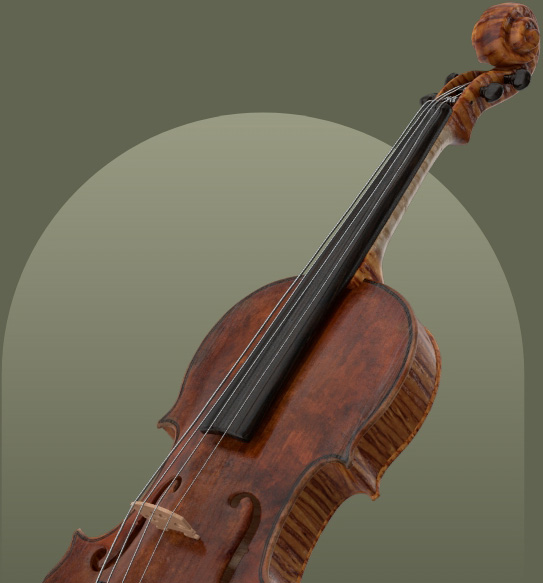
Lorenzo and Tomaso Carcassi were brothers who worked as violin makers in Florence, Italy, primarily between circa 1750 and 1780, though some sources suggest earlier or later activity. They were pupils of Giovanni Baptista Gabrielli and produced instruments, often on a high-arched Stainer model, with varying standards of finish and accuracy. Their work is characterized by a distinctive, though sometimes crudely cut, scroll and a clear, thin yellow or gold-brown varnish. Labels indicate they worked both individually and together, with specific addresses in Florence such as "dalla Madonna de' Ricci" and "in Borgo San Fridiano".
Auction Price History
Highest auction price
96 results
| Type | Details | Auction house | Sold | Price |
|---|---|---|---|---|
| Violin | Labelled Lor.° e Tom.° Carcassi In Firenze nell'Anno 1786 All'Insegna del Giglio Lot 97 | — | September 2025 | £49,766est. € 40.000-60.000 |
| Violin | Rosenberg collection, labelled Lor.° & Tom.° Carcassi, In Firenze nell'Anno 1781, All'Insegna del Giglio Lot 118 | — | June 2023 | £132,000est. £ 40,000-60,000 |
| Cello | Unlabelled Lot 111 | — | November 2022 | £312,000est. £ 200,000-300,000 |
| Viola | Labelled Lor.o e Tom.o Carcassi, in Firenze nell'anno 1774, All'Insegna del Giglio Lot 44 | — | March 2022 | £29,806est. $ 20,000-30,000 |
| Violin | Labelled Calcanius, not original head, many table and head restorations, table sound post crack Lot 260 | — | June 2019 | £28,696est. € 20.000-25.000 |
| Violin | Labelled Lor.o e Tom.o Carcassi, in Firenze nell'anno 1764, all'Insegna del Giglio, branded to the inside Lot 173 | — | March 2018 | £47,200est. £ 40,000-60,000 |
| Violin | Unlabelled Lot 257 | — | March 2018 | £21,600est. £ 18,000-25,000 |
| Violin | Labelled Calcanius, not original restored head, many table restorations, table sound post crack Lot 70 | — | November 2017 | £31,680est. € 20.000-25.000 |
| Violin | Bearing the makers' label, some table restorations, table sound post crack, back blemish Lot 170 | — | June 2017 | £43,848est. € 35.000-40.000 |
| Viola | Some table restorations Lot 208 | — | June 2017 | £9,918est. € 7.000-8.000 |
| Violin | Labelled Lor.° e Tom.° Carcassi, In Firenze nell'Anno 1781, All'Insegna del Giglio Lot 22 | — | March 2017 | £54,000est. £ 50,000-70,000 |
| Violin | Labelled Lor.o e Tom.o Carcassi, In Firenze nell'Anno 1769, All'Insegna del Giglio Lot 96 | — | October 2016 | £16,800est. £ 14,000-18,000 |
| Viola | Labelled Lor.o e Tom.o Carcassi, in Firenze nell'Anno 1777, all'Insegna del Giglio Lot 43 | — | June 2016 | £23,600est. £ 20,000-30,000 |
| Violin | Unlabelled Lot 55 | — | March 2015 | £54,000est. £ 30,000-50,000 |
| Violin | Unlabelled Lot 171 | — | May 2014 | £28,800est. £ 25,000-35,000 |
| Violin | Labelled Lor. e Tom. Carcassi, in Firenze nell'Anno 1745, All'Insegna del Giglio, head probably original Lot 264 | — | May 2014 | £30,079est. $ 25,000-40,000 |
| Violin | Labelled Lor.° E Tom.° Carcassi, in Firenze nell'Anno 1784, All'Insegna del Giglio Lot 167 | — | March 2014 | £45,000est. £ 35,000-55,000 |
| Violin | Many table restorations, table sound post crack, back worm restorations, restored head Lot 77 | — | December 2013 | £19,908est. € 20.000-25.000 |
| Viola | Labelled Lor E. Tom Carcassi, In Firenze, nell Anno ..., head possibly original and reshaped at the chin Lot 104 | — | October 2013 | £22,579est. $ 30,000-50,000 |
| Small Violin | Unlabelled Lot 24 | — | April 2012 | £11,587est. $ 15,000-25,000 |
| Violin | 35.4 cm 18th C. Ascribed to | — | October 2011 | £7,500 |
| Violin | 35.2 cm Florence, 1770 c. | — | April 2011 | £22,503 |
| Violin | 35.3 cm Florence, 1750 c. (Italian scroll later) | — | October 2010 | £28,800 |
| Violin | 36.0 cm Late 18th C. Ascribed to & possibly by | — | October 2010 | £6,600 |
| Violin | 35.1 cm Florence, 1770 c. | — | October 2010 | £43,186 |
| Violin | 35.3 cm Florence, 1750 c. and later | — | June 2010 | £6,240 |
| Violin | 35.2 cm Florence, 1757 (small soundpost crack, head replaced) | — | June 2010 | £14,498 |
| Violin | 34.9 cm Florence, 1790 c. | — | April 2010 | £11,784 |
| Violin | 35.1 cm Florence, 1760 c. | — | March 2010 | £14,400 |
| Violin | 34.9 cm Florence, 1790 c. Probably by | — | October 2009 | £8,400 |
| Violin | 35.3 cm Probably Florence 1750 c. Attributed to | — | October 2009 | £9,494 |
| Viola | 39.3 cm Florence, 1760 c. | — | October 2009 | £30,000 |
| Violin | 35.6 cm Florence, 1750 c. | — | May 2009 | £27,174 |
| Violin | 36.0 cm Late 18Th Century | — | October 2008 | £5,061 |
| Violin | 35.7 cm Florence, 1751 c. | — | October 2008 | £36,685 |
| Violin | 35.5 cm Florence, 1760 c. | — | March 2008 | £31,700 |
| Violin | 35.5 cm Florence, 1743 | — | October 2007 | £22,846 |
| Violin | 35.0 cm 1755 c. | — | July 2007 | £9,600 |
| Violin | 35.6 cm 18th C. Attributed to | — | February 2007 | £8,400 |
| Violin | 35.2 cm Florence, 1770 c. | — | February 2007 | £45,600 |
| Violin | 35.8 cm 1747 | — | December 2006 | £6,470 |
| Violin | 35.6 cm Florence, mid-18th C. Ascribed to | — | November 2006 | £6,600 |
| Violin | 36.1 cm 1750 c. Ascribed to | — | May 2006 | £2,453 |
| Violin | 35.2 cm Florence, 1745 | — | May 2006 | £18,968 |
| Violin | 35.7 cm Florence, 1748 | — | May 2006 | £17,703 |
| Violin | 35.1 cm Florence, 1760 c. | — | February 2006 | £54,000 |
| Violin | Florence, 1760 c. | — | November 2005 | £10,200 |
| Violin | Ascribed to | — | May 2005 | £12,000 |
| Violin | Florence, 1771 | — | February 2005 | £24,000 |
| Violin | Florence, 1740 c. | — | November 2004 | £17,925 |
| Violin | Florence, 1760 c. | — | July 2004 | £16,800 |
| Violin | 1755 c. | — | October 2003 | £21,510 |
| Violin | 1750 c. | — | July 2003 | £10,800 |
| Violin | 1779 | — | March 2003 | £21,150 |
| Violin | 1749 | — | March 2003 | £8,225 |
| Violin | 1760 | — | December 2001 | £14,657 |
| Violin | 1786 | — | November 2001 | £20,000 |
| Viola | 40.4 cm 1761 | — | June 2001 | £9,000 |
| Violin | 1765 c. | — | November 2000 | £23,500 |
| Violin | 1762 | — | November 1999 | £14,000 |
| Cello | 1769 | — | November 1999 | £95,000 |
| Violin | 1735 | — | November 1999 | £34,500 |
| Violin | 1787 | — | November 1999 | £18,400 |
| Violin | 1778 | — | June 1999 | £20,000 |
| Violin | 1747 | — | November 1998 | £29,900 |
| Violin | 1765 | — | November 1998 | £28,750 |
| Violin | 1750 c. | — | February 1998 | £8,660 |
| Violin | 1765 c. | — | June 1997 | £25,300 |
| Violin | 1790 | — | November 1996 | £23,000 |
| Violin | 1746 | — | November 1996 | £20,700 |
| Cello | 1776 | — | June 1996 | £47,700 |
| Violin | 1750 | — | March 1995 | £25,300 |
| Violin | 1760 | — | June 1994 | £18,400 |
| Violin | 1749 | — | March 1994 | £31,050 |
| Violin | 1785 | — | November 1993 | £24,150 |
| Violin | 1760 | — | October 1993 | £14,950 |
| Violin | 17-- | — | March 1993 | £3,680 |
| Violin | 1775 | — | March 1992 | £8,800 |
| Violin | 1770 | — | November 1991 | £16,500 |
| Violin | 1785 c. | — | March 1991 | £27,500 |
| Violin | 1750 c. | — | June 1989 | £6,820 |
| Violin | 1745 | — | March 1989 | £5,720 |
| Violin | 1754 | — | June 1988 | £9,900 |
| Violin | 1750-75 | — | June 1988 | £5,060 |
| Violin | 1786 | — | March 1987 | £16,508 |
| Violin | 1760 | — | March 1987 | £17,600 |
| Viola | 40.3 cm 1767 | — | March 1986 | £25,300 |
| Violin | 1745 | — | July 1985 | £8,250 |
| Violin | 1750 c. | — | November 1984 | £8,250 |
| Violin | 1763 | — | June 1984 | £2,852 |
| Violin | 1749 | — | June 1984 | £5,296 |
| Violin | 17-- | — | November 1983 | £6,973 |
| Violin | 17-- | — | May 1981 | £10,450 |
| Violin | 1750-99 | — | January 1981 | £5,378 |
| Cello | 1763 | — | November 1980 | £23,100 |
| Violin | 1751 | — | March 1980 | £4,156 |
No results match those filters.
Maker Overview
Life
Lorenzo And Tomaso Carcassi (circa 1750-1780) worked in Florence, Italy, as pupils of Giovanni Baptista Gabrielli. in The Brompton's Book of Violin & Bow Makers, the brothers Carcassi worked both together and individually during this period. Cecie Stainer, in A Dictionary of Violin Makers, states they worked in Florence about 1735-58. Willibald Leo Lütgendorff, in Die Geigen- und Lautenmacher vom Mittelalter bis zur Gegenwart, notes that labels for Tomaso Carcassi appear as late as 1786, but questions the likelihood of them working in the 1730s, suggesting such claims might stem from a misreading.
Characteristics
- Model
- Instruments were generally made to a high-arched Stainer model, which was prevalent in Florence at the time.
- Scroll
- The scrolls are often described as crudely cut but distinctive, featuring a large eye and slender chamfers.
- Varnish
- The varnish is typically of a clear, thin yellow colour, though sometimes a richer gold-brown. Cecie Stainer also describes their varnish as yellow-brown.
- Workmanship
- The quality of their work varied significantly; some pieces exhibit quite coarse-looking craftsmanship yet are perfectly authentic, while others conform to more classical notions of craftsmanship and depth of varnish. Despite this range, Cecie Stainer notes their workmanship was generally good.
- Labels
- Examples of their labels include "Lore e Tomo Carcassi. In Firenze nell' / Anno 1749. All' Insegno del Giglio", "Lorenzo Carcassi fec. / dalla Madonna de' Ricci / in Firenze, I'anno 1756", "Lorenzo Carcassi / in Borgo San Fridiano / fece l'anno 1742", "Ristaurato da me Lorenzo Carcassi / dalla Madonna de' Ricci / in Firenze 1740", and "Tommaso Carcassi / in Firenze, 1786".
- In Firenze nell’
Anno 1749John Dilworth - All’ Insegno del Giglio Lorenzo Carcassi fec.
dalla Madonna de’ Ricci
in Firenze, I’anno 1756John Dilworth - Lorenzo Carcassi
in Borgo San Fridiano
fece l’anno 1742John Dilworth - Ristaurato da me Lorenzo Carcassi
dalla Madonna de’ Ricci
in Firenze 1740John Dilworth - Tommaso Carcassi
in Firenze, 1786John Dilworth
Influence and legacy
- Mentorship: Lorenzo and Tomaso Carcassi were pupils of Giovanni Baptista Gabrielli.
Further Information
- Workshop Locations: Lorenzo Carcassi's labels indicate workshops at "dalla Madonna de' Ricci" and "in Borgo San Fridiano" in Florence.
Biographies
The overview above is drawn from the following published accounts. Read them in the original:
John Dilworth+
CARCASSI, Lorenzo & Tomaso Worked circa. 1750-1780 Florence Italy. Pupils of Giovanni Baptista Gabrielli, the brothers Carcassi worked both together and individually to varying standards of finish and accuracy, generally to a high-arched Stainer model which prevailed in Florence at that time. Often crudely cut but distinctive scroll with large eye and slender chamfers. Varnish is generally of a clear thin yellow colour; sometimes richer gold-brown. The range of quality can be quite unnerving; some quite coarse looking work can be perfectly authentic, while others conform to more classical notions of craftsmanship and depth of varnish. Lore e Tomo Carcassi. In Firenze nell’ / Anno 1749. All’ Insegno del Giglio Lorenzo Carcassi fec. / dalla Madonna de’ Ricci / in Firenze, I’anno 1756 Lorenzo Carcassi / in Borgo San Fridiano / fece l’anno 1742 Ristaurato da me Lorenzo Carcassi / dalla Madonna de’ Ricci / in Firenze 1740 Tommaso Carcassi / in Firenze, 1786
Cecie Stainer+
Worked in Florence about 1735-58. Though not in the first rank of makers, their workmanship was good : they used yellow-brown varnish.
Willibald Leo Lütgendorff+
Wahrscheinlich Theilhaber der Firma Lorenzo e Tomaso C.; dass er auch allein gearbeitet hat, beweisen seine Zettel, die noch um 1786 vorkommen. Dass er schon in den dreissiger Jahren gearbeitet hat, ist unwahrscheinlich und beruht, wenn es behauptet wird, wohl auf einem Lesefehler.
Sell your instrument with Amati
Get started by uploading photos of your instrument for our experts to review.
Sell your instrument with Amati
Get started by uploading photos of your instrument for our experts to review.
Florentine School
- Antonio Felice Carcassi worked 1770–1776
- Fredimaur worked 1736–1760
- Gaspero Piattellini worked 1738–1780
- Giovanni Baptista Birmetti worked 1770–1775
- Giovanni Battista Gabrielli 1716–1771
- Giovanni Bianchi worked 1746
- Leopoldo Franciolini worked 1760–1785
- Luigi (Aloysius) (I) Piattellini worked 1750–1791