Nathaniel Cross
London, 1686–1751
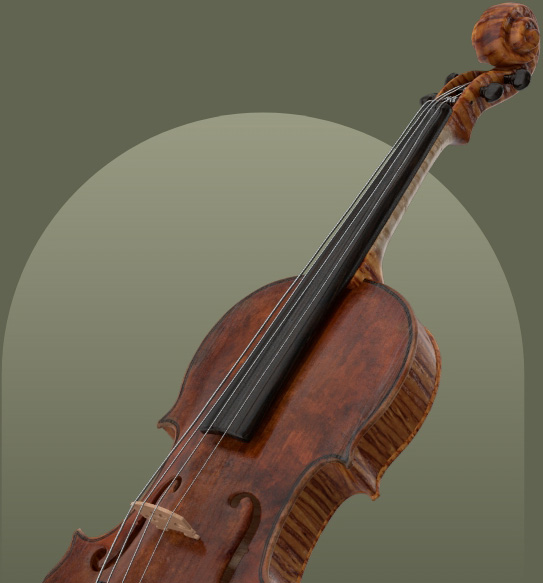
Nathaniel Cross (1686-1751) was a prolific English instrument maker active in London, known for his partnership with Barak Norman from around 1713 and his subsequent independent work from various addresses, including 'ye Crown in Piccadilly' and the George Inn, Aldersgate. He primarily crafted instruments on the Stainer model, though sources offer conflicting descriptions of his workmanship, with some noting beautiful finishing and excellent scrolls, while others describe early work as plain and later work with exaggerated fluting. His cellos were typically small, and his instruments often featured a clear yellow or light brown varnish. While it was once conjectured he was a pupil of Stainer, this is largely dismissed by historians. Cross's influence is noted on later London makers like Kennedy and Johnson, and his instruments are found in various collections, including a Viola d'amore in the Copenhagen Museum.
Request an expert valuation or learn how our global auctions achieve the highest prices for your instruments.
Instruments
Auction Price History
Highest auction price
13 results
| Type | Details | Auction house | Sold | Price |
|---|---|---|---|---|
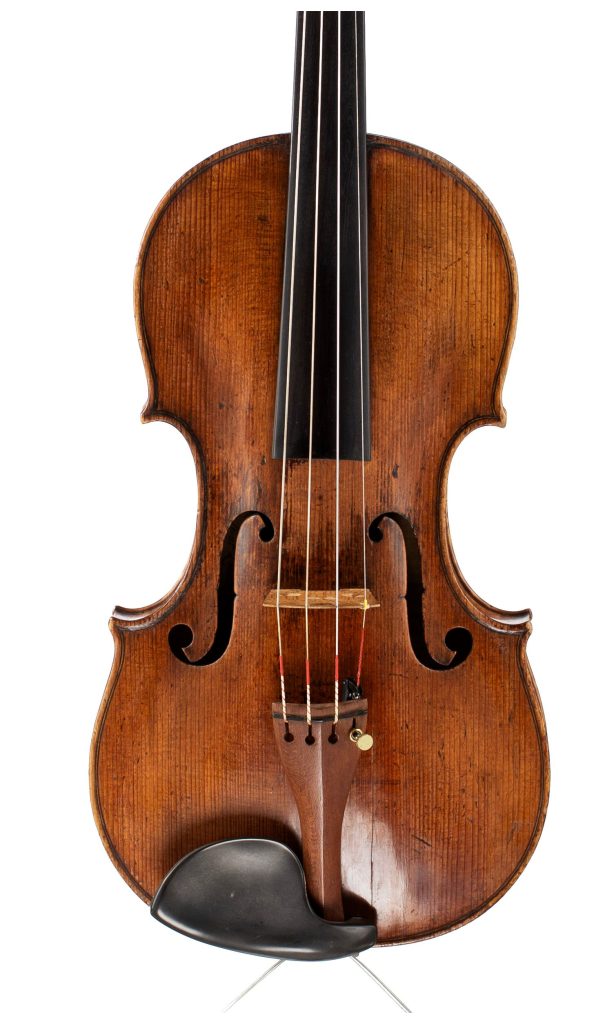
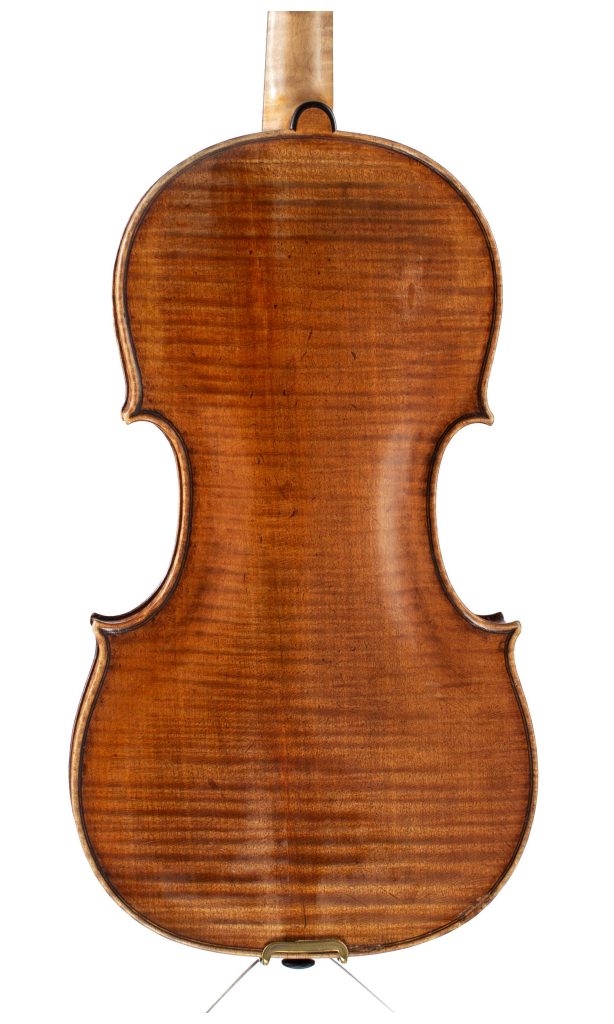
| Violin | A violin by Nathaniel Cross, London, 1731 Lot 137 | Amati | June 2025 | £4,108est. £ 3,000-6,000 |
| Violin | Faintly labelled Sold by Eliz: Miller at the sign of the violin on London Bridge ... Lot 74 | Tarisio | October 2024 | £8,400est. £ 3,000-5,000 |
| Violin | Labelled Made by John Barrett at ye Harp & Crown in Pickadilly. London 1727 Lot 149 | Ingles & Hayday | March 2020 | £14,400est. £ 7,000-10,000 |
| Violin | Property of a retired musician, labelled Nath Cross next door to the George Inn in Aldegate Street ... Lot 105 | Brompton’s | October 2014 | £11,400est. £ 10,000-15,000 |
| Cello | 71.5 cm London, 1733 Probably by | — | October 2010 | £9,764 |
| Violin | 35.6 cm London , 1740 c. Attributed to | — | October 2010 | £3,600 |
| Violin | 1740 c. | — | July 1997 | £1,150 |
| Viola | 41.1 cm 1732 | — | June 1994 | £21,780 |
| Violin | 1743 | — | January 1992 | £3,080 |
| Violin | 1725 | — | June 1991 | £3,080 |
| Cello | 1733 | — | June 1990 | £9,900 |
| Viola | 41.4 cm 1740 c. | — | April 1987 | £4,400 |
| Cello | 1700-50 | — | January 1984 | £2,444 |
No results match those filters.
Maker Overview
Life
Nathaniel Cross (1686-1751) was a prominent English instrument maker based in London, UK. He entered into a partnership with Barak Norman around 1713, with a Norman viol of that date inscribed 'Nathaniel Cross wrought my back and belly'. By 1724, Cross's name appeared alongside Norman's on a violin label from the address 'St Paul's Churchyard'. From 1725, Cross began using his own label, operating from a shop at 'ye Crown in Piccadilly'. He subsequently moved to the George Inn, Aldersgate, in 1730, and then to St. James, Aldermanbury, in 1733. His final known workshop location was at the 'Bass Viol' in Bow Churchyard, Cheapside. in The Brompton's Book of Violin & Bow Makers, Cross was a prolific maker.
Characteristics
- Model
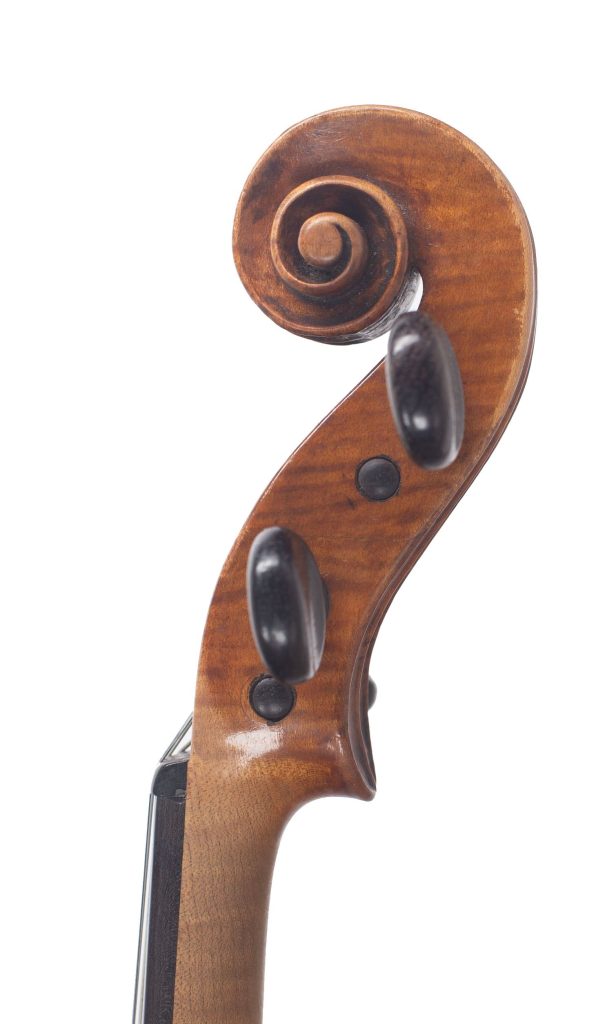
- Nathaniel Cross generally crafted instruments on a Stainer model, though William Meredith Morris in British Violin Makers notes that his early work (1700-1720) was rather plain and tasteless, large, highly arched, with short, blunt corners, approaching a 'Stainer caricature'. Morris observes that his work improved from 1720 onwards, aligning more closely with the German model.
- Workmanship
- Cecie Stainer, in A Dictionary of Violin Makers, describes his instruments as beautifully finished in all details, with acute fluting around the edge where the purfling is inlaid, and excellently cut scrolls. However, John Dilworth notes the head can be 'a little lacking in definition'. Morris also states that Cross never fully eliminated the exaggerated fluting around the edge.
- Soundholes
- John Dilworth describes his soundholes as 'quite elegant'.
- Cellos
- His cellos were typically of the small 27-28 inch (68.5cm-71cm) model, which was favored in England at that time. Cecie Stainer also notes his violoncellos are similar to those made during his partnership with Norman, being rather small in size.
- Materials & Varnish
- Materials are generally plain, with a clear yellow varnish. Cecie Stainer mentions a soft light-yellow varnish, while William Meredith Morris describes the varnish as soft, ranging from a light brown to a light yellow hue.
- Tone
- Cecie Stainer states his instruments have a clear and penetrating tone. In contrast, William Meredith Morris suggests that due to the exaggerated fluting, the tone is consequently 'rather small and feeble'. Willibald Leo Lütgendorff, in Die Geigen- und Lautenmacher vom Mittelalter bis zur Gegenwart, describes his violins as having a noble, powerful tone and being yellow varnished.
- Branding
- Instruments are often branded on the back with the initials 'N.C.' surmounted by a cross. Cecie Stainer specifies this branding is inside on the back, and Lütgendorff notes it's in the middle of the back.
- Nathaniel Cross, maker,
the George Inn, Aldersgate Street
London 1731John Dilworth - Nathanaeli Crosso
Stainero, fecit
No 2417 Viola d’amore in the Copenhagen Museum has label: Nath Cross in pickdily near St. James Church LondonJohn Dilworth
Influence and legacy
- Mentorship & Training: It was once supposed that Nathaniel Cross was a pupil of Stainer. However, Willibald Leo Lütgendorff explicitly states that it is 'excluded' that he learned directly from Stainer, despite having studied the Stainer model well. William Meredith Morris also dismisses this as 'mere conjecture', arguing that his instruments, particularly his early work, do not reflect training in Stainer's workshop.
- Influence on Others: His influence is observed in subsequent London makers such as Kennedy and Johnson, whom he may have taught directly.
- Museum Holdings: A Viola d'amore, numbered 2417, is housed in the Copenhagen Museum and bears a label: 'Nath Cross in pickdily near St. James Church London'.
- Collections: Works by Nathaniel Cross can be found in various collections.
Further Information
- Specific Labels: An example label from his partnership with Barak Norman reads: 'BARAK NORMAN AND NATHANIEL CROSS, AT THE BASS VIOL IN ST. PAUL'S CHURCH YARD, LONDON, FECIT 172-'. Another label from 1731 states: 'Nathaniel Cross, maker, / the George Inn, Aldersgate Street / London 1731 Nathanaeli Crosso / Stainero, fecit'.
- Workshop Addresses: His known addresses include St Paul's Churchyard (c.1724), 'ye Crown in Piccadilly' (from 1725), the George Inn, Aldersgate (1730), St. James, Aldermanbury (1733), and the 'Bass Viol' in Bow Churchyard, Cheapside.
Biographies
The overview above is drawn from the following published accounts. Read them in the original:
John Dilworth+
CROSS, Nathaniel Born 1686, died 1751 London UK. In partnership with Barak Norman from c.1713: Norman viol of that date is inscribed ‘Nathaniel Cross wrought my back and belly’. In 1724 Cross’ name appears alongside Norman’s on a violin label with the address ‘St Paul’s Churchyard’. From 1725 Cross’ own label appears with the shop at ‘ye Crown in Piccadilly’. In 1730 he had moved to the George Inn, Aldersgate and in 1733 to St. James, Aldermanbury. His final move was to the ‘Bass Viol’ in Bow Churchyard, Cheapside. A prolific maker, generally on a Stainer model. The head a little lacking in definition. Quite elegant soundholes. Cellos of the small 27”-28” (68.5cm-71cm) model favoured in England at that time. The materials are generally plain with a clear yellow varnish. His influence is seen on subsequent London makers, Kennedy and Johnson, whom he may have taught directly. Often branded on the back with initials ‘N.C.’ surmounted by a cross. Nathaniel Cross, maker, / the George Inn, Aldersgate Street / London 1731 Nathanaeli Crosso / Stainero, fecit / No 2417 Viola d’amore in the Copenhagen Museum has label: Nath Cross in pickdily near St. James Church London
William Meredith Morris+
Some suppose that he was a pupil of Stainer, but this is a mere conjecture. His instruments, although made on the Stainer model, are a sufficient proof that he had never received a day’s training in the great workshop at Absam. From 1700 to 1720, when he entered into partnership with Barak Norman, they are rather plain and tasteless, large and highly arched, with short, blunt corners — in fact, his work is in dangerous proximity to the Stainer caricature. From 1720 on the work improves and approaches more nearly to the lines of the German model. This is contrary to the rule. If he had been a pupil of Stainer, we should naturally have expected to see the more correct copies dating from the early years of his career, and work showing departures or originality dating later. He never got rid of the exaggerated fluting round the edge, and the tone is consequently rather small and feeble. His fine cutting of the scroll shows what he was capable of if he had had a better ideal. The varnish is soft, and of a light brown to light yellow hue. He marked his instruments on the back inside with his initials, with a [maltese cross] above. After he entered into partnership with Norman the label runs : —
BARAK NORMAN AND NATHANIEL CROSS, AT THE BASS VIOL IN ST. PAUL’S CHURCH YARD, LONDON, FECIT 172-
Cecie Stainer+
A maker in London about 1700-51. About 1720 he entered into partnership with Barak Norman His instruments resemble those of Stainer, of whom it is supposed that he was a pupil.
He made good violins, beautifully finished in all details, the fluting round the edge, where the purfle is inlaid, is very acute, and the scrolls are excellently cut. Violoncellos of his are known very similar to those made during his partnership with Norman, they are rather small in size with soft light-yellow varnish ; the tone is clear and penetrating. He marked his instruments inside on the back with his initials N. C. and a [cross] above.
Willibald Leo Lütgendorff+
Einer der bekanntesten Vertreter der englischen Schule. Er hat das Stainermodell
gut studirt und baute recht genau nach demselben. Dass er aber selbst
bei Stainer gelernt hat, wie man früher gerne behauptete, ist ausgeschlossen.
Seine Geigen haben einen edlen, kräftigen Ton und sind gelb lackirt. Seit 1715
war er Gesellschafter von Barak Norman, doch ist seine Arbeit leicht von der
Norman’s zu unterscheiden. Er bezeichnete seine Geigen im Innern in der
Mitte des Bodens mit einem Kreuz (»Cross«) unter den Buchstaben N. C. Arbeiten
von ihm findet man in verschiedenen Sammlungen.
Sell your instrument with Amati
Get started by uploading photos of your instrument for our experts to review.
Sell your instrument with Amati
Get started by uploading photos of your instrument for our experts to review.