
Mark Dearlove
Ripley, 1770–1820
Mark Dearlove (1770-1820) was a violin maker who worked in Leeds, UK, from 1808, though his workshop continued after his death until 1849 under family members. Initially trained as a cabinet maker, he employed notable figures like Thomas Absam and John Fryer. He is best known for his small pattern cellos, characterized by local sycamore and pine, boxwood purfling, and a yellow-ochre varnish. Despite some speculation about his role as a dealer, the consistent style of his work and his association with Joseph Chippendale confirm his status as a maker.
Request an expert valuation or learn how our global auctions achieve the highest prices for your instruments.
Auction Price History
Highest auction price
7 results
| Type | Details | Auction house | Sold | Price |
|---|---|---|---|---|
| Violin | Unlabelled, branded to the button Dearlove, Leeds Lot 107 | Tarisio | February 2019 | £2,935est. $ 3,000-5,000 |
| Violin | Branded Dearlove Leeds under the button, later head Lot 958 | Vichy | December 2018 | £2,350est. € 800 |
| Violin | Branded, of a golden amber brown colour Lot 247 | Bonhams | August 2013 | £1,000est. £ 600-800 |
| Cello | Lot 271 | Bonhams | October 2012 | £3,125 |
| Violin | 1830 | — | March 2002 | £3,120 |
| Cello | 1814 | — | April 1988 | £750 |
| Cello | 1814 | — | September 1986 | £770 |
No results match those filters.
Maker Overview
Life
Mark Dearlove (1770-1820) was born in 1770 in Ripley and died in 1820 in Leeds, Yorkshire, UK. He worked in Leeds from 1808, with his workshop continuing until 1849, as detailed in The Brompton's Book of Violin & Bow Makers by John Dilworth. Contemporary documents often described him as a 'music seller,' which led to speculation that he was a dealer in the work of others rather than a maker himself. However, his association with Joseph Chippendale and the consistent style of his work provide strong evidence in his favour as a maker. He established his workshop in Leeds at various addresses from 1809. After his death in 1820, the workshop was continued by Mary Dearlove, who was either his wife or daughter, and subsequently by his son, Mark William, around 1830.
Characteristics
- Instruments
- Mark Dearlove is best known for his cellos, which were of a useful small pattern.
- Materials
- His instruments often featured local growth sycamore for the backs, which lacked a deep figure, and pine fronts rather than imported spruce.
- Features
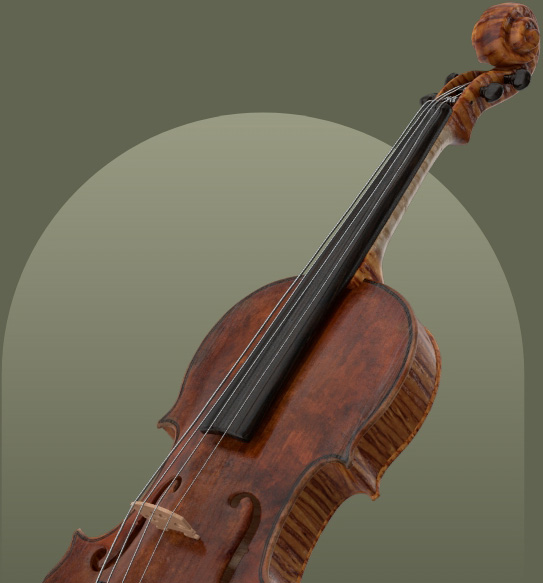
- Characteristics included boxwood (or similar) purfling, small scrolls, and upright soundholes, described as rather Tyrolean.
- Varnish
- He used a pleasant yellow-ochre varnish.
- Branding & Labels
- Instruments were branded 'Dearlove, Leeds' or 'Dearlove, maker, Leeds.' Manuscript labels read 'Mark Dearlove, Boar Lane, Leeds.'
- Quality Assessment
- William Meredith Morris noted that Dearlove made 'one or two nice copies of a Stradivari violin, but the tone was indifferent.' Willibald Leo Lütgendorff described him as a 'Wenig hervorragender Geigenmacher' (less outstanding violin maker), stating that his best works were valued at most 150 Marks.
Influence and legacy
- Apprenticeship: Mark Dearlove was probably apprenticed to his brother-in-law or uncle, Joseph Chippendale, as a cabinet maker in Ripley before he took up violin making.
- Employees: He employed Thomas Absam, John Gough, and John Fryer at different periods.
- Family Continuation: After Mark Dearlove's death in 1820, his workshop was continued by Mary Dearlove (either his wife or daughter) and later by his son, Mark William, around 1830.
Biographies
The overview above is drawn from the following published accounts. Read them in the original:
John Dilworth+
DEARLOVE, Mark Born 1770, Ripley, died 1820 Leeds, Yorkshire UK. Worked in Leeds 1808-1849. Employed (at different periods) Thomas Absam, John Gough, and John Fryer. Probably apprenticed to his brother-in-law (or uncle) Joseph Chippendale as a cabinet maker in Ripley before taking up violin making. Most often described as a ‘music seller’ in contemporary documents (as were most English makers), this has led to speculation that he was not a maker at all, but a dealer in the work of others. However, his association with Chippendale, and the consistent style of his work, provides strong evidence in his favour. Established in Leeds at various addresses (or variations of the same address) from 1809: 18 Bridge 1814, 4 Rayson’s Yard, Briggate 1817, and 4 Boar Lane from 1822-6. The workshop was continued after his death in 1820 by Mary Dearlove (both his wife and daughter bore this name). His son Mark William took over c.1830. Best known for cellos of a useful small pattern. Materials seem to be of local growth sycamore: backs lacking a deep figure and pine fronts rather than imported spruce. Boxwood (or similar) purfling, small scroll and upright soundholes, rather Tyrolean. Pleasant yellow-ochre varnish. Branded: ‘Dearlove, Leeds’ or ‘Dearlove, maker, Leeds.’ Manuscript label: Mark Dearlove, Boar Lane, Leeds.
George Hart+
Dearlove and Fryer, Musical Instrument Manufacturers, Boar Lane, Leeds, 1828.
William Meredith Morris+
He made one or two nice copies of a Stradivari violin, but the tone was indifferent.
Cecie Stainer+
Worked in Leeds about 1812-20.
Willibald Leo Lütgendorff+
Wenig hervorragender Geigenmacher. Die besten Arbeiten von ihm werden
höchstens mit 150 M. bezahlt.
Sell your instrument with Amati
Get started by uploading photos of your instrument for our experts to review.
Sell your instrument with Amati
Get started by uploading photos of your instrument for our experts to review.
Pupils
Mark William Dearlove Pupil