John Dodd
Kew, London, 1752–1839
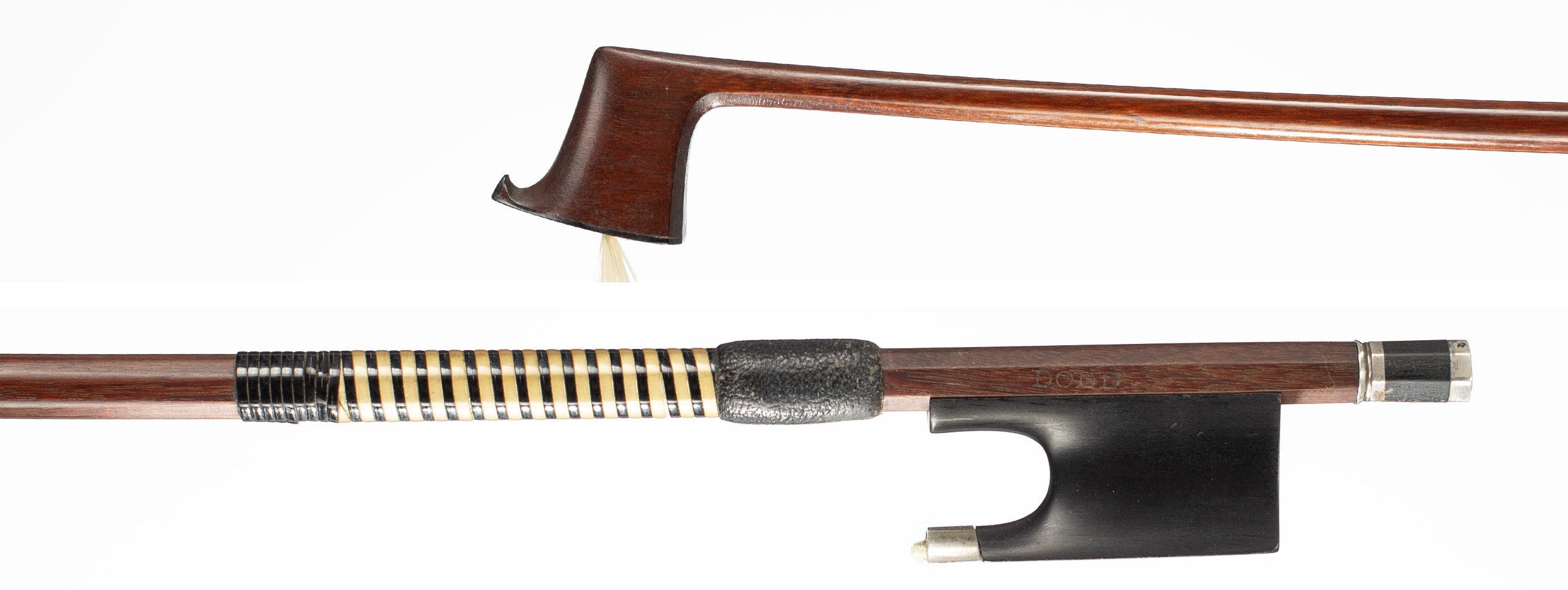
John Dodd (1752-1839) was an eminent English bow maker, often referred to as the 'English Tourte'. Trained initially as a gun-lock fitter, he applied his engineering skills to revolutionize bow design, developing key elements of the modern bow concurrently with François Tourte. His craftsmanship evolved from early 'axe head' designs to sophisticated modern forms, utilizing materials like tortoiseshell and employing a unique method of cutting bows directly from curved blocks. Despite his significant innovations and the high quality of his best work, his output was sometimes inconsistent, and his bows were occasionally shorter than ideal. He was the pupil of his father, Edward Dodd (I), but famously refused to take on apprentices or reveal his bow-making secrets, even in poverty. Dodd's reputation was later challenged by widespread imitations, yet his genuine bows remain highly prized. He died in the Richmond Workhouse in diminished circumstances.
Request an expert valuation or learn how our global auctions achieve the highest prices for your instruments.
Instruments


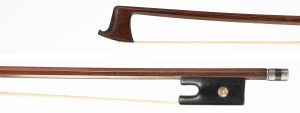

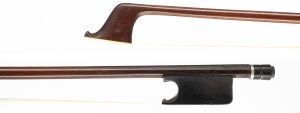

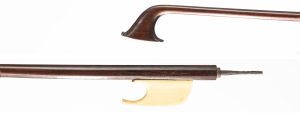

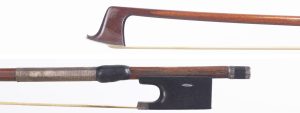



Auction Price History
Highest auction price
201 results
| Type | Details | Auction house | Sold | Price |
|---|---|---|---|---|
| Cello Bow | A silver-mounted cello bow, by John 'Kew' Dodd, London Lot 148 | Amati | January 2026 | £5,056est. £ 4,000-6,000 |
| Violin Bow | A silver-mounted violin bow by John Dodd, circa 1855 Lot 176 | Amati | January 2026 | £1,264est. £ 800-1,200 |
| Cello Bow | A silver-mounted cello bow, by John Dodd, London circa 1820 Lot 341 | Amati | November 2025 | £5,372est. £ 10-20 |
| Violin Bow | A silver-mounted violin bow by John Dodd, London Lot 202 | Amati | October 2025 | £1,011est. £ 800-1,200 |
| Violin Bow | Octagonal stick stamped Forster on the handle, ebony frog with pearl eye, ebony button Lot 94 | Ingles & Hayday | October 2025 | £8,400est. £ 1,500-2,500 |
| Cello Bow | Silver mounted, round stick, ebony frog with Paris eye, silver and ebony button Lot 154 | Ingles & Hayday | October 2025 | £6,600est. £ 3,000-5,000 |
| Small Violin Bow | An ivory-mounted small-sized violin bow by John Dodd, London, circa 1780 Lot 14 | Amati | January 2025 | £1,517 |
| Cello Bow | A silver-mounted cello bow by John Dodd, London, circa 1800 Lot 17 | Amati | January 2025 | £2,907 |
| Cello Bow | A silver-mounted cello bow by John Dodd, London, circa 1820 Lot 41 | Amati | June 2024 | £2,528est. £ 2,000-4,000 |
| Violin Bow | A silver and ivory-mounted violin bow by John Dodd, London, circa 1790 Lot 42 | Amati | March 2024 | £3,160est. £ 2,500-4,500 |
| Violin Bow | Silver mounted, round stick overstamped J. Tubbs, stamped to the frog Dodd Lot 69 | Tarisio | February 2024 | £7,052est. € 8.000-12.000 |
| Violin Bow | An ivory-mounted violin bow by John Dodd, London, circa 1780 Lot 34 | Amati | January 2024 | £3,792est. £ 1,000-2,000 |
| Cello Bow | Silver mounted, round stick stamped Dodd Lot 12 | Tarisio | November 2023 | £6,188est. $ 3,000-5,000 |
| Violin Bow | Silver mounted, round stick stamped Dodd Lot 98 | Tarisio | November 2023 | £4,046est. $ 4,000-6,000 |
| Cello Bow | A silver-mounted cello bow by John Dodd, Kew Lot 20 | Amati | November 2023 | £4,424est. £ 2,000-4,000 |
| Violin Bow | Silver mounted, without hair Lot 2266 | Gardiner Houlgate | September 2023 | £3,172est. £ 800-1,200 |
| Violin Bow | Rosenberg collection, silver mounted, round stick stamped J. Dodd, ebony frog with Paris eye Lot 138 | Ingles & Hayday | June 2023 | £3,600est. £ 1,200-1,800 |
| Violin Bow | A silver-mounted violin bow by John Dodd Lot 213 | Amati | March 2023 | £822est. £ 300-500 |
| Violin Bow | A silver-mounted violin bow by John Dodd, London Lot 24 | Amati | January 2023 | £2,528est. £ 3,000-5,000 |
| Violin Bow | Silver mounted, octagonal stick stamped Dodd, ebony frog with pearl eye, partial hair and lapping Lot 2258 | Gardiner Houlgate | December 2022 | £1,708est. £ 1,500-2,000 |
| Violin Bow | A silver-mounted violin bow by John Dodd Lot 54 | Amati | November 2022 | £3,792est. £ 3,000-5,000 |
| Violin Bow | Octagonal stick stamped Dodd, ivory mounted open trench frog Lot 72 | Tarisio | November 2022 | £5,554est. $ 2,000-3,000 |
| Violin Bow | A silver-mounted violin bow by John Dodd, England, circa 1820 Lot 49 | Amati | June 2022 | £1,011est. £ 800-1,200 |
| Violin Bow | Trasitional bow, round stick, stamped Dodd to the stick and to the frog, open trench ivory frog Lot 67 | Tarisio | March 2022 | £4,127est. $ 2,000-3,000 |
| Violin Bow | Round stick stamped Dodd on the handle, plain ivory frog, later bone button Lot 69 | Ingles & Hayday | March 2022 | £3,120est. £ 1,500-2,000 |
| Cello Bow | Silver mounted, octagonal stick stamped Dodd, frog and ebony button later Lot 18 | Tarisio | March 2022 | £6,420est. $ 1,500-2,200 |
| Cello Bow | Gold mounted, octagonal stick stamped Dodd, ivory frog and button later English work c. 1920 Lot 17 | Tarisio | March 2022 | £5,411est. $ 1,500-2,200 |
| Cello Bow | Trasitional bow, round stick stamped Dodd, open trench ivory frog stamped Dodd, bone button Lot 66 | Tarisio | March 2022 | £3,156est. $ 2,000-3,000 |
| Violin Bow | Round stick with Cramer head, plain ivory frog, bone button Lot 118 | Ingles & Hayday | November 2021 | £5,040est. £ 2,000-3,000 |
| Cello Bow | Silver mounted, round stick, plain ivory frog, silver and ivory button, mounts by W.E. Hill & Sons Lot 107 | Ingles & Hayday | November 2021 | £7,200est. £ 2,000-3,000 |
| Violin Bow | Silver mounted, round stick stamped Dodd Lot 2227 | Gardiner Houlgate | September 2021 | £390 |
| Cello Bow | Silver mounted, octagonal stick stamped J. Dodd Lot 8 | Tarisio | July 2021 | £2,992est. $ 5,000-8,000 |
| Cello Bow | Silver mounted, round stick, frog chevalled stamped Dodd Lot 9 | Tarisio | July 2021 | £6,521est. $ 6,000-9,000 |
| Cello Bow | Octagonal stick stamped Dodd, thumb projection has been filed slightly Lot 121 | Brompton’s | June 2021 | £6,600est. £ 4,000-5,000 |
| Violin Bow | A nickel-mounted violin bow by John Dodd, circa 1795 Lot 96 | Amati | October 2020 | £1,517est. £ 1,000-2,000 |
| Violin Bow | A silver-mounted violin bow by John Dodd, London, circa 1810 Lot 103 | Amati | October 2020 | £6,952est. £ 3,000-5,000 |
| Violin Bow | Silver mounted, round stick stamped to the handle and frog Dodd, ivory frog Lot 43 | Tarisio | July 2020 | £3,711est. $ 4,000-6,000 |
| Violin Bow | Silver mounted, round stick stamped to the handle and frog Dodd, ivory frog Lot 44 | Tarisio | July 2020 | £3,711est. $ 5,000-8,000 |
| Violin Bow | Sparse hair, leather lapping, head in need of refacing Lot 248 | Brompton’s | June 2020 | £480est. £ 400-600 |
| Violin Bow | Silver mounted, round stick stamped Dodd on the handle, plain ebony frog, silver and ebony button Lot 114 | Ingles & Hayday | March 2020 | £9,600est. £ 3,500-5,000 |
| Violin Bow | Bill Watson collection, silver mounted, round stick, ivory frog and button by William Watson circa 1970 Lot 40 | Ingles & Hayday | March 2020 | £4,800est. £ 1,500-2,500 |
| Violin Bow | Bill Watson collection, silver mounted, round stick, frog and button by William Watson circa 1990 Lot 41 | Ingles & Hayday | March 2020 | £3,840est. £ 1,800-2,500 |
| Violin Bow | An early bow by John Dodd, England, circa 1795 Lot 68 | Amati | January 2020 | £2,402est. £ 300-500 |
| Cello Bow | Ivory frog, frog converted from open model Lot 47 | Brompton’s | October 2019 | £9,600est. £ 6,000-10,000 |
| Violin Bow | An ivory-mounted violin bow by John Dodd, England Lot 2 | Amati | June 2019 | £1,770est. £ 500-1,000 |
| Violin Bow | Arnold R. Bone collection, silver mounted, octagonal stick stamped DODD Lot 212 | Skinners | June 2019 | £1,849est. $ 2,000-3,000 |
| Violin Bow | Nickel mounted, unstamped, stick spliced under the lapping Lot 2306 | Vichy | June 2019 | £1,440est. £ 100-200 |
| Violin Bow | Round stick stamped Dodd, ivory frog, button probably later, cotton lapping Lot 17 | Brompton’s | June 2019 | £5,040est. £ 4,000-6,000 |
| Violin Bow | Silver mounted, round stick Lot 106 | Tarisio | November 2018 | £1,797est. $ 2,000-3,000 |
| Violin Bow | A silver-mounted violin bow by John Dodd, England Lot 16 | Amati | October 2018 | £4,424est. £ 2,000-4,000 |
| Cello Bow | Ivory frog Lot 161 | Brompton’s | June 2018 | £4,800est. £ 2,000-3,000 |
| Cello Bow | Silver mounted, round stick stamped Dodd Lot 162 | Brompton’s | June 2018 | £2,950est. £ 2,500-3,500 |
| Cello Bow | Round stick stamped Dodd, plain ivory frog possibly the work of his father Edward, ivory button Lot 69 | Ingles & Hayday | March 2018 | £4,200est. £ 1,200-1,600 |
| Violin Bow | Camber in need of attention, head with an original fitted piece of pernambuco Lot 311 | Brompton’s | December 2017 | £1,200est. £ 1,000-1,500 |
| Violin Bow | Silver mounted, octagonal stick stamped Dodd, frog and button later, engraved W. T. to P. M. Lot 80 | Tarisio | November 2017 | £4,527est. $ 1,200-1,800 |
| Violin Bow | Round stick, plain ivory frog possibly later, ivory button Lot 115 | Ingles & Hayday | October 2017 | £2,160est. £ 1,500-2,500 |
| Cello Bow | Silver mounted, round stick, frog slightly small proportions but apparently original to the stick Lot 13 | Tarisio | June 2017 | £5,400est. £ 3,000-5,000 |
| Cello Bow | Cello Bow Lot 3 | Brompton’s | June 2017 | £3,360est. £ 1,500-1,800 |
| Cello Bow | Round stick, plain ivory frog stamped Dodd, ivory button Lot 95 | Ingles & Hayday | March 2017 | £1,920est. £ 1,800-2,500 |
| Violin Bow | Violin Bow, 1800 c. Lot 173 | Brompton’s | October 2016 | £840est. £ 700-1,000 |
| Cello Bow | Silver mounted, round stick unstamped Lot 36 | Tarisio | March 2016 | £5,700est. £ 5,000-8,000 |
| Cello Bow | Silver mounted, octagonal stick stamped Dodd Lot 46 | Brompton’s | March 2016 | £3,360est. £ 3,000-5,000 |
| Cello Bow | Ivory frog, stick with grain lift 1 inch behind head Lot 53 | Brompton’s | March 2016 | £3,600est. £ 3,000-5,000 |
| Cello Bow | Silver mounted, signed, thin lapping Lot 771 | Vichy | December 2015 | £389est. € 500 |
| Viola Bow | Silver mounted, round stick stamped Betts, rosewood frog with pearl shields stamped Betts * London Lot 70 | Ingles & Hayday | November 2015 | £6,000est. £ 4,000-6,000 |
| Cello Bow | Round stick, plain later ivory frog by W. E. Hill, later ivory button with two gold bands by W. E. Hill Lot 108 | Ingles & Hayday | November 2015 | £5,760est. £ 1,800-2,500 |
| Cello Bow | Silver mounted, octagonal stick stamped Dodd, sold with original ivory frog stamped Dodd and button Lot 40 | Tarisio | May 2015 | £11,995est. $ 8,000-12,000 |
| Violin Bow | Silver mounted, round stick stamped Dodd Lot 147 | Tarisio | February 2015 | £2,720est. $ 3,000-5,000 |
| Violin Bow | Silver mounted, octagonal stick stamped Dodd Lot 170 | Tarisio | October 2014 | £3,376est. $ 6,000-9,000 |
| Cello Bow | Silver mounted, round stick stamped Dodd, frog and button by William Tubbs Lot 19 | Tarisio | October 2014 | £12,000est. £ 8,000-12,000 |
| Violin Bow | Gold mounted, without lapping, frog and button later probably by a member of the Tubbs family Lot 107 | Tarisio | October 2014 | £4,720est. £ 4,000-6,000 |
| Violin Bow | Gold mounted, round stick stamped Dodd, cloth lapping Lot 230 | Brompton’s | October 2014 | £3,000est. £ 4,000-6,000 |
| Violin Bow | Silver mounted, octagonal stick stamped Dodd Lot 235 | Brompton’s | October 2014 | £456est. £ 400-600 |
| Violin Bow | Silver mounted, round stick stamped Dodd on stick and frog, no hair Lot 245 | Brompton’s | October 2014 | £1,200est. £ 1,200-1,800 |
| Violin Bow | Nickel mounted, round stick stamped Dodd, ebony frog with pearl flowerhead, without hair and lapping Lot 115 | Gardiner Houlgate | October 2014 | £660est. £ 400-600 |
| Viola Bow | Silver mounted, round stick stamped Dodd Lot 37 | Tarisio | May 2014 | £13,447est. $ 10,000-15,000 |
| Violin Bow | Silver mounted, octagonal stick stamped Dodd Lot 326 | Brompton’s | December 2013 | £1,080est. £ 1,000-1,500 |
| Viola Bow | Silver mounted, round stick stamped Dodd, frog and button later Lot 83 | Tarisio | October 2013 | £2,220est. $ 3,000-5,000 |
| Cello Bow | Silver mounted, round stick stamped Dodd, spliced shaft and head Lot 209 | Brompton’s | October 2013 | £840est. £ 500-800 |
| Violin Bow | Octagonal shaft joined towards the handle by a brass section stamped Dodd Lot 41 | Brompton’s | March 2013 | £60 |
| Cello Bow | Round stick stamped Dodd on the handle, ivory frog, thunder shakes to stick Lot 151 | Brompton’s | March 2013 | £2,640est. £ 2,000-3,000 |
| Cello Bow | Silver mounted, unstamped, branded to the frog S. Salchow, frog and button by Stephen Salchow Lot 26 | Tarisio | October 2012 | £3,000est. £ 3,000-5,000 |
| Cello Bow | Silver mounted, stamped Dodd Lot 27 | Tarisio | October 2012 | £10,200est. £ 3,000-5,000 |
| Cello Bow | Gold mounted, round stick stamped Dodd, ivory frog, later mounts by W. E. Hill & Sons Lot 56 | Brompton’s | October 2012 | £6,600est. £ 5,000-7,000 |
| Violin Bow | Silver mounted, octagonal stick stamped Dodd Lot 209 | Brompton’s | October 2012 | £1,200est. £ 1,000-1,500 |
| Violin Bow | Silver mounted, stamped Dodd on round stick and ivory frog, full hair Lot 201 | Bonhams | October 2012 | £3,750 |
| Violin Bow | Silver mounted, round stick stamped Dodd Lot 30 | Brompton’s | June 2012 | £840est. £ 600-1,000 |
| Violin Bow | Silver mounted, octagonal stick stamped Dodd Lot 32 | Brompton’s | June 2012 | £1,200est. £ 1,000-1,500 |
| Violin Bow | Silver mounted, stamped on the frog Dodd, semi-swan head, handle fitten with a silver end cap Lot 40 | Brompton’s | June 2012 | £1,320est. £ 1,200-1,800 |
| Cello Bow | Round stick, ivory frog stamped Dodd, whalebone lapping, swan head Lot 384 | Brompton’s | June 2012 | £3,600est. £ 3,000-5,000 |
| Cello Bow | Round stick, stamped on the ivory frog and handle Dodd Lot 392 | Brompton’s | June 2012 | £3,120est. £ 2,500-3,500 |
| Cello Bow | Gold mounted, octagonal stick stamped DODD, plain ivory frog, gold and ivory button Lot 57 | Christie's | April 2012 | £5,021est. $ 4,000-6,000 |
| Violin Bow | Silver mounted, stamped Dodd, frog and button by James Tubbs Lot 143 | Tarisio | April 2012 | £2,225est. $ 3,000-5,000 |
| Cello Bow | Lot 143 | Bonhams | March 2012 | £4,375 |
| Violin Bow | Round stick of a brown colour, stamped Dodd on stick and frog, ivory frog Lot 117 | Bonhams | March 2012 | £2,500est. £ 2,000-2,500 |
| Violin Bow | stamped Dodd on stick and frog, ivory frog, some hair Lot 120 | Bonhams | March 2012 | £2,250est. £ 1,500-2,000 |
| Cello Bow | Made for Thomas Kennedy, round stick stamped Kennedy, ivory frog, full hair Lot 143 | Bonhams | March 2012 | £4,375est. £ 2,000-3,000 |
| Violin Bow | Silver mounted, round stick stamped Gilkes Lot 289 | Brompton’s | March 2012 | £840est. £ 1,000-1,500 |
| Viola Bow | Lot 206 | Bonhams | October 2011 | £8,500 |
| Viola Bow | S/E 69 g. | — | October 2011 | £8,500 |
| Violin Bow | S/E 60 g. Kew , 1820 c. (adjuster later) | — | October 2011 | £2,750 |
| Cello Bow | Ivory 73 g. | — | October 2011 | £2,070 |
| Cello Bow | S/E 83 g. | — | September 2011 | £5,400 |
| Violin Bow | Ivory 47 g. 1775 c. swan head, no lapping | — | June 2011 | £10,200 |
| Violin Bow | 37 g. no hair, no mounts | — | June 2011 | £960 |
| Cello Bow | Ebony 77 g. 1790 c. sparce hair, no lapping Probably by | — | June 2011 | £3,120 |
| Cello Bow | Ivory 69 g. London, 1780 c. sparce hair, no lapping | — | June 2011 | £2,160 |
| Cello Bow | S/I 72 g. London, 1795 c. sparce hair, no lapping Probably by | — | June 2011 | £1,800 |
| Viola Bow | S/I 56 g. London, 1800 c. without lapping or hair | — | March 2011 | £4,375 |
| Violin Bow | 55 g. | — | March 2011 | £2,640 |
| Cello Bow | S/E 81 g. | — | December 2010 | £10,200 |
| Cello Bow | S/E 84 g. (button later, slight damage to shaft) | — | December 2010 | £1,320 |
| Violin Bow | S/E 58 g. | — | October 2010 | £2,400 |
| Cello Bow | S/E 84 g. | — | June 2010 | £1,800 |
| Viola Bow | S/E 67.0 g. | — | April 2010 | £7,807 |
| Cello Bow | 72.0 g. (frog & button not original) Probably by | — | April 2010 | £3,142 |
| Violin Bow | Ivory 52.5 g. Open trench | — | April 2010 | £3,339 |
| Violin Bow | Ivory 44.5 g. 1800 c. Open trench, Baroque camber, without hair Probably by | — | April 2010 | £3,732 |
| Violin Bow | S/I 55.5 g. 1820 c. | — | April 2010 | £5,499 |
| Cello Bow | Ivory 84 g. | — | December 2009 | £2,880 |
| Violin Bow | S/E 67.0 g. (frog & button not original) | — | October 2009 | £2,224 |
| Violin Bow | S/E 62 g. England, 1830 c. | — | October 2009 | £2,374 |
| Violin Bow | Ivory 55.5 g. London, 1800 c. | — | October 2009 | £2,000 |
| Violin Bow | G/E 59 g. | — | October 2009 | £1,553 |
| Violin Bow | G/T 59 g. | — | October 2009 | £3,220 |
| Violin Bow | 40 g. | — | June 2009 | £519 |
| Violin Bow | S/E 55 g. leather wrapping | — | March 2009 | £1,200 |
| Violin Bow | S/E 58 g. cloth wrapping | — | March 2009 | £576 |
| Viola Bow | S/E 67 g. Kew, 1820 c. (frog possibly later, button later) | — | March 2009 | £2,750 |
| Viola Bow | S/E 64.5 g. (frog later) | — | December 2008 | £3,583 |
| Violin Bow | Ivory 53 g. | — | November 2008 | £1,800 |
| Cello Bow | S/E 77 g. Kew, 1820 c. (later mounts by "W.E. Hill & Sons") | — | October 2008 | £3,750 |
| Cello Bow | Ivory 83.5 g. Open trench, sold with modern replacement frog & button | — | May 2008 | £4,485 |
| Cello Bow | S/I 81.5 g. (frog & button later English replacements) | — | May 2008 | £5,094 |
| Violin Bow | S/E 57.0 g. 1860 c. Probably by | — | March 2008 | £1,521 |
| Cello Bow | Ivory 76.5 g. London, 1820 c. stamped "Kennedy", | — | March 2008 | £3,250 |
| Cello Bow | S/E 68 g. London, 1820 c. | — | March 2008 | £5,625 |
| Viola Bow | S/I 65.5 g. London, 1820 c. | — | March 2008 | £4,375 |
| Violin Bow | S/E 62 g. London, 1820 c. | — | March 2008 | £7,500 |
| Violin Bow | S/E 59 g. London, early 19th C. (later adjustor) Probably by | — | March 2008 | £1,000 |
| Violin Bow | S/I 62 g. London, 1820 c. | — | March 2008 | £3,000 |
| Violin Bow | S/E 61 g. London, early 19th C. Probably by | — | March 2008 | £2,250 |
| Violin Bow | S/E 57 g. London, 1820 c., made for "George Corsby" Probably by | — | March 2008 | £2,000 |
| Violin Bow | S/E 53 g. 1810 c. | — | December 2007 | £1,082 |
| Cello Bow | Ivory 88.5 Kew, 1820 c. Open frog | — | October 2007 | £4,750 |
| Cello Bow | S/E 84 g. | — | October 2007 | £1,059 |
| Violin Bow | S/E 53 g. 1810 c. | — | October 2007 | £612 |
| Violin Bow | S/E 62 g. | — | May 2007 | £1,414 |
| Viola Bow | --/E 71.5 g. Kew, 1820 c. (ebony cello frog, later button by "W.E. Hill & Sons") | — | November 2006 | £1,320 |
| Violin Bow | S/E 51.0 g. | — | October 2006 | £1,478 |
| Violin Bow | S/E 65.5 g. Kew, early 19th C. (Frog & Button possibly by "J. Lafleur") Probably by | — | July 2006 | £1,680 |
| Violin Bow | S/E 54.5 g. Kew, 1820 c. (later frog & button by "J. Tubbs") | — | July 2006 | £1,320 |
| Violin Bow | S/E 63.0 g. | — | May 2006 | £4,905 |
| Cello Bow | S/E 80.5 g. London, 1810 c. | — | February 2006 | £5,760 |
| Cello Bow | Ivory 77 g. London, 1820 c. Open frog | — | February 2006 | £3,360 |
| Bass Bow | 144 g. | — | June 2005 | £4,114 |
| Cello Bow | Ivory 79 g. Open frog | — | April 2005 | £3,760 |
| Cello Bow | S/E 81 g. | — | February 2005 | £3,360 |
| Violin Bow | G/E 58 g. | — | February 2005 | £4,200 |
| Violin Bow | Ivory 59.5 g. Open frog | — | February 2005 | £2,040 |
| Violin Bow | Ivory 56.5 g. Open frog | — | February 2005 | £1,080 |
| Cello Bow | S/E 81.0 g. | — | October 2004 | £4,135 |
| Cello Bow | S/E 82 g. Attributed to | — | October 2004 | £2,158 |
| Violin Bow | S/E 60 g. | — | October 2004 | £1,926 |
| Violin Bow | Ivory 57.5 g. (later adjustor) | — | July 2004 | £1,680 |
| Cello Bow | S/E 88 g. 1800 c. made for "Forester" Probably by | — | March 2004 | £4,200 |
| Violin Bow | S/T 59 g. | — | November 2003 | £3,600 |
| Violin Bow | S/I 62 g. | — | November 2003 | £3,120 |
| Violin Bow | S/E 59 g. | — | October 2002 | £1,959 |
| Cello Bow | S/E 80 g. | — | June 2002 | £4,811 |
| Cello Bow | S/I 75 g. | — | March 2002 | £1,800 |
| Cello Bow | S/E 84 g. | — | November 2001 | £7,000 |
| Violin Bow | S/E 58 g. | — | October 2001 | £2,837 |
| Cello Bow | G/E 87 g. | — | June 2001 | £1,570 |
| Violin Bow | S/E 58 g. | — | March 2001 | £940 |
| Violin Bow | S/E 61 g. | — | November 2000 | £2,585 |
| Violin Bow | S/I 62 g. | — | October 2000 | £2,215 |
| Violin Bow | E/E 46 g. | — | July 2000 | £480 |
| Violin Bow | G/E 53 g. | — | May 2000 | £1,718 |
| Viola Bow | S/E 66 g. | — | June 1999 | £1,800 |
| Violin Bow | S/I 60 g. | — | April 1999 | £3,577 |
| Violin Bow | S/I 60 g. | — | April 1999 | £1,145 |
| Cello Bow | S/E 77 g. | — | March 1999 | £4,600 |
| Cello Bow | Ivory 85 g. | — | June 1998 | £3,335 |
| Cello Bow | S/E 79 g. Open frog | — | February 1998 | £1,559 |
| Violin Bow | S/E 58 g. | — | June 1997 | £1,840 |
| Cello Bow | S/E 90 g. | — | March 1997 | £2,990 |
| Violin Bow | G/E 55 g. | — | June 1996 | £3,910 |
| Cello Bow | Ivory 85 g. | — | October 1995 | £1,265 |
| Violin Bow | Ivory 54 g. | — | October 1995 | £805 |
| Violin Bow | S/E 56 g. | — | May 1995 | £862 |
| Violin Bow | G/E 54 g. | — | May 1995 | £1,581 |
| Violin Bow | S/E 52 g. | — | October 1994 | £690 |
| Cello Bow | S/E 82 g. | — | June 1994 | £4,600 |
| Violin Bow | S/E 61 g. | — | May 1994 | £1,855 |
| Violin Bow | S/E 62 g. | — | March 1993 | £977 |
| Violin Bow | S/E 55 g. | — | March 1993 | £747 |
| Viola Bow | S/E 68 g. | — | November 1990 | £1,430 |
| Cello Bow | S/I 84 g. | — | June 1990 | £1,980 |
| Viola Bow | S/E 69 g. | — | September 1987 | £1,650 |
| Viola Bow | S/I -- g. | — | March 1983 | £572 |
No results match those filters.
Maker Overview
Life
John Dodd (1752-1839) was born in Stirling, Scotland, and died in 1839 in the Richmond Workhouse, being buried at Kew, London. He was the eldest son of Edward Dodd (I). John Dodd initially trained as a gun-lock fitter and later worked as a money-scale maker before finding his true vocation in bow making. He began working in London around 1780 and was recorded in trade directories by 1794 as a bow maker at 10 Gray's Walk, Lambeth. He moved to 11 Lower Row, Lambeth, in 1796, and by 1803, he had settled in Kew, Surrey. Sources contain conflicting information about his London residence, with Lütgendorff stating he lived on New Street, Covent Garden. Despite his significant contributions to bow making, he died in very diminished circumstances in the Richmond Workhouse. William Meredith Morris notes that his intemperate habits caused him many troubles, and he often faced starvation, saved by the kindness of Dr. Selle and Mr. Richard Platt of Richmond.
Characteristics
- Reputation
- John Dodd is widely known as the 'English Tourte', a title that much of his work justifies, placing him in high regard alongside his French contemporary, François Tourte.
- Workmanship
- While his bows are considered excellent, his workmanship was less consistent than Tourte's, and his tendency to make bows a little short has placed him on a slightly lower rung of importance.
- Innovation
- Dodd developed many key elements of the modern bow concurrently with Tourte. His early training as a gun-lock fitter, similar to Tourte's experience as a watchmaker, provided him with the fine engineering skills necessary to produce the superior screw-adjusting mechanisms for bows.
- Evolution of Design
- His work evolved from early forms featuring 'axe head' shapes with an extended rear lip and no facing, and ivory frogs often lacking slides, to fully developed modern bows incorporating all the furnishings of a slide, face, ferrule, and ebony frog.
- Materials
- Dodd was one of the first to use tortoiseshell for the frog, and his bows are noted for being made of magnificent wood.
- Construction Method
- 's method of cutting bows was primitive and unique; he cut the bow in its curved form directly from the block, eschewing the common practice of cutting it straight and bending it by heat.
- Branding and Imitation
- Dodd's bows bear clear brands on both the frog and the stick, but these marks were widely imitated. He supplied many other makers and dealers, such as Betts, Forster, J. & H. Banks, and Norris & Barnes, whose brands are often found superimposed on his work.
- Stick Types
- He produced both octagonal and round sticks.
- Specific Example
- William Meredith Morris describes a fine specimen in the possession of the Rev. J. Rhys Jones, which features a graceful camber and good balance, measuring exactly 28 1/4 inches in length with a hair length of 25 1/8 inches. This bow is of medium weight, very dark in color, with the face of the heel decorated with mother-of-pearl and thick silver ferrules.
Influence and legacy
- Mentorship: John Dodd was the pupil of his father, Edward Dodd (I), and significantly improved upon his father's work.
- Teaching Philosophy: He never took on pupils, preferring to keep his bow-making secrets to himself. It is claimed that he refused an offer of £1,000 for the disclosure of his method, even when he was in great poverty.
- Final Years: Despite his significant contributions to bow making, John Dodd died in the Richmond Workhouse in 1839.
- Reputation Challenges: His fame suffered considerably in the mid-19th century due to the widespread stamping of his name on many inferior bows, leading to hundreds of 'mongrel Dodds' in circulation.
- Enduring Value: A genuine Dodd bow of regulation length and made in his best style is considered a valuable treasure.
Biographies
The overview above is drawn from the following published accounts. Read them in the original:
John Dilworth+
DODD, John Born 1752, died 1839 Kew, London UK. Bow maker. Eldest son of Edward Dodd (I), above. Trained as a gun-lock fitter. Worked in London from c.1780; recorded in trade directories in 1794 as a bow maker at 10 Gray’s Walk, Lambeth. Moved to 11 Lower Row, Lambeth 1796, and by 1803 was settled in Kew, Surrey. Died in Richmond Workhouse in very diminished circumstances. Known as the ‘English Tourte’, he developed many of the key elements of the modern bow at about the same time as Tourte in France, but his workmanship was less consistent, and his tendency to make his bows a little short has placed him on a slightly lower rung of importance than Tourte. Tourte had an early training as a watch maker, and for both men, their experience with fine engineering provided them with the skills to produce the screw-adjusting mechanisms which helped make their bows so superior. His work developed from early forms having ‘axe head’ shapes, with an extended rear lip and no facing, and ivory frogs (often subsequently replaced) lacking slides, to the fully developed modern bows with all the furnishings of slide, face, ferrule, and ebony frog. Some are highly ornate, even bejewelled, and Dodd was one of the first to use tortoiseshell for the frog. Dodd’s bows bear clear brands on the frog and stick, but this is widely imitated. He supplied many other makers and dealers, and their brands are often superimposed on his; Betts, Forster, J. & H. Banks, and Norris & Barnes marks can all be found. Both octagonal and round sticks made.
William Meredith Morris+
He was born in Stirling, died in Richmond workhouse, and was buried at Kew. He is styled ” The English Tourte,” and much of his work justifies the title. Had he lived a more virtuous life, he probably would have turned out work of uniform excellence. Many of his bows were evidently made in haste, and sold for a few shillings, to meet the exigencies of an empty cupboard and a parching thirst. His intemperate habit was the cause of many troubles to himself, and to others who interested themselves on his behalf, and he came nigh the last stage of starvation many a time. Had it not been for the kindly offices of Dr. Selle and Mr. Richard Platt, of Richmond, he would have ended his days on the roadside ; as it was, he ended them in the workhouse.
He was the pupil of his father, the Edward Dodd previously noticed, and he improved so much upon the work of his father, and upon everything else in the whole of the violin world (excepting the work of his greater contemporary, Francois Tourte), that his bows have maintained an undiminished celebrity down to our own days. His method of cutting his bows was primitive, and it has not been adopted by any great maker since his time. He cut the bow in the curved form out of the block, and dispensed with the ordinary plan of cutting it straight and bending by heat. I have seen a large number of Dodd bows, and I am convinced from a close examination of them that they have all been cut in this manner. One of the finest specimens which I have seen is now in the possession of the Rev. J. Rhys Jones, Priest-in-charge, Maesteg, Glamorganshire. It is a fine stick, with a graceful camhre and good balance. Its length is exactly 28 1/4in., and the length of the hair 25 1/8in. It is of medium weight, and very dark in colour. The face of the heel is decorated with mother-of-pearl, and the ferrules are of thick silver. Dodd’s name was stamped on all sorts of wretched nondescripts in the middle of last century, and his fame suffered considerably in consequence. But his work has suffered more than his fame, for there are hundreds of mongrel “Dodds”” about, some with genuine heels, others with genuine heads, and not a few patched up in divers manners. The owner of a genuine Dodd, of regulation length, or anything near it, and made in his best style, has a treasure that he can well be proud of.
Cecie Stainer+
Eldest son of Edward Dodd ; b. 1752, Stirling; d. Oct. 4, 1839, in Richmond Workhouse; was buried at Kew. He was first a gun-lock fitter, then a money-scale maker, and finally found his true vocation in making bows. They are made of magnificent wood and the work is so beautiful that he is known as ‘ The English Tourte”; their only defect is that they are sometimes too short. He would never take pupils, preferring to keep secret his method of cutting the wood, and refused to reveal it for a bribe of £1,000, although he was often in great poverty.
Willibald Leo Lütgendorff+
Dieser ausgezeichnete Bogenmacher, der zuerst Büchsenschlosser und dann
Goldwaagenmacher war, steht in England in gleichem Ansehen wie Fr. Tourte
in Frankreich. Seine Bögen sind ebenso gut wie die seines französischen
Rivalen, wenn er auch ihre Eleganz nicht erreicht. Er war der älteste Sohn
von Edward D. und Bruder von Thomas D. und wohnte New street, Covent
Garden. Seine Stangen haben vielleicht den einzigen Fehler, nicht immer lang
genug zu sein. Trotzdem brachte er es im Leben nicht vorwärts und starb
als 87jähriger Greis im Armenasyl (workhouse) zu Richmond. Er hatte nie
einen Schüler, da er seine Geheimnisse des Bogenmachens nicht verrathen
wollte; er soll sogar, wie behauptet wird, trotz seiner Armuth ein Angebot von
1000 Pf. Sterling für die Preisgabe seines Geheimnisses abgelehnt haben.
Sell your instrument with Amati
Get started by uploading photos of your instrument for our experts to review.
Sell your instrument with Amati
Get started by uploading photos of your instrument for our experts to review.