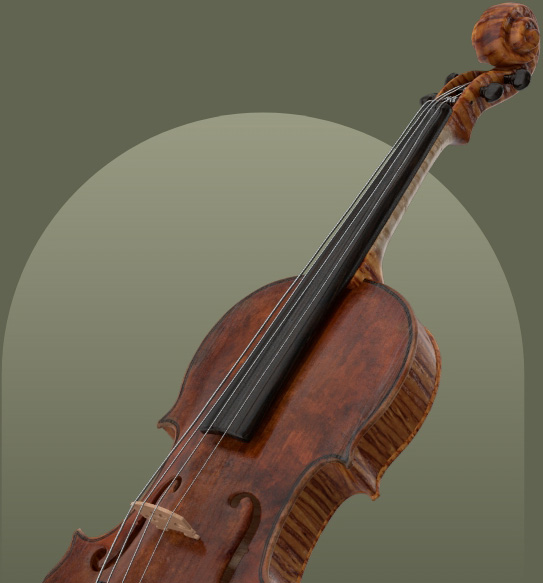
Thomas (II) Dodd
London
Thomas (II) Dodd is primarily recognized for his exceptional expertise in the varnishing of musical instruments, particularly violins and violoncellos. While historical accounts conflict on whether he was a direct instrument maker—some sources suggesting he was a student of Bernh. Fendt and Lott, others explicitly stating he was not—he played a pivotal role in the finishing process. Dodd developed a unique method for mixing colors and possessed a secret recipe for "original Cremona varnish," which he meticulously applied to instruments crafted by others, such as John Lott and Bernard Fendt. His "very excellent" varnish significantly enhanced the appearance and value of instruments bearing his name, allowing them to command premium prices during his lifetime.
Request an expert valuation or learn how our global auctions achieve the highest prices for your instruments.
Maker Overview
Life
Thomas (II) Dodd.'s Die Geigen- und Lautenmacher vom Mittelalter bis zur Gegenwart, he was the younger son of Th. sen. and died in the early 19th century. Lütgendorff states he was a student of Bernh. Fendt and Lott, and although skilled, he died young before he could fully mature. George Hart, in The Violin, identifies him as the son of Edward Dodd of Sheffield. Sources contain conflicting information regarding his role as a maker; Lütgendorff implies he was a student of makers, while Hart explicitly states, "He was not a maker of Violins." Hart clarifies that numerous instruments bearing Dodd's name, including violins and violoncellos, were the work of John Lott and Bernard Fendt. Despite not being the primary maker, Hart notes that Thomas Dodd's judgment was crucial during the manufacturing process, particularly in the varnishing, an area in which he took a "livelest interest." He developed a method for mixing colors and possessed a "recipe for preparing the original Cremona varnish," which he proudly advertised on his labels. Dodd's varnish was considered "very excellent" and contributed to the rich appearance of his instruments, rarely seen in the English school. He was encouraged by "persons of taste" and commanded high prices, such as £40 or £50 for a violoncello, allowing him to spare no expense or time in improving his productions. He meticulously varnished instruments "in the white" himself, carefully guarding the secret of his varnish composition, a practice he maintained throughout his career.
Characteristics
- Varnishing Expertise
- Thomas Dodd was highly skilled in the art of varnishing, developing his own method for mixing colors and possessing a unique "recipe for preparing the original Cremona varnish."
- Quality of Varnish
- The varnish he used w as "very excellent," imparting a rich appearance to instruments that was rarely found in the English school.
- Production Process
- He was most particular in receiving instruments "in the white" (without varnish) and would then carefully varnish them with his own hands, guarding the treasured secret of his composition.
- Instrument Quality
- Instruments bearing his label, though made by others, were of the "highest order" due to the exceptional talent of the craftsmen and Dodd's meticulous finishing, commanding prices of £40 or £50 for a Violoncello.
Influence and legacy
- Mentorship: was a student of Bernh. Fendt and Lott.
- Encouragement: George Hart notes that Dodd was "encouraged in the art of varnish-making by persons of taste," who recognized the superior qualities of his composition.
- Reputation and Value: Thomas Dodd attained a significant reputation for his instruments during his lifetime, commanding high prices.
- Future Appreciation: George Hart predicted that instruments bearing the Dodd label, though perhaps undervalued at the time of his writing, would eventually be "valued according to their true merits."
Biographies
The overview above is drawn from the following published accounts. Read them in the original:
George Hart+
Son of Edward Dodd, of Sheffield. He was not a maker of Violins. Numerous instruments bear his name, but they are Violin, Violoncello the work of john Lott and Bernard Fendt. The merit of these instruments is of the highest order, and they are justly appreciated by both player and connoisseur. Thomas Dodd deserves to be mentioned in terms of high praise, notwithstanding that the work was not executed by him, for his judgment was brought to bear upon the manufacture during its various stages, and more particularly in the varnishing, in which he took the liveliest interest. He had a method of mixing colours, the superior qualities of which he seems to have fully known, if we may judge from the note on his labels, which runs thus: “The only possessor of the recipe for preparing the original Cremona varnish. Instruments improved and repaired.” This undoubtedly savours of presumption, and is certainly wide of the truth. Nevertheless there is ample evidence that the varnish used by Thomas Dodd was very excellent, and had a rich appearance rarely to be met with in instruments of the English school. Dodd was encouraged in the art of varnish-making by persons of taste, who readily admitted the superior qualities of his composition, and paid him a handsome price for his instruments. He was thus enabled to gratify his taste in his productions by sparing no means to improve them. He ultimately attained such a reputation for his instruments as to command no less a sum than £40 or £50 for a Violoncello. Commanding such prices, it is evident that he spared no expense, or, what was to him a matter of still greater importance, no time. He was most particular in receiving the instruments in that incomplete stage known in the trade as ” in the white,” i.e., without varnish. He would then carefully varnish them with his own hands, guarding most warily the treasured secret of the composition of his varnish. That he never departed from this practice may be inferred from the fact that the varnish made by the workmen in his employ, apart from the establishment, for their own instruments, is of an entirely different stamp, and evidently shows that they were not in their master’s secrets. The instruments bearing the Dodd label are not valued to the extent of their deserts, and there can be but little doubt that in the course of time they will be valued according to their true merits. They were made by men of exceptional talent, who were neither restricted in price nor material. Under such favourable conditions the results could not fail to be good.
Willibald Leo Lütgendorff+
Jüngerer Sohn von Th. sen. †Anfang des 19. Jahrhunderts. Schüler von
Bernh. Fendt und Lott. Er war geschickt, aber er starb so jung, dass er nicht
ausreifen konnte.
Sell your instrument with Amati
Get started by uploading photos of your instrument for our experts to review.
Sell your instrument with Amati
Get started by uploading photos of your instrument for our experts to review.