Ferdinando Gagliano
Naples, b. 1724
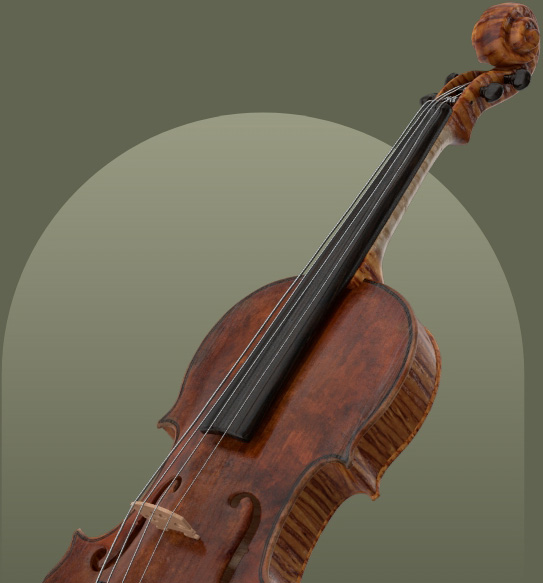
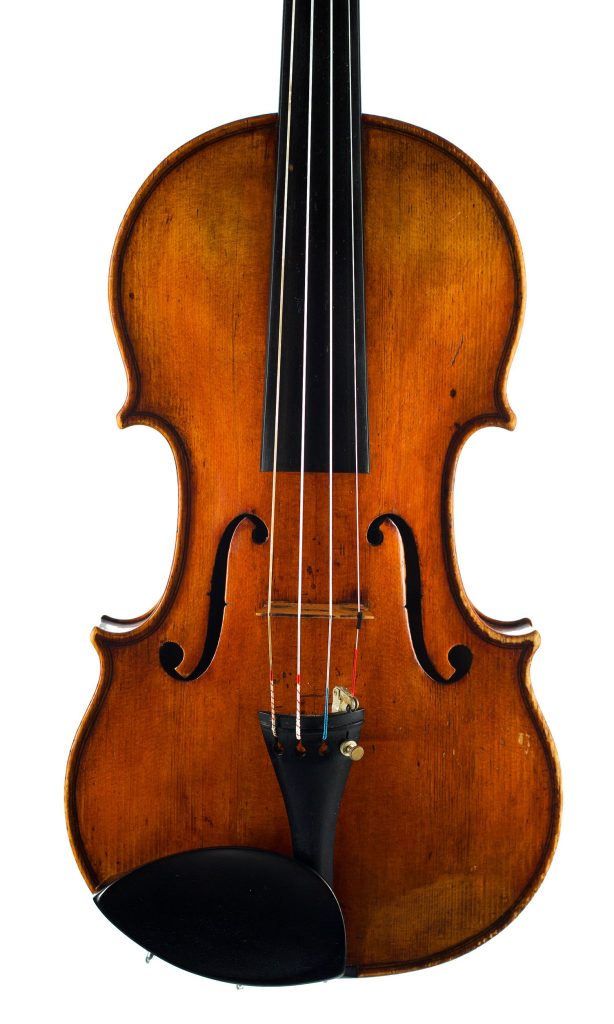
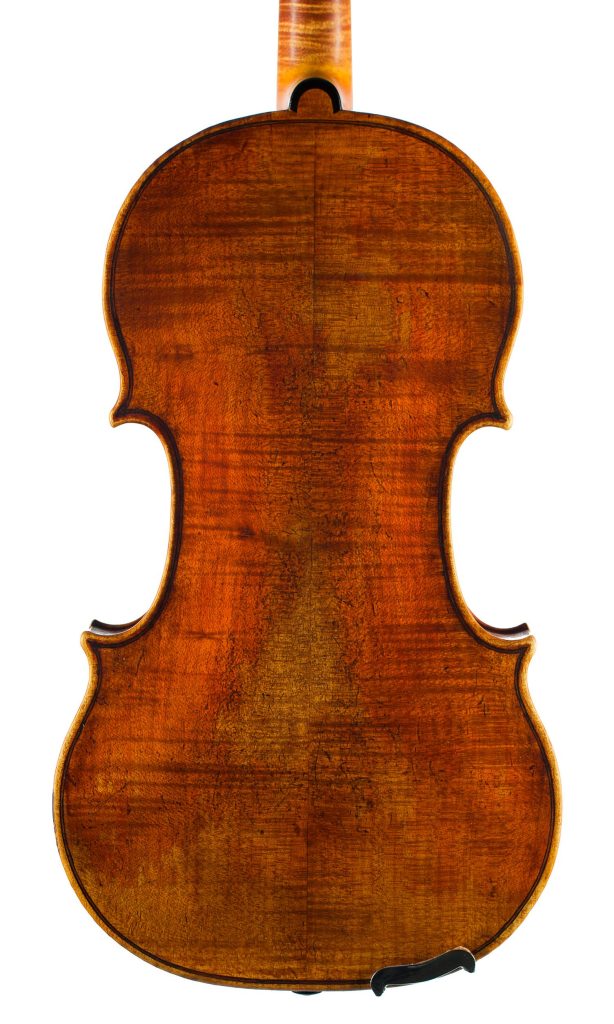
Ferdinando Gagliano, a Neapolitan luthier, was the son of Nicola Gagliano and grandson of Alessandro Gagliano, with conflicting birth and death dates (1724-1795 or 1706-1781). Likely trained by his uncle Gennaro Gagliano, his craftsmanship is described with varying quality, from excellent to showing decadence compared to his father's work, particularly in arching and finish. He is recognized for specific stylistic elements such as a small, tightly-wound scroll and a distinctive 'f' wing. His output included violins, basses, and notably, highly regarded cellos. He also produced instruments for trade at lower prices, which sometimes led to pieces of lesser value.
Instruments
Auction Price History
Highest auction price
63 results
| Type | Details | Auction house | Sold | Price |
|---|---|---|---|---|
| Violin | Labelled Ferdinandus Gagliano Filius Nicolai fecit Neap. 17... Lot 97 | Tarisio | March 2026 | £118,000est. Estimate £ 120,000-180,000 |
| Violin | Bearing the maker's label and signature, original neck Lot 175 | Vichy | June 2023 | £315,246 |
| Violin | A violin by Ferdinando Gagliano, Naples, 1771 Lot 10 | Amati | March 2022 | £73,312est. £ 60,000-120,000 |
| Violin | A violin by Ferdinand Gagliano, Naples, circa 1756 Lot 79 | Amati | January 2021 | £17,696est. £ 15,000-25,000 |
| Viola d'amore | Bearing the maker's label Lot 320 | Vichy | November 2019 | £29,745est. € 25.000-30.000 |
| Violin | Labelled Ferdinandus Gagliano Filius Nicolai fecit Neap. 1774, and In Concepcione tua Virgo Maria ... Lot 262 | Tarisio | November 2018 | £107,787est. $ 200,000-300,000 |
| Violin | Labelled Ferdinandus Gagliano filius, Nicolai fecit Neap. 1782 Lot 228 | Tarisio | October 2018 | £120,000est. £ 80,000-120,000 |
| Violin | Labelled Ferdinandus Gagliano Filius Nicolai fecit Neap. 1780 Lot 154 | Tarisio | February 2018 | £59,096est. $ 70,000-100,000 |
| Violin | Head by Giuseppe Gagliano Lot 175 | Vichy | November 2017 | £97,152est. € 80.000-100.000 |
| Violin | Labelled Ferdinando Gagliano filius, Nicolai fecit Neap 17..., cut down from a small viola Lot 184 | Tarisio | March 2017 | £66,000est. £ 30,000-50,000 |
| Violin | Labelled Ferdinandus Gagliano Filius Nicolai fecit Neap. 1789, bearing a religious inscription internally Lot 24 | Ingles & Hayday | October 2016 | £180,000est. £ 65,000-85,000 |
| Violin | Labelled Ferdinandus Gagliano Filius Nicolai fecit Neap. 1762 Lot 185 | Ingles & Hayday | October 2016 | £76,800est. £ 60,000-90,000 |
| Violin | 35.5 cm Naples, 1780 c. | — | May 2011 | £134,743 |
| Viola | 38.0 cm Naples, 1790 c. | — | December 2010 | £24,000 |
| Violin | 34.8 cm Naples, 1760 | — | October 2010 | £37,553 |
| Viola | 38.0 cm Naples, 1774, Viola D'Amore | — | June 2010 | £40,161 |
| Viola | 38.1 cm Naples, 1776 | — | June 2010 | £72,289 |
| Violin | 35.3 cm Naples, 1760 c. | — | March 2010 | £90,000 |
| Violin | 35.2 cm Naples, 1750 | — | October 2009 | £107,916 |
| Violin | 35.0 cm Naples, 1795 | — | October 2009 | £57,600 |
| Violin | 35.4 cm Attributed to | — | March 2009 | £8,414 |
| Violin | 35.4 cm Attributed to | — | May 2008 | £8,430 |
| Violin | 35.0 cm Naples, 1781 | — | April 2008 | £90,741 |
| Violin | 35.5 cm Ascribed to | — | May 2007 | £28,803 |
| Violin | 35.2 cm Naples, 1780 c. | — | May 2007 | £48,966 |
| Viola | 36.9 cm Naples, 1782 | — | November 2006 | £30,000 |
| Violin | Naples, 1790 c. | — | November 2004 | £77,675 |
| Violin | Naples | — | May 2004 | £56,505 |
| Viola | 36.9 cm 1775 | — | November 2002 | £35,850 |
| Violin | 1769 | — | May 2000 | £44,481 |
| Violin | 1790 c. | — | March 1998 | £14,950 |
| Violin | 1790 c. | — | November 1997 | £16,100 |
| Violin | 1790 c. | — | November 1997 | £22,456 |
| Violin | 1790 c. | — | November 1996 | £20,700 |
| Violin | 17-- | — | November 1995 | £39,100 |
| Violin | 1790 | — | October 1995 | £47,700 |
| Violin | 17-- | — | May 1995 | £35,219 |
| Violin | 1775-99 | — | March 1995 | £19,550 |
| Violin | 17-- | — | October 1993 | £56,500 |
| Violin | 1784 | — | July 1993 | £32,200 |
| Violin | 1770 | — | April 1993 | £37,800 |
| Violin | 1760 c. | — | November 1992 | £27,500 |
| Violin | 1772 | — | November 1992 | £35,200 |
| Violin | 1782 | — | June 1992 | £82,500 |
| Violin | 1770 c. | — | March 1992 | £26,400 |
| Violin | 1785 | — | November 1991 | £49,500 |
| Violin | 1750 c. | — | March 1991 | £35,200 |
| Violin | 1750 c. | — | November 1990 | £45,100 |
| Violin | 1753 | — | June 1989 | £12,100 |
| Violin | 1770 c. | — | November 1988 | £24,200 |
| Violin | 1780 c. | — | June 1988 | £29,700 |
| Violin | 1760 | — | March 1988 | £4,620 |
| Violin | 1784 | — | November 1987 | £31,900 |
| Violin | 1794 c. | — | November 1987 | £22,000 |
| Violin | 1760 c. | — | November 1987 | £13,200 |
| Viola | 36.8 cm 1775 | — | November 1987 | £16,500 |
| Viola | 36.8 cm 1773 | — | July 1987 | £12,100 |
| Violin | 1782 | — | April 1987 | £35,200 |
| Viola | 38.3 cm 1783 | — | November 1986 | £12,650 |
| Violin | 1780 | — | November 1986 | £15,400 |
| Violin | 17-- | — | May 1986 | £15,120 |
| Violin | 1794 | — | June 1983 | £11,429 |
| Cello | 1765 | — | November 1980 | £40,700 |
No results match those filters.
Maker Overview
Life
Ferdinando Gagliano (1724-1795) was born in Naples, Italy. Sources contain conflicting information regarding his birth and death dates; while John Dilworth states he was born in 1724 and worked circa 1770-1795, Cecie Stainer indicates he was born in 1706 and died around 1781. He was the eldest son of Nicola Gagliano and grandson of Alessandro Gagliano. He worked in Naples, Italy.
Characteristics
- Workmanship
- Ferdinando Gagliano's work shows elements of both his father, Nicola, and his uncle, Gennaro, though his workmanship is described by John Dilworth as being of a more restrained order. Cecie Stainer notes a decadence in his work compared to his father's, stating it was not as arched, thicknesses were not accurate, and the finish was less careful. However, George Hart describes his instruments as usually excellently made, and Willibald Leo Lütgendorff considers him a very good master, whose work is similar to Alessandro Gagliano's. He is known to have imitated the last Stradivari model.
- Varnish
- John Dilworth describes his varnish as generally tending towards a thinner, harder quality. In contrast, Cecie Stainer notes his varnish was richer in color than that used by other family members, and George Hart mentions a warmer tint. Willibald Leo Lütgendorff specifies a good, reddish-brown or yellow varnish of warm color.
- Characteristics
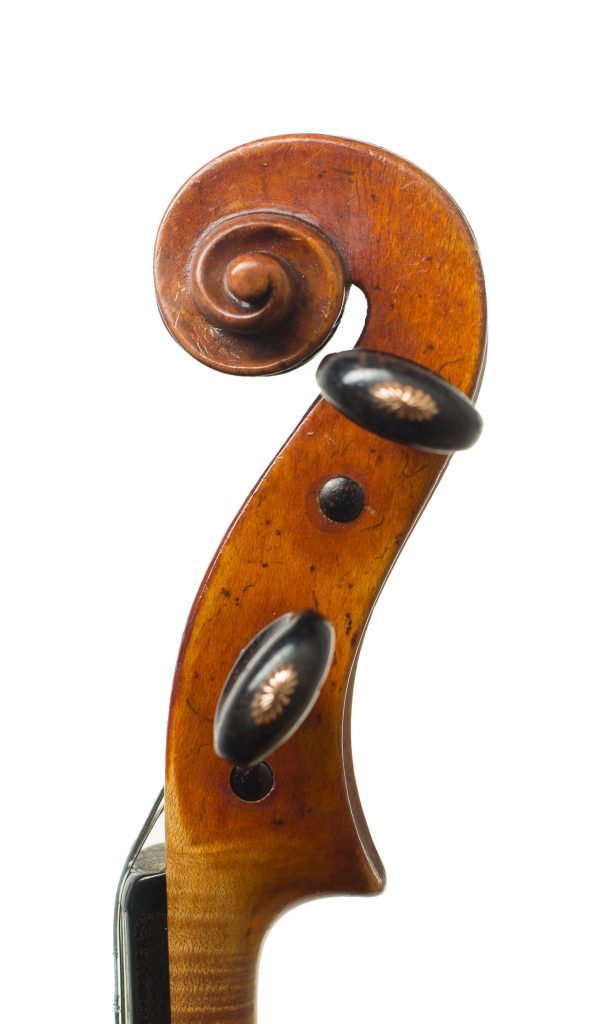
- His instruments often feature a small, tightly-wound scroll. The upper wing of the treble 'f' is carved downward in a distinctive manner. The outline frequently exhibits an awkward transition from the outward curve of the lower bouts into the concave lines of the corner. Some examples include decorative inlay. Willibald Leo Lütgendorff notes he used flatter arching and a broader pattern than his father, and was less careful in his choice of wood.
- Instruments
- Violins and basses by Ferdinando Gagliano are known, dated up to the year of his death. A very good alto dated 1753 is also known. His cellos are considered his best instruments.
- Ferdinandus Gagliano Filius
Nicolai, Fecit Neap. 17..John Dilworth - Ferdinando Gagliano, me fecit
Neapoli, anno 17..John Dilworth
Influence and legacy
- Training: Ferdinando Gagliano was the son of Nicola Gagliano and was probably trained by his uncle Gennaro Gagliano.
- Family: Willibald Leo Lütgendorff states that Ferdinando Gagliano is said to have had a son named Giuseppe.
Further Information
- Labels: Additional labels with religious dedications are often found fixed to the upper rib inner surface of his instruments. Common label inscriptions include "Ferdinandus Gagliano Filius / Nicolai, Fecit Neap. 17.." and "Ferdinando Gagliano, me fecit / Neapoli, anno 17.." Cecie Stainer also cites "Ferdinando Gagliani, me fecit Neapoli, anno 1730."
- Trade Practices: He also worked for the trade at low prices, which, according to Cecie Stainer, meant some of his instruments are not of much value.
Biographies
The overview above is drawn from the following published accounts. Read them in the original:
John Dilworth+
GAGLIANO, Ferdinando Born 1724, Worked circa. 1770-1795 Naples Italy. Son of Nicola Gagliano, below, but probably trained by his uncle Gennaro, below. Work shows elements of both, but workmanship of a more restrained order, and varnish generally tending towards a thinner harder quality. Small tightly-wound scroll. Upper wing of treble ‘f’ carved downward in distinctive manner. Outline often marked by an awkward transition from the outward curve of the lower bouts into the concave lines of the corner. Some examples with decorative inlay. Additional label with religious dedication often found fixed to upper rib inner surface. Ferdinandus Gagliano Filius / Nicolai, Fecit Neap. 17.. Ferdinando Gagliano, me fecit / Neapoli, anno 17..
George Hart+
His instruments are usually excellently made, and have a varnish of a warmer tint than is met with on the instruments of the Gagliani family.
Cecie Stainer+
Eldest son of Nicola, grandson of Alessandro, b. 1706, in Naples; d. about 1781. His work shows decadence, although it is an imitation of that of his father; it is not so arched, the thicknesses are not accurate, the work is not so carefully finished ; the varnish is richer in colour than that used by other members of the family. As he also worked for the trade at low prices, some of his instruments are not of much value. Violins and basses of his are known dated up to the year of his death, and a very good alto dated 1753.
and “Ferdinando Gagliani, me fecit Neapoli, anno 1730.”
Willibald Leo Lütgendorff+
Ältester Sohn von Nicola, den er zwar nicht immer erreicht, trotzdem aber noch ein sehr guter Meister. Seine Arbeit ist der von Alessandro G. ähnlich, er ahmt das letzte Stradivari-Modell nach und verwendet einen guten, rothbraunen oder gelben Lack von warmer Farbe. Die Wölbung nimmt er flacher, das Patron aber breiter als sein Vater, auch in der Wahl des Holzes ist er weniger sorgfältig. Am besten gelangen ihm seine Violoncelli. Er soll einen Sohn Namens Giuseppe gehabt
haben.
Sell your instrument with Amati
Get started by uploading photos of your instrument for our experts to review.
Sell your instrument with Amati
Get started by uploading photos of your instrument for our experts to review.