Samuel Gilkes
London, Northamptonshire, 1787–1827
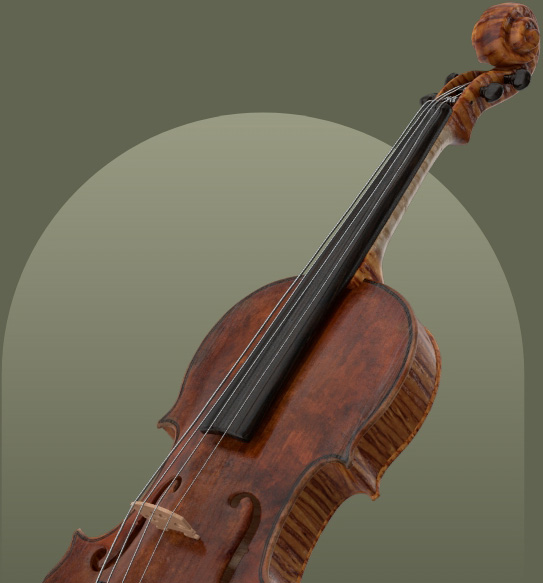
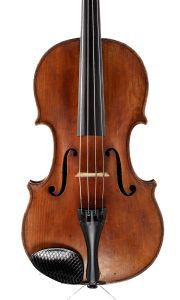
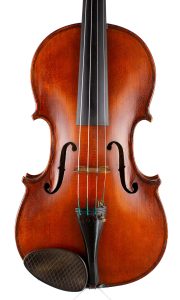
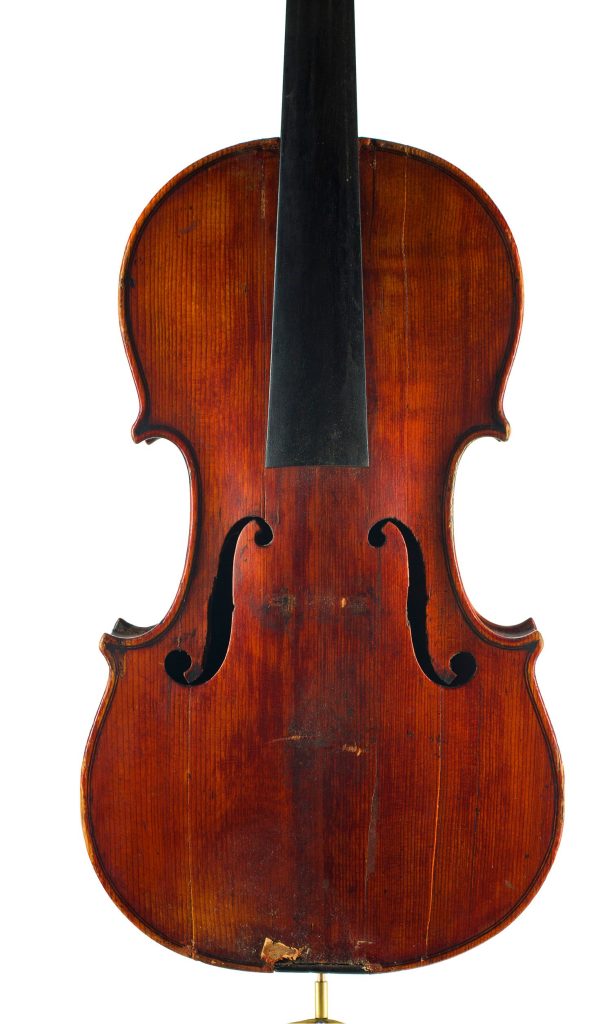
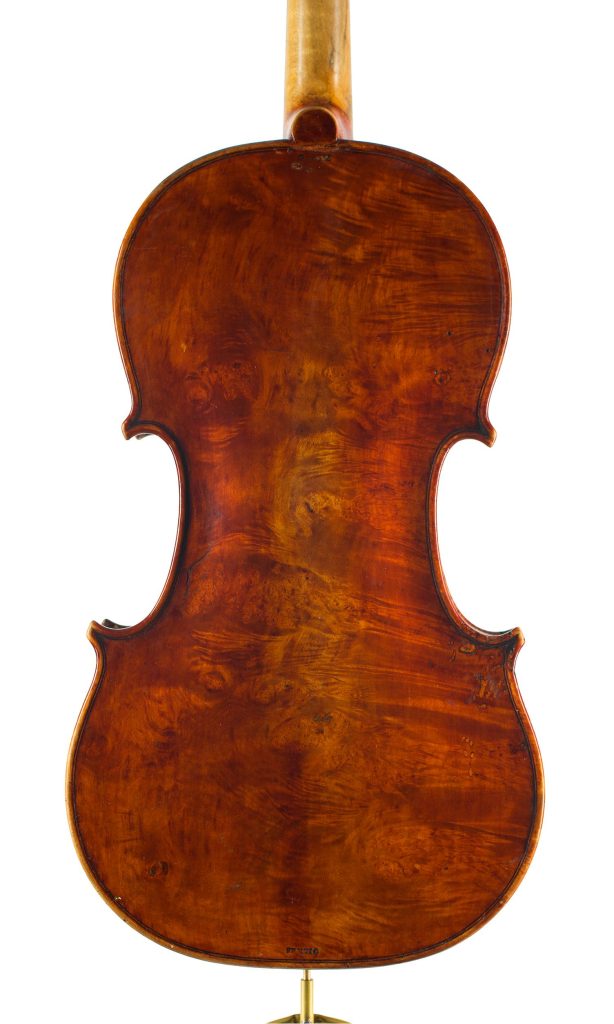
Samuel Gilkes (1787-1827) was a highly regarded English violin and violoncello maker born in Morton Pinkney, Northamptonshire. He apprenticed with Charles Harris and worked for William Forster (III) before establishing his own workshop in London, first at 4 Carteret Street and later at 34 St James's Street. Gilkes's early work reflected the style of his teacher, Charles Harris, often following Amati models. However, his craftsmanship significantly improved from 1820 onwards, with his Amati and Stradivari copies, particularly his cellos, achieving a "first rank" quality. He was known for his rich, transparent varnishes and meticulous finish. Despite his early death at age 40, Gilkes's instruments are highly sought after, and he is considered to have been on the cusp of even greater achievements.
Request an expert valuation or learn how our global auctions achieve the highest prices for your instruments.
Instruments
Auction Price History
Highest auction price
19 results
| Type | Details | Auction house | Sold | Price |
|---|---|---|---|---|
| Cello | Labelled Gilkes (from Forster's, ) James Street, Buckingham Gate. Westr. London, Anno 1824, branded Lot 17 | Tarisio | May 2025 | £43,792est. $ 50,000-80,000 |
| Violin | A violin by Samuel Gilkes, London, circa 1800 Lot 238 | Amati | November 2021 | £12,008est. £ 800-1,200 |
| Violin | Labelled Samuel Gilkes Fecit London 1811 Lot 828 | Gardiner Houlgate | June 2015 | £180est. £ 100-150 |
| Violin | Lot 16 | Bonhams | May 2013 | £3,000 |
| Cello | Signed and branded on the lower rib Gilkes Lot 258 | Brompton’s | March 2013 | £36,000est. £ 25,000-35,000 |
| Violin | Lot 324 | Bonhams | October 2012 | £3,125 |
| Violin | Branded Gilkes internally on the back and by the endpin Lot 7 | Sotheby's | October 2012 | £6,875est. £ 3,000-5,000 |
| Violin | Labelled Samuel Gilkes fecit London, branded to the lower rib Gilkes Lot 356 | Tarisio | July 2012 | £1,224est. $ 2,000-3,000 |
| Violin | 35.7 cm London, 1810 Probably by | — | June 2011 | £2,160 |
| Viola | 41.5 cm London, 1815 c. | — | October 2009 | £34,850 |
| Violin | 35.4 cm London, 1st half 19th C. Probably by | — | November 2008 | £998 |
| Cello | 75.7 cm 1810 c. | — | November 2008 | £11,400 |
| Violin | 1850 | — | October 2003 | £416 |
| Viola | 41.4 cm 1820 | — | November 1994 | £12,650 |
| Cello | 1800-25 | — | June 1992 | £14,300 |
| Violin | 1820 c. | — | April 1991 | £6,600 |
| Violin | 1800-25 | — | November 1988 | £2,734 |
| Viola | 38.9 cm 18-- | — | June 1984 | £1,620 |
| Violin | 1872 | — | February 1982 | £714 |
No results match those filters.
Maker Overview
Life
Samuel Gilkes (1787-1827) was born in 1787 in Morton Pinkney, Northamptonshire, and died in November 1827 in London, UK. He was apprenticed to Charles Harris in London. Gilkes worked for William Forster (III) from 1810, though some sources state he started his own business in 1810 after leaving Forster's workshop. He established his own workshop at 4 Carteret Street, Westminster, in 1819. During this period, he had John Hart as an apprentice from 1820 and also employed James Gibbs. In 1822, he moved his workshop to 34 St James's Street, Buckingham Gate, Westminster. Samuel Gilkes died a comparatively young man, just as he was beginning to produce work reflecting his ripened talent, a fact lamented by historians such as William Meredith Morris.
Characteristics
- Quality
- Samuel Gilkes made a range of instruments in various qualities, with his best work considered to be of the first rank, highly praised by competent judges.
- Models
- His Amati model for violins was particularly successful, and his best work is seen in his Stradivari cello copies. From 1820 onwards, his work showed improvement in style, with his Amati and Stradivari copies of this period being excellent.
- Early Characteristics
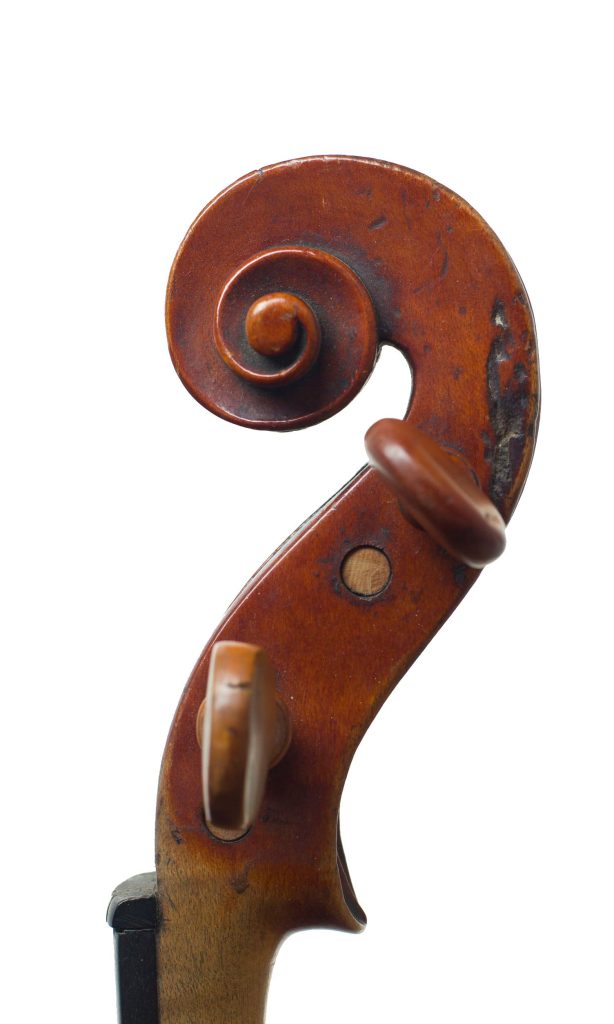
- The characteristics of his early Amati work included a rather pronounced arching, narrow margins, a somewhat top-heavy scroll, and a very weak button. Early Strad copies featured rather gaping sound-holes and narrow margins, with a leaning towards the Amati arching, especially between the inner bouts, where a decided groove was present between the sound-holes and the edge.
- Later Characteristics
- These early defects were nearly altogether eliminated in his latest and best work. A Stradivari copy observed by William Meredith Morris featured a scroll that was thoroughly Italian in character, beautifully cut and not too wide sound-holes, a pure outline, and a very graceful arching.
- Wood
- The wood of the back was cut on the quarter, with a curl of regular and medium width, and the pine was of close grain.
- Varnish
- He used yellow-brown or Forster-like dark red varnishes. The poorest quality varnish was described as a rather opaque and thin rubbed coat. His later work featured golden brown varnish of good quality and perfect transparency. Cecie Stainer noted he used varnish of rich quality.
- Tone
- The tone of his best instruments was clear, bright, and mellow.
- Branding
- Instruments were branded on the linings and lower block, and sometimes externally on the lower rib.
- Production
- He made various classes of instruments for country dealers.
- Gilkes (from Forster’s)
34 James Street, Buckingham Gate, Westr.
London, 18..John Dilworth - Samuel Gilkes
fecit London. 1815John Dilworth - Samuel Gilkes
from Forster’s
Violin and Violoncello maker
34 James Street. Buckingham Gate. WestminsterJohn Dilworth
Influence and legacy
- Apprenticeship: Samuel Gilkes was apprenticed to Charles Harris in London, and he followed Harris's style with much success, retaining its features even when working for others.
- Employment: He worked for William Forster (III) from 1810, making many instruments for him.
- Stylistic Influence: For the first ten years of his independent work, he followed the lines of Charles Harris, though William Meredith Morris noted that the chief fault of his model during this period was that it was "a copy of a copy."
- Reputation: His work has been greatly praised by competent judges and is considered to fully deserve its high regard. His violins and violoncellos are highly sought after today.
- Untapped Potential: Historians like William Meredith Morris lament his early death, believing he had just begun a period of increased activity in production and accuracy of model, suggesting he could have achieved even greater renown had he lived longer.
Further Information
- Workshop Locations: Samuel Gilkes operated his own workshop at 4 Carteret Street, Westminster, from 1819, and later at 34 St James's Street, Buckingham Gate, Westminster, from 1822.
- Labels: His instruments bear printed labels such as "Gilkes (from Forster's) / 34 James Street, Buckingham Gate, Westr. / London, 18.." and "Samuel Gilkes / fecit London. 1815" or "Samuel Gilkes / from Forster's / Violin and Violoncello maker / 34 James Street. Buckingham Gate. Westminster".
Biographies
The overview above is drawn from the following published accounts. Read them in the original:
John Dilworth+
GILKES, Samuel Born 1787 Morton Pinkney, Northamptonshire, died 1827 London UK. Apprenticed to Charles Harris in London. Worked for William Forster (III) from 1810. Established own workshop at 4 Carteret Street, Westminster 1819. Had John Hart as apprentice from 1820, and also employed James Gibbs. Moved to 34 St James’s Street 1822. Made a range of instruments in various qualities, but the best are of the first rank. Amati model for violins particularly successful, but his best work is seen in his Stradivari cello copies. Yellow-brown or Forster-like dark red varnishes; poorest quality is a rather opaque and thin rubbed coat. Branded on linings and lower block; also externally on lower rib. Printed label: Gilkes (from Forster’s) / 34 James Street, Buckingham Gate, Westr. / London, 18.. Samuel Gilkes / fecit London. 1815 Samuel Gilkes / from Forster’s / Violin and Violoncello maker / 34 James Street. Buckingham Gate. Westminster
George Hart+
Was born at Morton Pinkney, in Northamptonshire. He became an apprentice of Charles Harris, whose style he followed with much success. Upon leaving Harris he engaged himself to William Forster, making many instruments for him, retaining, however, all the features of the style of Harris. In the year 1810 he left the workshop of Forster, and commenced business on his own account in James Street, Buckingham Gate, where the few instruments bearing his name were made. Too much cannot be said in praise of this excellent maker; he was a thorough artist, and the exquisite finish of his works evidences that the making of them was to him a labour of love. Amati was his favourite model.
William Meredith Morris+
He was born at Morton Pinkney, Northamptonshire, and died Nov. 1827. His work has been greatly praised by competent judges, and fully deserves to be. He died a comparatively young man, just as he was beginning to give the world the first-fruit of ripened talent. He started work on his own account in 1810, and for the next ten years he followed the lines of Charles Harris. The chief fault of his model of this period is that it is a copy of a copy. Many modern makers commit the same error, and we have to-day in the work of some amateurs copies that are removed from the original to the fifth or sixth degree. This is much to be deplored, as something is lost at each remove, and the result in the long run becomes a caricature. Originality pure and simple is quite a different thing, as in such a case the powers of the mind are unfettered and allowed free display. From 1820 on his work shows improvement in style, and his Amati and Stradivari copies of this period are excellent. He had probably had opportunity about the year 1820 of seeing and closely examining genuine Amati and Stradivari (grand) violins. The characteristics of his early Amati work are : a rather pronounced arching, narrow margins, a somewhat top-heavy scroll, and a very weak button ; and of the early Strad copies, rather gaping sound-holes, narrow margins, with a leaning towards the Amati arching, especially between the inner bouts, where there is also a decided groove between the sound-holes and the edge. These defects are nearly altogether eliminated in his latest and best work. The scroll of a Stradivari copy which I saw quite recently was thoroughly Italian in character, and the sound-holes beautifully cut and not too wide. The outline was pure and the arching very graceful. The wood of the back was cut on the quarter, with a curl of regular and medium width, and the pine was of close grain. The varnish was golden brown in colour, of a good quality and perfectly transparent. The tone was clear, bright, and mellow. It is a great pity Gilkes did not live another twenty years, because it is quite evident that he had just begun on a period of activity in production and accuracy of model. He was the pupil of his relative Charles Harris, and he worked for a few years with William Forster. Label : —
GILKES, FROM FORSTER’S, VIOLIN AMD VIOLONCELLO MAKER, 34 JAMES STREET, BUCKINGHAM GATE, WESTMINSTER
Cecie Stainer+
b. 1787, Morton Pinkney, Northamptonshire; d. Nov., 1827, London. Apprenticed to Charles Harris, sen., in London, afterwards worked for William Forster ( 1764-1824). In 1810 he started his own business, labelling his instruments with his own name. He followed the Nicola Amati pattern, and was a clever maker, although his style showed traces of his training under Charles Harris. He used varnish of rich quality, and his work was beautifully finished. He made various classes of instruments for country dealers.
Willibald Leo Lütgendorff+
Schüler von Charles Harris sen.; arbeitete bei William III. Forster und eröffnete
1810 seine eigene Werkstatt. Er arbeitete im Stile von Harris nach
dem Amati-Modell recht sauber und verwendete einen guten Lack. Er wurde
auch von Händlern viel beschäftigt. Seine Geigen und Violoncelli sind heute
sehr gesucht.
Sell your instrument with Amati
Get started by uploading photos of your instrument for our experts to review.
Sell your instrument with Amati
Get started by uploading photos of your instrument for our experts to review.