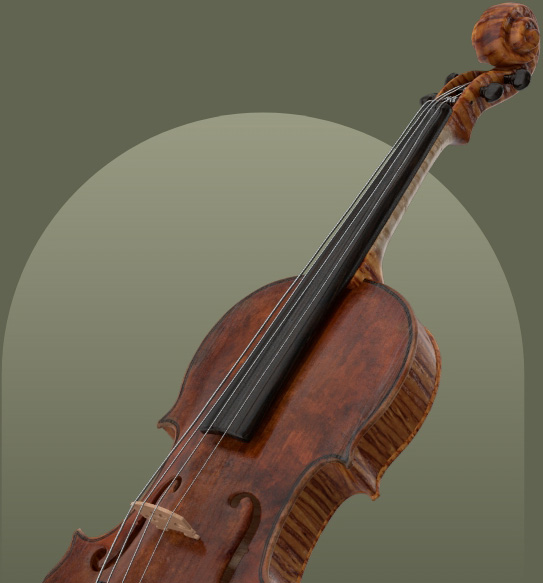
Giovanni Battista Guadagnini
Auction price history
Highest auction price
£676,640
| Type | Details | Sold | Price |
|---|---|---|---|
| Violin | Table head and lower right rib of the 19th C., many table restorations including sound post crack | December 2024 | £70,069 |
| Violin | Rudolph Wurlitzer (1932) and W.E. Hill (1937) issued a certificate but these documents have been lost | March 2024 | £586,129 |
| Violin | Labelled Joannes Baptista Guadagnini, Cremonensis fecit ..., table and scroll by another hand c. 1900 | February 2024 | £100,743 |
| Violin | 35.5 cm Turin, 1783 | November 2011 | £676,640 |
| Cello | 70.9 cm Turin, 1783 (revarnished) | November 2011 | £501,215 |
| Violin | October 2011 | £37,250 | |
| Violin | 35.7 cm [Ascribed to] | October 2011 | £37,250 |
| Violin | 35.4 cm Turin, 1771 c. | May 2011 | £458,370 |
| Violin | 35.4 cm Piacenza, 1740 c. | April 2011 | £469,552 |
| Violin | 35.5 cm (head later) [Possibly by] | October 2010 | £36,000 |
| Cello | 75.0 cm Late 18th C. [Attributed to] | April 2010 | £47,136 |
| Violin | 35.1 cm Italy, 1758 c. [Attributed to] | April 2010 | £16,436 |
| Violin | 35.2 cm Milan, 1753 c. [Lit.] | April 2010 | £356,670 |
| Violin | 35.4 cm Milan, 1755, 'The Ex-Wollgant', with Provance & Lit. | April 2008 | £295,283 |
| Violin | 35.6 cm Italy, 18th C. [Ascribed to] | October 2007 | £20,900 |
| Violin | 35.3 cm Turin, 1779 | April 2007 | £157,687 |
| Violin | 35.6 cm Milan, 1753 | November 2006 | £325,519 |
| Violin | Parma, 1766 | November 2005 | £203,027 |
| Cello | Parma, 1760 | November 2004 | £341,250 |
| Violin | Piacenza, 1745 | November 2004 | £232,150 |
| Violin | Cremona, 1758 | March 2004 | £218,400 |
| Violin | 1755 c. | November 2003 | £196,000 |
| Cello | 1744 | June 2002 | £336,650 |
| Violin | 1777 | October 2001 | £127,660 |
| Violin | 1753 | October 2000 | £108,557 |
| Violin | 1769 | May 2000 | £176,000 |
| Violin | 1770 | May 2000 | £187,338 |
| Violin | 1773 | March 2000 | £216,000 |
| Violin | 1765 c. | June 1997 | £47,700 |
| Violin | 1774 | November 1996 | £149,500 |
| Violin | 1776 | November 1996 | £115,000 |
| Violin | 1775 c. | November 1996 | £243,500 |
| Violin | 1767 | June 1996 | £117,000 |
| Cello | 1757 | November 1995 | £166,500 |
| Violin | 1773 | October 1993 | £221,500 |
| Violin | 1790 c. | July 1993 | £91,700 |
| Violin | 1755 | November 1992 | £132,000 |
| Cello | 1780 | November 1991 | £154,000 |
| Violin | 174- | April 1991 | £97,900 |
| Violin | 1772 | November 1990 | £176,000 |
| Violin | 1780 | June 1990 | £143,000 |
| Violin | 17-- | June 1990 | £48,400 |
| Violin | 1761 | November 1989 | £99,000 |
| Viola | 39.1 cm 1796 | September 1989 | £5,720 |
| Violin | 1744 | March 1989 | £94,600 |
| Violin | 1747 | March 1989 | £90,200 |
| Violin | 1750 | November 1988 | £66,000 |
| Violin | 1743 | November 1988 | £88,000 |
| Violin | 1769 | November 1987 | £72,600 |
| Violin | 1740 c. | November 1987 | £44,000 |
| Violin | 1757 | July 1985 | £85,800 |
| Violin | 1773 | June 1985 | £92,400 |
| Violin | 1778 | March 1984 | £22,000 |
| Cello | 1777 | November 1983 | £44,000 |
| Viola | 1765 | June 1983 | £18,360 |
| Violin | 1758 | April 1983 | £79,200 |
| Violin | 1772 | November 1982 | £46,200 |
| Violin | 1767 | April 1982 | £20,899 |
| Violin | 1760 c. | April 1982 | £23,750 |
| Violin | 1765 | November 1981 | £17,600 |
| Violin | 1753 | May 1981 | £36,300 |
| Violin | 1751 | May 1981 | £23,100 |
| Violin | 1773 | March 1981 | £47,336 |
| Violin | 1750 | May 1980 | £23,100 |
Maker Overview
History
Giovanni Battista Guadagnini (Born 1711, died 1786) was a founder of one of the most enduring Italian dynasties of luthiers and is considered one of the last great makers of the late classical period to develop his own distinctive style. According to John Dilworth, he was born in Piacenza in 1711 and died in Turin in 1786. However, Count Cozio di Salabue, as noted by George Hart and Cécile Stainer, stated he was born in Cremona in 1711, with Stainer also confirming his death in Turin on September 18, 1786.
His career saw him move frequently across Italy. He worked initially in Piacenza, before moving to Milan in late 1749. By the spring of 1758, he was established in Parma, under the patronage of Guillaume-Leon du Tillot and the Bourbon Duke of Parma, Don Felipe. According to George Hart and Cécile Stainer, he was appointed instrument maker to the Duke in Parma. The political climate and anticipated withdrawal of ducal patronage, culminating in the discontinuation of pensions to the artists of the Duke's Court in 1772, likely prompted his move to Turin in 1771 (Dilworth), where he remained until his death. Hart suggests that he moved frequently, possibly due to his hasty temper.
In Turin, he became acquainted with the celebrated collector Count Cozio di Salabue. Their relationship, while eventually souring, involved Guadagnini supplying instruments and information about old makers. This connection led to Guadagnini introducing Cozio to Paolo Stradivari, which directly resulted in Cozio acquiring relics from the Stradivari workshop, including the renowned ‘Messiah’ Stradivari violin. Giovanni Battista Guadagnini was assisted by four of his sons: Gaetano, Giuseppe, Carlo, and Filippo (Dilworth). Stainer also mentions two sons, Gaetano and Giuseppe, as makers.
His labels reflect his movements, with examples such as "Joannes Baptista Guadagnini / filius Laurentii Guadagnini / fecit Placentiae 1744," "Joannes Baptista Guadagnini Pla- / centinus fecit Mediolani 1757," "Joannes Baptista Guadagnini / fecit Cremonae 1758," and "Joannes Baptista Guadagnini / Cremonensis fecit Taurini 1772." Some late labels explicitly state "alumnus Antoni Stradivari," as seen in a 1777 label.
Craft
- Innovation: Giovanni Battista Guadagnini is noted for developing his own distinctive style and form without merely copying past makers. His techniques and material use were largely unique to him, stemming from his own initiative rather than easily traceable precedents, and influencing his followers. He developed original models for cellos and violas; his cello model was of compact size but featured full arching and particular breadth across the breast, proving very successful for player facility and depth of tone. His fine violas from his later period were also compact and original, designed with strength and volume focused on the broad breast, while other aspects were minimized for player comfort.
- Materials: Guadagnini was particularly adept at selecting his wood, which was invariably of handsome quality. The backs of his instruments typically feature nicely figured two-piece wood with regular markings, and the bellies are made from spruce chosen for its resonant properties. A distinctive characteristic was his use of walnut for purfling, a material choice uncommon among his contemporaries. His varnish varied throughout his career: in Piacenza, it was a beautiful deep orange-red; in Milan, it developed into a luscious rich red-brown laid over a golden ground with a flawless texture. During his Parma period, the varnish became a more modest amber color. In his later Turin period, the best work features a fine orange varnish, though some instruments have acquired a "dowdy brown coating" over time. Generally, his varnish is described as very transparent and of a brilliant golden-red color, although Cécile Stainer noted it showed signs of inferiority compared to that of the great makers.
- Methods: Guadagnini utilized the interior form familiar in Cremona. In his early Piacenza period, his work featured a flat model with a broad recurve around the edges. The soundholes were Amati-style, tightly cut at the upper end but open in the lower half, characterized by distinctive oval lower finials and no flute in the wings. His distinctive scroll was often thrown back, with blackened edges and a series of puncture points tracing the volute's last turn; the carving was plastic and carefully smoothed. The broad edges of his instruments diminished in thickness at the corners, contrary to the conventional practice of leaving corners fuller. Moving to Milan, his work matured, with the arch growing fuller and less hollowed at the edges, and all aspects becoming bolder. The Parma period saw his work become somewhat extreme, with idiosyncrasies almost overwhelming the form's integrity; instruments became narrower and more highly arched, and soundholes were increasingly exaggerated with nicks set bizarrely low. Under Count Cozio's influence in Turin, he adopted a more "Stradivarian style," which involved lowering the arch, adding fluting to the lower wings of the soundholes, and making the lower holes perfectly circular.
Influence
- Training and Mentorship: Giovanni Battista Guadagnini was the son of Lorenzo Guadagnini. While his later labels claimed he was a pupil of Antonio Stradivari ("alumnus Antoni Stradivari"), John Dilworth suggests he was largely self-taught. Cécile Stainer states he was a pupil of his father and possibly worked under Antonio Stradivari in Cremona around 1730. Willibald Leo Lütgendorff also writes, "Sohn von Lorenzo G. und wie sein Vater wahrscheinlich Schüler von Stradivari." [Son of Lorenzo G. and like his father probably a pupil of Stradivari.] George Hart notes that Giovanni Battista's instruments more closely resemble those of Stradivari than Lorenzo's, suggesting he might have been influenced by the great master early on. He was assisted in his workshop by his four sons.
- Schools/Tradition: Guadagnini is recognized as a part of an enduring Italian dynasty of luthiers. His work often followed the Stradivari pattern or model. Count Cozio di Salabue encouraged him to work in a more "Stradivarian style" during his later years in Turin. George Hart notes that Guadagnini consistently considered the Stradivari model to be the one to follow, attributing this influence to the "teachings of the great master."
- Notable Associations: He enjoyed the patronage of Guillaume-Leon du Tillot and Don Felipe, the Bourbon Duke of Parma, during his time in Parma. In Turin, he became acquainted with Count Cozio di Salabue, a celebrated collector and historian of the violin. His relationship with Cozio was instrumental in introducing Cozio to Paolo Stradivari, leading to Cozio's acquisition of significant relics from the Stradivari workshop, including the "Messiah" Stradivari violin. Dilworth also suggests he might have spent a short time assisting Paolo Stradivari in Cremona.
Legacy
- Modern Recognition: His instruments continue to stand high in public estimation. As noted by Count Cozio di Salabue (quoted by George Hart), his instruments were "highly esteemed by connoisseurs and professional men in Holland and Germany." He is also recognized as one of the most prolific cello makers among 17th and 18th-century Italians. The English were likely among the first to recognize the considerable merits of his work, acquiring many of his finest specimens.
Further Information
- Historical Uncertainties: There is conflicting information regarding his birthplace; John Dilworth states Piacenza, while Count Cozio di Salabue (cited by Hart and Cécile Stainer) claimed Cremona. This is further complicated by his later labels mentioning Cremona while early ones do not. Similarly, his primary teacher is uncertain: he was either largely self-taught, a pupil of his father Lorenzo Guadagnini, or possibly influenced by or even worked under Antonio Stradivari, a claim also found on some of his labels. While a small number of violins dated 1758 give Cremona as the place of origin, there is no direct evidence of his residence there, though it has been suggested he might have briefly assisted Paolo Stradivari.
- Notable Quotes:
According to Count Cozio di Salabue, as communicated in correspondence to Vincenzo Lancetti: "He imitated Stradivari, but avoided close imitation of all detail, and prided himself in not being a mere copyist."
In 1823 correspondence between Count Cozio di Salabue and Vincenzo Lancetti, the Count stated: "The instruments of G. B. Guadagnini were highly esteemed by connoisseurs and professional men in Holland and Germany."
Summary
Giovanni Battista Guadagnini, a pivotal figure in 18th-century Italian violin making, navigated a career marked by frequent geographical shifts and stylistic evolution. Born in either Piacenza or Cremona in 1711, he worked across Piacenza, Milan, Parma, and finally Turin, where he died in 1786. Despite uncertainties surrounding his early training—whether self-taught, a pupil of his father Lorenzo, or influenced by Antonio Stradivari—he developed a distinctive style, characterized by unique techniques and material use, particularly his walnut purfling. His instruments exhibit clear developmental phases, from the flat Piacenza model with Amati-style soundholes to the bolder Milan work, the extreme high arching of Parma, and a later Stradivarian influence in Turin. He was a prolific maker, especially of cellos, which were praised for their player facility and tone, and also created original viola models. His association with patrons like Don Felipe and especially Count Cozio di Salabue was crucial, facilitating his access to the Stradivari legacy. Guadagnini's work consistently employed handsome wood and varied varnishes, and his instruments are highly regarded by connoisseurs, especially in England, Holland, and Germany, affirming his enduring legacy as a significant Italian violin maker.
Biographies
John Dilworth
GUADAGNINI, Giovanni Battista Born 1711 Piacenza, died 1786 Turin Italy. Founder of one of the most enduring Italian dynasties of luthiers. Perhaps also the last great maker of the classical period to arrive at his own distinctive style and form without slavishly copying past makers. Son of Lorenzo Guadagnini, below, who until recently was considered to be his teacher. Despite Giovanni Battista’s claims on his own later labels that he was a pupil of Antonio Stradivari, the evidence seems to indicate that in fact he was largely self-taught. His techniques and use of materials are unique to him and his followers, and cannot be readily traced back to any precedent. Although he doubtless used the interior form familiar in Cremona, a great deal of his method seems to be his initiative. Working initially in Piacenza, not far from Cremona itself, he developed a flat model with quite broad recurve around the edges. The soundholes are basically Amatisé, rather tightly cut around the upper end, but the lower half open, with distinctive oval shaped lower finials, and no flute in the wings. The equally distinctive scroll is rather thrown back, with blackened edges, and invariably marked with a series of puncture points tracing the shape of the last turn of the volute. The carving is quite plastic and shows signs of careful smoothing with abrasive. The purfling is made from walnut, unique amongst luthiers of the time, and the broad edges diminish in thickness at the corners, opposite to the convention elsewhere of leaving the corners fuller than the rest of the edge. The varnish is a beautiful deep orange-red. On moving to Milan in late 1749 his work entered its mature stage. Many of his greatest masterpieces come from Milan. The arch grew fuller, less hollowed at the edges, and every aspect of the work is bolder, including the varnish which developed into a particularly luscious rich red-brown laid over a golden ground, with no sign of defect in the texture. A small number of violins dated 1758 give Cremona as the place of origin. While no evidence has yet been found for his residence there, these few instruments are consistent with each other stylistically, and appear at the time Guadagnini was in transit from Milan to his new residence in Parma. Rosengard suggests that he might have spent a short time assisting Paolo Stradivari in Cremona, who had been employing Michael Angelo Bergonzi to assist in winding up the old Stradivari workshop. Bergonzi died in 1758. Guadagnini was established in Parma in the spring of 1758, under the patronage of Guillaume-Leon du Tillot and the Bourbon Duke of Parma, Don Felipe. Guadagnini’s work in this period became a little extreme, his idiosyncracies nearly overwhelming the integrity of the form. This became narrower and more highly arched, the soundholes increasingly exaggerated with the nicks set bizarrely low on the stem. The varnish lost some of the intense redness of the Milan recipe, and is usually a more modest amber colour. At the same time his efforts with the cello reached a beneficial level of invention. His original model, of compact size but full arching and particular breadth across the breast, seems to have been driven by his involvement with players. The results are very successful indeed in terms of facility for the player and depth of tone. Guadagnini in fact was one of the most prolific cello makers of all the 17th and 18th century Italians. The death of Don Felipe in 1768 brought an end to Guadagnini’s financial security and his life became chaotic. With a large family to support he moved again to Turin in 1771. There he became acquainted with the celebrated collector and historian of the violin, Count Cozio di Salabue. Under contract with him to supply new instruments, and also to supply information about old makers and instruments, the relationship seems eventually to have turned sour, but not before Guadagnini had introduced Cozio to Paolo Stradivari, leading directly to his acquisition of the relics of the Stradivari workshop, including the great ‘Messie’ Stradivari violin of 1716. Cozio encouraged Guadagnini to work in a more Stradivarian style and this produced some erratically fine work in his last period. The acknowledgements to Stradivari seem to consist of lowering the arch, adding fluting to the lower wings of the soundholes, and making the lower holes perfectly circular. Some of these late works show a resurgence of Guadagnini’s own style, but are very variable. He was certainly assisted by four of his sons, Gaetano, Giuseppe, Carlo, and Filippo. The best work is on a broad flat model with fine orange varnish, although some have a rather dowdy brown coating. Fine violas also come from this period and, like the cellos, are very compact entirely original models, with the strength and volume focused on the broad breast; all other aspects are reduced to a minimum, presumably in the interests of the player’s comfort. Joannes Baptista Guadagnini / filius Laurentji Guadagnini / fecit Placentiae 1744 Joannes Baptista Guadagnini Pla- / centinus fecit Mediolani 1757 GBGP Joannes Baptista Guadagnini / fecit Cremonae 1758 Joannes Baptista Guadagnini / Cremonensis Fecit Parma / GBGP / C.S.R. 1765 Joannes Baptista Guadagnini / Fecit Parmae serviens / GBGP / C.S.R. 1765 Joannes Baptista Guadagnini / Cremonensis fecit Taurini 1772 GBGP Joannes Baptista Guadagnini / Cremonensis fecit Taurini / GBG / alumnus Antoni Stradivari 1777 Questo corretto e fatto al Convento da me Gian Battista Guadagnini Piacentino in Milano [Rosengard, Doring]
Sell your instrument with Amati
Get started by uploading photos of your instrument for our experts to review.
Sell your instrument with Amati
Get started by uploading photos of your instrument for our experts to review.