Charles Mennegand
Nancy, 1822–1885
Charles Mennegand (1822-1885) was a distinguished French luthier, born in Nancy and trained in Mirecourt. He gained significant experience in Paris, working with Rambaux from 1840 to 1845 and later with Maucotel. After establishing an independent workshop in Amsterdam from 1852 to 1857, where he produced numerous instruments, he returned to Paris in 1857, settling at 26, Rue de Trévise. Mennegand was highly regarded for his exceptional skill in both instrument making and repair, particularly for his violoncellos and his controversial practice of "cutting" larger Italian instruments. He received several medals, including those in Paris in 1855, 1867, and 1878, and his instruments often bore labels acknowledging his training under Rambaux.
Request an expert valuation or learn how our global auctions achieve the highest prices for your instruments.
Auction Price History
Highest auction price
2 results
| Type | Details | Auction house | Sold | Price |
|---|---|---|---|---|
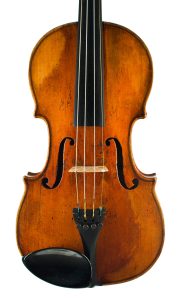
| Violin | Labelled C. Mennegand luthier 26, rue de Trévise Paris, 1879, inscribed C. Mennegand luthier à Paris ... Lot 162 | Ingles & Hayday | March 2016 | £3,000est. £ 3,000-5,000 |
| Cello | 1860 c. | — | November 1989 | £3,520 |
No results match those filters.
Maker Overview
Life
Charles Mennegand (1822-1885) was born on June 19, 1822, in Nancy and passed away on January 9, 1885, in Villers-Cotterets, France, as detailed by Cecie Stainer and John Dilworth. He received his initial training in Mirecourt, and Cecie Stainer. In 1840, Mennegand moved to Paris and began working as an assistant for Rambaux, where he remained for five years until 1845, acquiring exceptional skill in the repair of old instruments, and Stainer. From 1851 to 1852, he worked with Maucotel. Following this, in 1852, he established his own workshop in Amsterdam, Netherlands, where he worked diligently, producing numerous violins, violas, and violoncellos. In 1857, Mennegand returned to Paris, settling at 26, Rue de Trévise. After his return to Paris, he primarily focused on making violoncellos, which became highly sought after.
Characteristics
- Instrument Making
- Charles Mennegand produced a significant number of violins, violas, and violoncellos, particularly during his time in Amsterdam. After returning to Paris, his work predominantly focused on violoncellos, which are considered among the best of his era.
- Repair and Restoration
- He was highly distinguished as both a maker and a repairer of instruments, gaining exceptional skill in the repair of old instruments during his tenure with Rambaux. John Dilworth also highlights his fine reputation for repair and restoration work in Paris.
- Controversial "Cutting" Practice
- George Hart discusses Mennegand's singular ability in the delicate and difficult task of "cutting" large Italian violoncellos and tenors to reduce their dimensions. Hart, quoting Charles Reade, describes this practice as "cutting in the statutory sense, viz., cutting and maiming," and laments the damage inflicted by such operations, comparing unskilled operators to Borgis, the diamond-cutter who was fined for his imperfect performance on the Koh-i-nor.
- Models
- John Dilworth notes that Mennegand primarily used Stradivari models for his instruments.
- Labeling
- His instruments were signed internally with 'C. Mennegand' and featured printed labels such as "Mennégand / Luthier / 26 rue de Trévise, Paris / 1867 C. Mennégand luthier / 26, rue de Trévise, / Paris 1877," as detailed by John Dilworth. Some of his labels also proudly bore the inscription "Élève de Rambaux," signifying his training.
- Mennégand
Luthier
26 rue de Trévise, Paris
1867John Dilworth - C. Mennégand luthier
26, rue de Trévise,
Paris 1877John Dilworth
Influence and legacy
- Apprenticeship: Charles Mennegand began his training with an apprenticeship in Mirecourt, and Cecie Stainer.
- Mentorship under Rambaux: He worked as an assistant for Rambaux in Paris from 1840 to 1845, where he developed his exceptional skills in instrument repair, and Stainer. He often referred to himself as "Élève de Rambaux" on his labels, acknowledging his teacher's influence.
- Work with Maucotel: From 1851 to 1852, Mennegand further honed his craft by working with Maucotel, as reported by Lütgendorff, Dilworth, and Stainer.
- Awards: Charles Mennegand received several accolades throughout his career. He was awarded a medal at the Paris Exhibition in 1867. Cecie Stainer provides more detail, noting a medal of the 2nd class in Paris in 1855, and bronze medals in both 1867 and 1878. John Dilworth confirms medals awarded at several competitions in France.
- Reputation: He was highly regarded for his skill in both making and repairing instruments, particularly for his repair and restoration work in Paris, for which he held a fine reputation. His violoncellos made after his return to Paris are considered among the best work of the time and are highly sought after.
Further Information
- Workshop Locations: Charles Mennegand established his independent workshop in Amsterdam, Netherlands, from 1852 to 1857. Upon his return to Paris in 1857, he settled at 26, Rue de Trévise, an address that also appeared on his printed labels.
- Label Inscriptions: His instruments featured printed labels with inscriptions such as "Mennégand / Luthier / 26 rue de Trévise, Paris / 1867 C. Mennégand luthier / 26, rue de Trévise, / Paris 1877," as documented by John Dilworth. Some labels also included the phrase "Élève de Rambaux."
Biographies
The overview above is drawn from the following published accounts. Read them in the original:
John Dilworth+
MENNÉGAND, Charles Born 1822 Nancy, died 1885 Villers-Cotterets France. Apprenticed in Mirecourt. Pupil of Rambeaux in Paris 1840-1845. Worked for Maucotel 1851. Established independently in Amsterdam, Netherlands 1852-1857, subsequently returning to Paris. Medals awarded at several competitions in France, although most productive years were those in Amsterdam. In Paris he was chiefly occupied with repair and restoration work for which he has a fine reputation. Mostly Stradivari models. Violins, violas, and cellos. Signed internally: ‘C. Mennegand’. Printed labels: Mennégand / Luthier / 26 rue de Trévise, Paris / 1867 C. Mennégand luthier / 26, rue de Trévise, / Paris 1877
George Hart+
He is distinguished both as a maker and repairer of instruments. He entered the service of Rambaux in Paris in 1840. He has been rightly regarded as having displayed singular ability in the delicate and difficult task of ” cutting” the large Italian Violoncellos and Tenors. The practice of reducing the dimensions of Cremonese instruments has happily come to be looked upon as emulative of the acts of the Goths and Vandals. It is in any case certain that numerous instruments have been operated upon with no greater skill than might have been expected at the hands of those barbarians. “These ruthless men,” remarks Charles Reade, “just sawed a crescent off the top, and another off the bottom, and the result is a thing with the inner bout of a giant and the upper and lower bout of a dwarf.” He rightly names this, ” cutting in the statutory sense, viz., cutting and maiming,” and implores the owner of an instrument in its original state to spare it, and if too large, to play on one of the value of £5, with the Cremona set before him to look at while he plays. To ” cut” a Cremona, and to cut a diamond into a brilliant or a rose, are tasks equally difficult. The indifferent operator in both cases suffers more or less from the injury and annoyance his unskilfulness has occasioned. Borgis, a Venetian diamond-cutter, was employed by Shah Jehan to cut the Koh-i-nor, and in place of a reward was fined ten thousand ducats for his imperfect performance. Had it happened that some possessors of Cremonese gems had inflicted monetary or other punishment on incapable instrument-cutters, the world would have been richer in Cremonas. Mennegand was at Amsterdam for a few years, and returned to Paris in 1857.
Cecie Stainer+
b. June 19, 1822, at Nancy; d. Jan. 9, 1885, at Villers-Cotterets. Was apprenticed at Mirecourt ; in 1840 went to Paris and worked with Rambaux for five years and there gained the experience which rendered him such a clever repairer of old instruments. 1851-52 worked with Maucotel, and in 1852 left France for Amsterdam. Returned to Paris 1857 settled at 26, rue de Trevise.
He made a large number of good violins, altos, and violoncellos in Amsterdam; but after his return to Paris principally made violoncellos, which rank among the best work of the time.
He was awarded a medal of the 2nd class, Paris, 1855, and bronze medals in 1867 and 1878.
and “C. Mennegand, luthier, 26 rue de Trevise, Paris, 1877. (Signed) C. Mennegand.”
Some of his labels have ” eleve de Rambaux ” on them.
Willibald Leo Lütgendorff+
Erhielt seine Ausbildung in Mirecourt, kam 1840 nach Paris, trat als
Gehilfe bei Rambaux ein und blieb bei diesem geschickten Meister fünf Jahre
lang und eignete sich hier seine aussergewöhnliche Geschicklichkeit in der Reparatur
alter Instrumente an. Er nannte sich daher, im Anfange seiner Selbstständigkeit, auf seinen Zetteln gerne »Élève de Rambaux«. Nachdem er von 1851—1852 noch bei Maucotel gearbeitet, ging er nach Amsterdam, um seine eigene Werkstatt zu eröffnen. Er arbeitete hier sehr fleissig, machte viele Violinen, Violen u. Violoncelli, ging aber 1857 nach Paris zurück und wohnte Rue de Trévise No. 26. Hier machte er fast nur Violoncelli, die sehr gesucht sind. Auf der Pariser Ausstellung 1867 erhielt er eine Medaille.
Sell your instrument with Amati
Get started by uploading photos of your instrument for our experts to review.
Sell your instrument with Amati
Get started by uploading photos of your instrument for our experts to review.