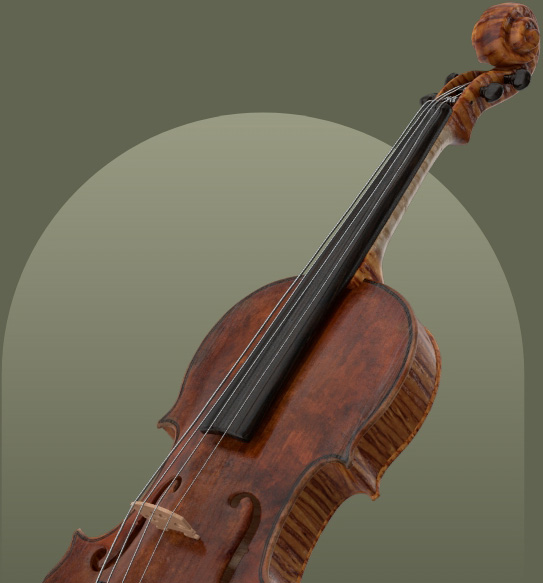
Pietro Giacomo. Rogeri
Brescia, c.1665–1740
Pietro Giacomo Rogeri, son and pupil of Giovanni Battista Rogeri, worked in Brescia, Italy, from the late 17th to early 18th century. He produced instruments similar to his father's, often with a more slender model, and was particularly renowned for his violas and violoncellos, which are noted for their excellent tone and fine varnish. While some sources suggest his craftsmanship was not always as refined as his father's, his cellos, including one owned by Paganini, are considered splendid instruments.
Request an expert valuation or learn how our global auctions achieve the highest prices for your instruments.
Auction Price History
Highest auction price
6 results
| Type | Details | Auction house | Sold | Price |
|---|---|---|---|---|
| Violin | Made in the father's workshop, back blemish, some restorations Lot 220 | — | November 2017 | £95,040est. € 40.000-50.000 |
| Violin | Bearing an illegible label Lot 6 | — | April 2012 | £38,625est. $ 50,000-80,000 |
| Violin | 35.5 cm Brescia, 1720 c. | — | March 2008 | £90,500 |
| Violin | 35.2 cm Brescia, 1700 c. | — | May 2006 | £31,613 |
| Violin | 1700-15 | — | November 1987 | £11,550 |
| Cello | 1695-99 | — | February 1982 | £12,486 |
No results match those filters.
Maker Overview
Life
Pietro Giacomo. ROGERI (1665-c.1740) was born in 1665 and died around 1740 in Brescia, Italy. He was the son, pupil, and successor of Giovanni Battista Rogeri. John Dilworth notes that his work was very similar to that of his father, though some later pieces showed extremity and stylistic weakness. Willibald Leo Lütgendorff states that he was probably a pupil of his father, Giambattista R., and imitated him, though without quite reaching his level. Karel Jalovec indicates that he was the son of Giambattista Rogeri, generally maintaining his father's model, but in a more slender shape, and lacking the careful craftsmanship of his father. Cecie Stainer notes he was born about 1675 in Brescia and worked until about 1735, making instruments on a similar pattern to his father, but not quite as broad. Henri Poidras describes his work as fine, similar to his father's but perhaps a little less finished.
Characteristics
- Model
- John Dilworth notes that his corners were longer and even slightly hooked, and he made cellos on the same short, broad model as his father. Willibald Leo Lütgendorff states his model was more slender. Karel Jalovec describes his model as more slender than his father's. Cecie Stainer indicates he made instruments on a similar pattern to his father, but not quite so broad. Henri Poidras describes a flat model with broad corners and a parrot's head.
- Materials & Varnish
- Karel Jalovec states he used good wood and applied a beautiful golden-yellow varnish. Willibald Leo Lütgendorff also notes good wood and varnish. Cecie Stainer mentions he used fine varnish. Henri Poidras describes a yellow varnish.
- Workmanship
- John Dilworth notes examples of lower class instruments with imitation purfling and cheaper materials. Karel Jalovec states he cut the scrolls and sound-holes with taste and skill, and made the purfling nearer the edge. Henri Poidras notes that the backs are not always purfled.
- Output
- Willibald Leo Lütgendorff mentions he was very diligent and made all kinds of violins, with his violas and violoncellos being his best. Karel Jalovec states his speciality was instruments of small pattern, and highlights the excellent tone of his creations, particularly cellos and violas. Cecie Stainer notes his violins are not equal to his father's, but his violoncellos are splendid instruments, and he also made many fine violas and double-basses. Henri Poidras also considers his cellos his best instruments.
- Petrus Jacobus Reggerius
de Nicolai Amati Cremonensis
fecit Brixiae, 1708John Dilworth - Petrus Jacobus Rogeri
fecit Brixiae, 1716John Dilworth - Pietro Giacomo Rogerius filius
Joannes Baptiste. Brescia 1721John Dilworth - Petrus Jacobus Rugerius
fecit Brixiae 1725John Dilworth
Influence and legacy
- Training: He was the son and pupil of Giovanni Battista Rogeri. Willibald Leo Lütgendorff states he was the son of Giambattista R., whose pupil he probably was. Karel Jalovec identifies him as the son of Giambattista Rogeri. Cecie Stainer identifies him as the son of Gian Battista Rogeri. Henri Poidras identifies him as the son of one preceding.
- Notable Instruments: Karel Jalovec mentions a large 'cello once owned by Paganini, which sold for 400,000 Kc, and notes his contrabasses are also outstanding. Cecie Stainer notes a magnificent violoncello was in the Collection of Count Cozio di Salabue.
Further Information
- Labels: John Dilworth provides several labels, including "Petrus Jacobus Reggerius / de Nicolai Amati Cremonensis / fecit Brixiae, 1708", "Petrus Jacobus Rogeri / fecit Brixiae, 1716", "Pietro Giacomo Rogerius filius / Joannes Baptiste. Brescia 1721", and "Petrus Jacobus Rugerius / fecit Brixiae 1725 [Chiesa/Brescia]". Cecie Stainer provides a label: "Petrus Jacobus Rogeri fecit Brixijc, 1714."
Biographies
The overview above is drawn from the following published accounts. Read them in the original:
John Dilworth+
ROGERI, Pietro Giacomo. Born 1665, d.c.1740 Brescia Italy. Son, pupil, and successor of Giovanni Battista Rogeri, above. Very similar work to that of his father, but some later work shows some extremity and stylistic weakness. Corners longer and even slightly hooked. Examples of lower class with imitation purfling and cheaper materials are known. Cellos on the same short broad model as his father. Very fine and important works. Petrus Jacobus Reggerius / de Nicolai Amati Cremonensis / fecit Brixiae, 1708 Petrus Jacobus Rogeri / fecit Brixiae, 1716 Pietro Giacomo Rogerius filius / Joannes Baptiste. Brescia 1721 Petrus Jacobus Rugerius / fecit Brixiae 1725 [Chiesa/Brescia]
Cecie Stainer+
Son of Gian Battista Rogeri; b. about 1675 in Brescia; worked till about 1735. He made on a similar pattern to his father, but not quite so broad, and used fine varnish. His violins are not equal to those of his father, but his violoncellos are splendid instruments; a magnificent one was in the Collection of Count Cozio di Salabue. He also made many fine violas and double-basses. Label: ” Petrus Jacobus Rogeri fecit Brixijc, 1714.”
Willibald Leo Lütgendorff+
Sohn von Giambattista R., dessen Schüler er wahrscheinlich gewesen ist. Er ahmte seinen Vater nach, ohne ihn ganz zu erreichen; auch ist sein Modell schlanker. Er war sehr fleissig und hat alle Arten von Geigen gemacht. Am besten gelangen ihm seine Violen und Violoncelli. Holz und Lack sind recht gut.
Henri Poidras+
Son of one preceding. Fine make. Same work as his father but perhaps a little less finished. His ‘cellos are his best instruments. The backs are not always purfled. Flat model. Broad corners. Parrot’s head. Yellow varnish.
Karel Jalovec+
Son of Giambattista Rogeri, keeping on the whole his model (of a more slender shape), but lacking the careful craftsmanship of his father. He used good wood, made the purfling nearer the edge, cutthe scrolls and sound-holes with taste and skill. Applied a beautiful golden-yellow varnish. His speciality were instruments of small pattern. The excellent tone of his creations, particularly of the ‘cellos and violas, is reflected in the price of a large ‘cello, once owned by Paganini, which was sold at the price of 400.000 Kc. Contrabasses by him are also outstanding. Price of violins 65 — 80.000 Kc.
Sell your instrument with Amati
Get started by uploading photos of your instrument for our experts to review.
Sell your instrument with Amati
Get started by uploading photos of your instrument for our experts to review.