Pieter Rombouts
Amsterdam, 1667–1728
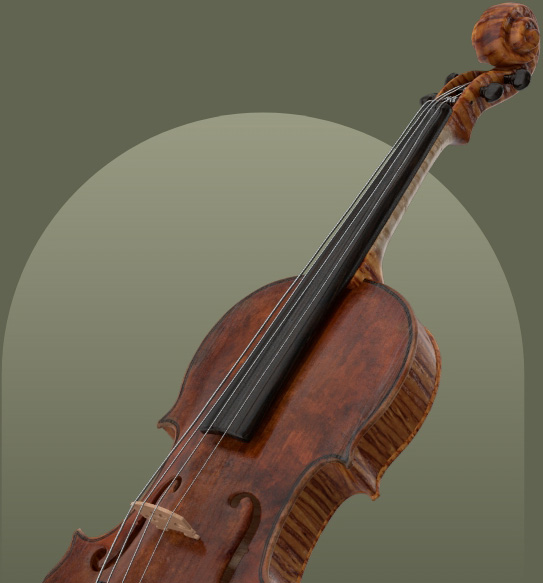
Pieter Rombouts (1667-1728) was an influential Dutch luthier from Amsterdam, known for his fine craftsmanship and independent style. As the pupil and step-son of Hendrik Jacobs, he initially worked in Jacobs' workshop before establishing his own, producing a wide range of instruments including violins, violas, cellos, and viols. He developed a distinctive style characterized by broad patterns, a full arch, and a deep, thick red varnish, often incorporating Amati and Stainer models. His instruments are found in notable collections and museums, reflecting his significant contribution to violin making.
Request an expert valuation or learn how our global auctions achieve the highest prices for your instruments.
Auction Price History
Highest auction price
9 results
| Type | Details | Auction house | Sold | Price |
|---|---|---|---|---|
| Cello | Eugène Isaye collection, labelled M. Albani, many restorations, some pachts including to back sound post Lot 120 | — | December 2021 | £43,271est. € 30.000-40.000 |
| Violin | Labelled HENDRIK JACOBES / Me fecit in Amsterdam / 1712 Lot 91 | — | May 2016 | £9,267est. $ 10,000-15,000 |
| Violin | Labelled Pieter Rombouts, Amsterdam, 1713 Lot 270 | — | May 2014 | £21,232est. $ 30,000-50,000 |
| Cello | Bearing a repair label by Mennegand in Amsterdam, back and ribs worm Lot 175 | — | December 2012 | £29,269est. € 20.000-25.000 |
| Violin | 65.5 cm Amsterdam, 1708, Tenor Viola D'Gamba | — | October 2009 | £134,500 |
| Violin | Amsterdam, 1700 c. | — | November 2005 | £7,106 |
| Violin | Workshop | — | November 2005 | £3,216 |
| Violin | 1701 | — | March 2000 | £6,325 |
| Violin | 1700 | — | March 2000 | £10,350 |
No results match those filters.
Maker Overview
Life
Pieter ROMBOUTS (1667-1728) was born in 1667 and died in 1728 in Amsterdam, Netherlands. Sources contain conflicting information regarding his active period; John Dilworth states his life dates as 1667-1728, while Cecie Stainer indicates he was active in Amsterdam about 1705-35. He was the pupil and step-son of Hendrik Jacobs, and was active in Jacobs' workshop from approximately 1685. Rombouts later established himself independently, first in Sint Antoniessbreestraat, and subsequently in Botermarkt. His workshop continued in business after his death.
Characteristics
- Instruments Made
- Pieter Rombouts independently made violins, violas, cellos, pochettes, and viols. Cecie Stainer also mentions six-stringed bass viols, while Willibald Leo Lütgendorff notes Kniegeigen (knee fiddles), Gamben (viols), and Nonnengeigen (nuns' fiddles). Most, if not all, cellos bearing the Jacobs label can be ascribed to Rombouts.
- Craftsmanship
- His work is characterized by very fine craftsmanship and neat finish (Cecie Stainer). Willibald Leo Lütgendorff describes his work as sorgfältig (careful).
- Varnish
- He developed a style featuring a deep, thick red varnish. Other descriptions include "brilliant but rather thick varnish" (Cecie Stainer), "flaky" (George Hart), and "bei aller Leuchtkraft etwas zu dick" (despite all luminosity, somewhat too thick) (Willibald Leo Lütgendorff).
- Models and Design
- Early work was similar to Jacobs', but he developed a more independent style. He utilized both Amati and later Stainer models. His instruments generally feature quite broad patterns and a full arch. The soundholes are widely spaced. The whalebone purfling is very wide and set quite close to the edge in a deep channel. Corners are relatively short. The scrolls have a tight, well-regulated volute with an extended final turn. The pegbox is deeply fluted and broad across the back. Some instruments feature carved lion heads.
Influence and legacy
- Mentorship: Pieter Rombouts was the pupil and step-son of Hendrik Jacobs. His early work showed similarities to Jacobs' style.
- Assistants: He was possibly assisted by H. Ravekens and C. Beeringer in his workshop.
- Collections and Museums: A violin from 1712 was part of the Scheurleer collection. Berlin possesses a Kniegeige from 1708. The Selhof'sche Auctionsverzeichniss (1759) lists three Kniegeigen by him from the years 1703, 1719, and 1720. Gamben and Nonnengeigen by Rombouts are housed in the Museum des Liceo filarm. in Bologna, and a Nonnengeige is in the same museum in Naples.
Biographies
The overview above is drawn from the following published accounts. Read them in the original:
John Dilworth+
ROMBOUTS, Pieter Born 1667, died 1728 Amsterdam Netherlands. Pupil and step-son of Hendrik Jacobs. Active in his workshop from c.1685. Most if not all cellos with the Jacobs label can be ascribed to Rombouts. Established in Sint Antoniessbreestraat, later Botermarkt. Independently made violins, violas, cellos, pochettes, and viols. Possibly assisted himself by H. Ravekens and C. Beeringer; the workshop certainly continued in business after his death. Very fine craftsmanship. Early work similar to Jacobs, but developed a more independent style with deep thick red varnish. Amati and later Stainer models. Generally quite broad patterns. Full arch. Soundholes widely spaced. Whalebone purfling very wide and set quite close to the edge in a deep channel. Corners relatively short. The scrolls have a tight well regulated volute with extended final turn. Pegbox deeply fluted and broad across the back. Some instruments with carved lion heads. Pieter Rombouts Amsterdam. 1714
Cecie Stainer+
A maker in Amsterdam about 1705-35 He made violins, violas, and violoncellos, much arched, with a brilliant but rather thick varnish. In a six-stringed bass viol, of which the work shows neat finish, was the label : “Pieter Rombouts, Amsterdam, 1708.”
George Hart+
High model, varnish of much brilliancy, but flaky.
Willibald Leo Lütgendorff+
Ein sehr tüchtiger Meister, der alle Arten von Geigen machte. Seine Arbeit ist sorgfältig, nur sein Lack bei aller Leuchtkraft etwas zu dick. Zur Einlage nahm er gerne Fischbein. Eine Violine von 1712 war in der Sammlung Scheurleer, eine Kniegeige von 1708 besitzt Berlin; auch das Selhof’sche Auctionsverzeichniss (1759) weist drei Kniegeigen von ihm aus den Jahren 1703, 1719 und 1720 auf. Gamben und Nonnengeigen von ihm sind ferner im Museum des Liceo filarm. in Bologna und eine Nonnengeige im gleichem Museum in Neapel.
Sell your instrument with Amati
Get started by uploading photos of your instrument for our experts to review.
Sell your instrument with Amati
Get started by uploading photos of your instrument for our experts to review.