Johann Paul Schorn
Salzburg
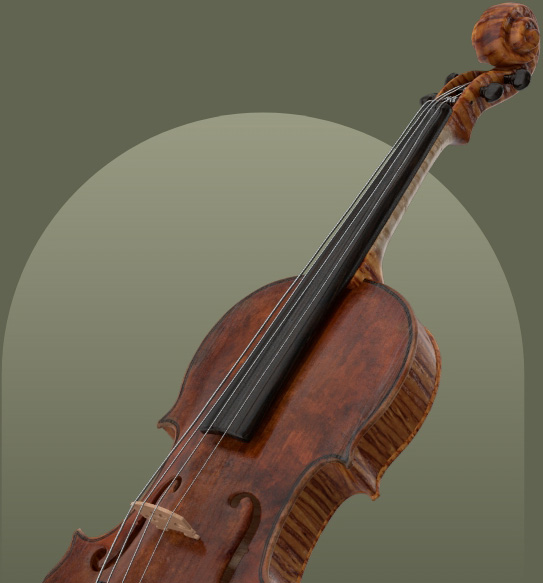
Johann Paul Schorn was an Austrian musician and luthier active in Innsbruck and Salzburg from the mid-17th to early 18th century. He is known for crafting a variety of stringed instruments, including violins, lutes, and viole d'amore, often producing fine Stainer copies with a high-arched model and good golden-brown varnish. His work shows stylistic similarities to Albani. Several of his instruments are preserved in prominent museums, and a pochette and a Brettlgeige are famously associated with Wolfgang Amadeus Mozart.
Auction Price History
Highest auction price
4 results
| Type | Details | Auction house | Sold | Price |
|---|---|---|---|---|
| Violin | Labelled Jacobus Stainer in Absom, prope Oenipontum ... 167... Lot 63 | Tarisio | March 2025 | £20,400est. £ 4,000-6,000 |
| Violin | Labelled Widhalm, some restorations Lot 18 | — | December 2022 | £5,291est. € 4.000-5.000 |
| Violin | 35.3 cm Salzbourg, 1715 - 1720 c. (replace head) | — | December 2006 | £5,992 |
| Violin | 1720 c. | — | March 1993 | £2,860 |
No results match those filters.
Maker Overview
Life
Johann Paul SCHORN (d. after 1720) was a musician and luthier active in Innsbruck and Salzburg, Austria., he worked in Innsbruck from 1654 to 1684 and was appointed to the service of the Archbishop of Stuttgart in 1684. Sources contain conflicting information regarding his exact dates in Innsbruck, with Cecie Stainer stating he worked there from about 1680-90. He was living in Mülln, Salzburg from 1689, and returned to Salzburg around 1696-1720 as a musician to the court. Cecie Stainer indicates his Salzburg period was about 1696 to 1716. Willibald Leo Lütgendorff states he was based in Innsbruck until 1696 before entering the service of the Archbishop of Salzburg and residing in the Mülln suburb near Salzburg. Willibald Leo Lütgendorff also notes that if J. Hart distinguishes between a Jakob and a Johann Schorn, it seems to be a confusion with Jakob Schrot, and that Schorn only seems to have used both first names after Johann Joseph Schorn also began working in Salzburg.
Characteristics
- Instrument Types
- Johann Paul Schorn crafted violins, lutes, viols, viole d'amore, guitars, pochettes, and Polish cithers.
- Construction Style
- His instruments are described as fine Stainer copies with a high-modelled, pronounced arching and sweeping corners. Henri Poidras also mentions a pronounced arching.
- Varnish
- He used a good golden-brown varnish, which George Hart describes as similar to that of Albani. Willibald Leo Lütgendorff states his varnish is very good, and Cecie Stainer notes he used a fairly good varnish.
- Extant Instruments
- A violin from 1719 with a finely carved lion's head is preserved in the Cherubini Museum, Florence. A pochette dated 1695, said to have belonged to Mozart, is in the Salzburg Museum. The royal collection of old musical instruments in Berlin holds a so-called Brettlgeige, which is traditionally believed to be the violin Mozart played as a child, featuring a beautifully carved lion's head on the pegbox. A beautiful violin from 1692 is owned by the collegiate church in Laufen. The Gesellschaft der Musikfreunde in Vienna possesses an excellent viola d'amore from 1716 and a Polish zither, as well as a Polish cither dated Salzburg, 1696, and a viola d'amore dated Salzburg 1699. The Kärnthener Landesmuseum in Klagenfurt holds a viola d'amore from 1700, a violin from 1703, a violin repaired by Schorn in 1700, and a Polish zither from 1700. An instrument from 1701 is located in the städtische Museum Carolino-Augusteum in Salzburg.
- Joannes Schorn fecit
in Mülln prope Salisburg
Anno 1688John Dilworth - Johannes Schorn
Salisburgiensis, 1695John Dilworth - Joann Paul Schorn
H.F. Musicus auch Lauten
und Geigenmacher in Salzburg
Ao. 1716John Dilworth - Joannes Schorn H.F. Musicus
und Laudenmacher-Salisburgi
1719John Dilworth - Joannes Schorn, Hoff Lauten
und Geigenmacher. Salisburgi
1708John Dilworth
Influence and legacy
- Stylistic Influences: His work is closely related to that of Albani, with his model being high-arched and his varnish similar to Albani's. He also produced fine Stainer copies.
- Notable Associations: A pochette dated 1695 in the Salzburg Museum is said to have belonged to Mozart. The royal collection of old musical instruments in Berlin preserves a Brettlgeige, which is traditionally believed to be the violin on which Mozart played as a child.
- Museum Holdings: Instruments by Schorn are held in significant collections including the Cherubini Museum in Florence, the Salzburg Museum, the royal collection of old musical instruments in Berlin, the Stiftskirche in Laufen, the Gesellschaft der Musikfreunde in Vienna, the Kärnthener Landesmuseum in Klagenfurt, and the städtische Museum Carolino-Augusteum in Salzburg.
Further Information
- Labels: His labels often varied in wording, including examples such as "Joannes Schorn fecit / in Mülln prope Salisburg / Anno 1688", "Johannes Schorn / Salisburgiensis, 1695", "Joann Paul Schorn / H.F. Musicus auch Lauten / und Geigenmacher in Salzburg / Ao. 1716", "Joannes Schorn H.F. Musicus / und Laudenmacher-Salisburgi / 1719", and "Joannes Schorn, Hoff Lauten / und Geigenmacher. Salisburgi / 1708".
- Workshop Locations: He worked in Innsbruck and later resided in Mülln near Salzburg, and then in Salzburg itself.
Biographies
The overview above is drawn from the following published accounts. Read them in the original:
John Dilworth+
SCHORN, Johann Paul Worked from 1654 Innsbruck, d. after 1720 Salzburg Austria. Musician and luthier active in Innsbruck, 1654-1684. Appointed to the service of the Archbishop of Stuttgart in 1684. According to labels, living in Mülln, Salzburg from 1689, and returning to Salzburg c.1696-1720 as musician to the court. Fine Stainer copies with good golden-brown varnish. Violin of 1719 in the Cherubini Museum, Florence with finely carved lion’s head. Pochette dated 1695, said to have belonged to Mozart, in the Salzburg Museum. Lutes, viol, viole d’amore and guitars also extant. Joannes Schorn fecit / in Mülln prope Salisburg / Anno 1688 Johannes Schorn / Salisburgiensis, 1695 Joann Paul Schorn / H.F. Musicus auch Lauten / und Geigenmacher in Salzburg / Ao. 1716 Joannes Schorn H.F. Musicus / und Laudenmacher-Salisburgi / 1719 Joannes Schorn, Hoff Lauten / und Geigenmacher. Salisburgi / 1708
Cecie Stainer+
Worked first in Innsbruck about 1680-90, then in Salzburg about 1696 to 1716, according to labels so dated found in his instruments. He made excellent violins, much arched, and used a fairly good varnish. In the Collection of the Gesellschaft der Musikfreunde in Vienna are two instruments, a Polish cither dated Salzburg, 1696, and a viola d’amore dated Salzburg 1699. Label: ” Joann Paul Schorn, H. F Musicus, auch Lauten und Geigenmacher in Salzburg, A. 1716.”
George Hart+
An excellent maker; the varnish is similar to that of Albani; high modelled. He appears to have removed to Salzburg. There are Viols of his make dated from there in 1696 and 1699.
Willibald Leo Lütgendorff+
Er war Musiker und Lautenmacher und war bis 1696 in Innsbruck ansässig. Er trat dann in die Dienste des Erzbischofs von Salzburg und wohnte in der Vorstadt Mülln bei Salzburg. Seine Arbeit ist der von Albani nahestehend, sein Modell ist hochgewölbt, hat schwungvolle Ecken, sein Lack ist sehr gut. Die königl. Sammlung alter Musikinstrumente in Berlin bewahrt von ihm eine sog. Brettlgeige, die als die Geige, auf der Mozart als Kind spielte, überliefert worden ist. Am Wirbelkasten befindet sich ein schön geschnitzter Löwenkopf. Eine schöne Violine von ihm aus dem Jahre 1692 besitzt die Stiftskirche in Laufen, eine vorzügliche Viola d’ amore von 1716 und eine polnische Zither die Gesellschaft der Musikfreunde in Wien, eine Viola d’ amore von 1700, eine Violine von 1703, eine von Schorn 1700 reparirte Violine und eine polnische Zither von 1700 das Kärnthener Landesmuseum in Klagenfurt und ein Instrument von 1701 das städtische Museum Carolino-Augusteum in Salzburg. — Wenn J. Hart einen Jakob und einen Johann Schorn unterscheidet, so scheint ihm eine Verwechslung mit Jakob Schrot untergelaufen zu sein. Da Schorn die meisten Zettel schrieb, haben sie einen oft wechselnden Wortlaut. Die beiden Vornamen scheint er erst angewandt zu haben, nachdem auch Johann Joseph Schorn in Salzburg arbeitete.
Henri Poidras+
Make not devoid of qualities. Good varnish. Albani model. Pronounced arching.
Sell your instrument with Amati
Get started by uploading photos of your instrument for our experts to review.
Sell your instrument with Amati
Get started by uploading photos of your instrument for our experts to review.