Paolo Antonio Testore
Milan, c.1690–1767
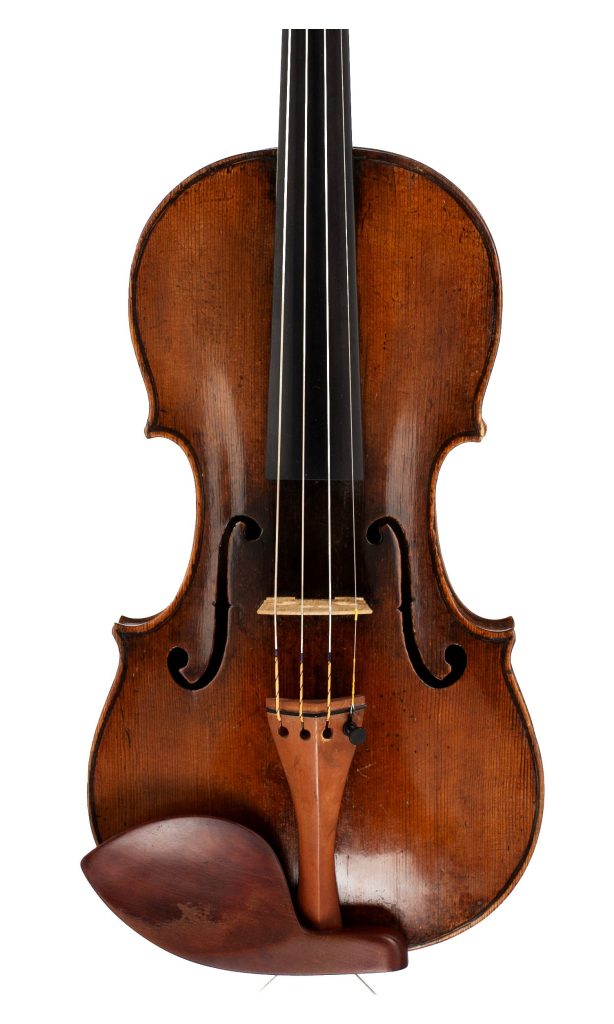
Paolo Antonio Testore (circa 1690-1767) was a Milanese luthier, the son and pupil of Carlo Giuseppe Testore, and the last violin maker of his family. He worked with his brother, Carlo Antonio, until 1710 before continuing independently. While known for prolific output and a focus on lutes and guitars, his violins often exhibited a less refined craftsmanship, characterized by shortcuts like scratched purfling and poor wood, though some possess an excellent and powerful tone. He frequently copied the Guarneri model and used a range of yellow to brown varnishes. His workshop was located in Contrada Larga di Milano.
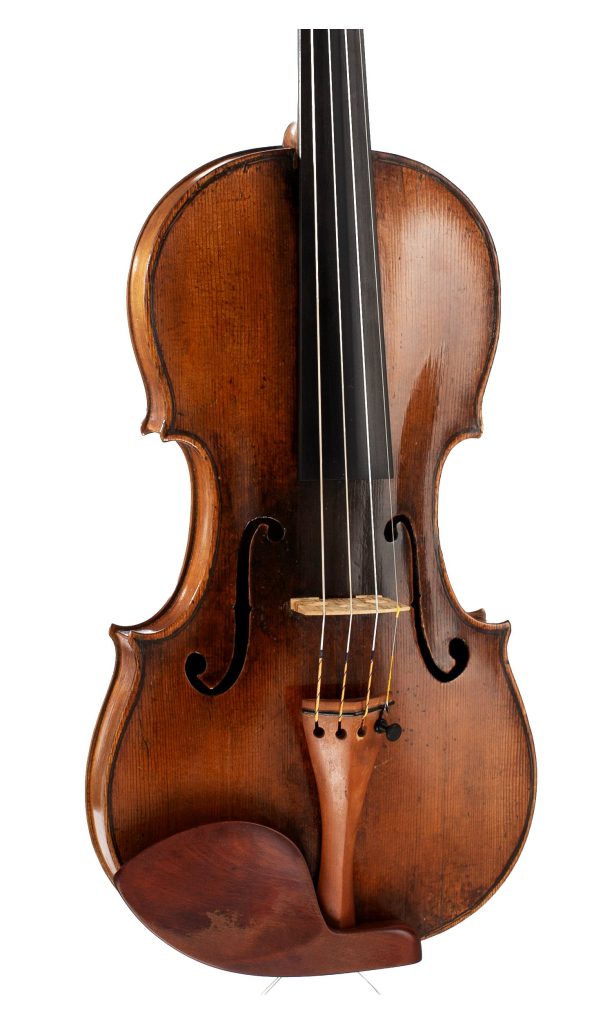
Instruments
Auction Price History
Highest auction price
35 results
| Type | Details | Auction house | Sold | Price |
|---|---|---|---|---|
| Violin | Labelled Carlo Giuseppe Testore in Con-, trada Larga di Milano al, Segno dell'Aquila 1690 Lot 106 | Tarisio | May 2024 | £55,805est. € 55.000-85.000 |
| Violin | A violin by Paulo Antonio Testore, Milan, circa 1730 Lot 88 | Amati | March 2024 | £75,840est. £ 30,000-50,000 |
| Violin | Table and head of Italian school in the late 19th C., not original varnish, fair condition Lot 343 | — | October 2023 | £9,485est. € 5.500-6.500 |
| Violin | A violin by Paolo Antonio Testore, Milan, circa 1730 Lot 60 | Amati | January 2023 | £47,400est. £ 30,000-50,000 |
| Viola | Labelled Paolo Antonio Testore figlio di Carlo Giuseppe Testore in Contrada Larga di Milano al ... Lot 108 | — | June 2019 | £78,000est. £ 65,000-85,000 |
| Violin | Labelled Paolo Antonio Testore figlio, di Carlo Giuseppe Testore ..., varnish to the back somewhat redone Lot 196 | — | May 2019 | £65,209est. $ 60,000-90,000 |
| Violin | Labelled Paolo Antonio ..., sound post patch to top, multiple repaired top cracks, volute pinned to head Lot 129 | — | November 2018 | £28,421est. $ 40,000-60,000 |
| Small Violoncello | Labelled Paolo Antonio Testore figlio di Carlo Giuseppe Testore, in Contrada Larga di Milano al ... Lot 72 | — | May 2017 | £136,403est. $ 150,000-220,000 |
| Viola | Minor repairs to table and back, sound post crack in back with patch, small worm channel in back Lot 106 | — | June 2016 | £36,000est. £ 30,000-50,000 |
| Violin | Labelled Paolo Antonio Testore figlio di Carlo Giuseppe Testore in Contrada Larga di Mila-no al ... Lot 246 | — | November 2015 | £36,000est. £ 30,000-40,000 |
| Violin | Property of the late Evelyn Shotter, bearing the original label Paolo Antonio Testore figlio Carlo ... Lot 110 | — | March 2015 | £42,000est. £ 40,000-60,000 |
| Viola | 39.5 cm late 19th C. Ascribed to | — | December 2011 | £13,924 |
| Violin | 35.4 cm Attributed to | — | November 2011 | £24,434 |
| Violin | Lot 112 | Bonhams | October 2011 | £10,000 |
| Violin | 35.8 cm Milan, 1740 c. | — | May 2011 | £58,591 |
| Violin | 35.7 cm Milan, 1749 | — | April 2011 | £62,707 |
| Violin | 35.5 cm Milan, 1740 c. | — | March 2011 | £34,850 |
| Violin | 35.8 cm Milan, 1750 c. | — | March 2010 | £37,250 |
| Violin | 35.6 cm Attributed to | — | May 2007 | £3,168 |
| Violin | 35.5 cm Milan, 1750 c. | — | November 2006 | £37,592 |
| Violin | 35.7 cm Milano, 1730 c. | — | October 2006 | £19,406 |
| Violin | 35.8 cm Milan, 1730 c. | — | May 2006 | £22,994 |
| Violin | 35.7 cm Mid-18th C. Ascribed to | — | February 2006 | £4,800 |
| Violin | Milan, 1720 c. Attributed to | — | November 2004 | £19,200 |
| Violin | 1760 | — | November 2000 | £5,290 |
| Violin | 1750 c. | — | March 1997 | £8,625 |
| Viola | 40.5 cm 1717 | — | March 1995 | £78,500 |
| Violin | 1740 | — | May 1989 | £17,600 |
| Violin | 1725-50 | — | March 1989 | £15,400 |
| Violin | 1750 c. | — | March 1989 | £15,400 |
| Violin | 1720 c. | — | November 1986 | £9,900 |
| Cello | 1750 c. | — | November 1985 | £9,350 |
| Cello | 1737 | — | December 1984 | £11,092 |
| Violin | 1734 | — | May 1983 | £1,650 |
| Violin | 1746 | — | May 1980 | £3,520 |
No results match those filters.
Maker Overview
Life
Paolo Antonio Testore (circa 1690-1767) was born around 1690 and died in 1767 in Milan, Italy. He was the son, pupil, and successor of Carlo Giuseppe Testore. Karel Jalovec notes that he produced cheaper instruments in company with his brother, Carlo Antonio Testore, with whom he worked until 1710. After this period, he continued working alone. Lütgendorff also indicates that he was very diligent but focused more on making lutes and guitars, which is corroborated by Stainer, who mentions that his guitars, in particular, are considered among the most beautiful known. While he was a prolific craftsman, only a few of his specimens achieved a fine finish.
Characteristics
- Workmanship
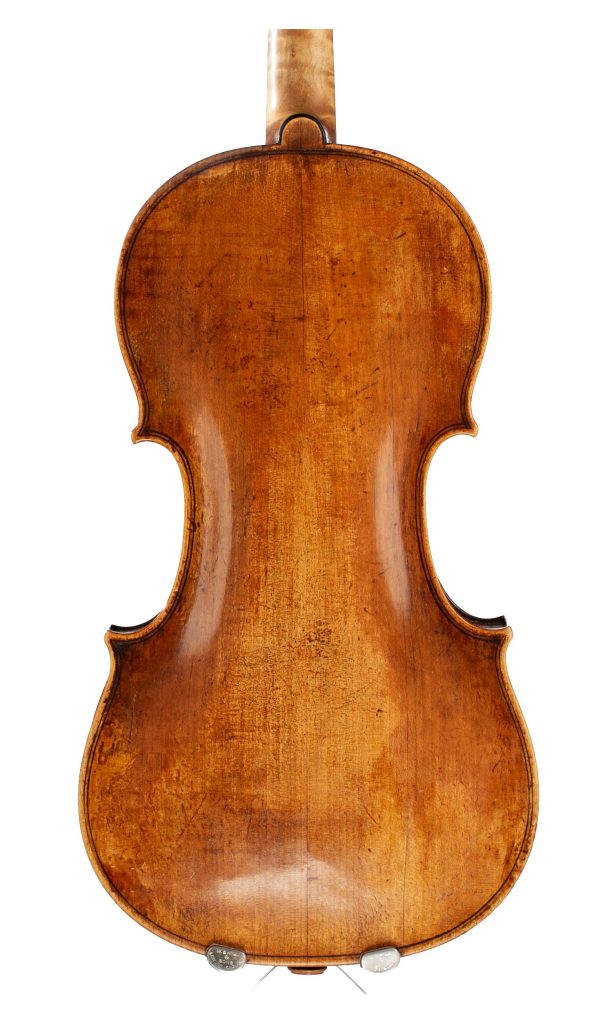
- John Dilworth describes Paolo Antonio Testore as the least adept maker of his family, often producing quite coarse and sometimes very high-arched instruments. He frequently took shortcuts, including scratched and inked purfling, unfluted pegboxes, and the use of poor wood. Dilworth also notes that his scrolls are remarkable for their carelessness and almost plastic quality. However, Karel Jalovec states that the arching of his instruments is beautiful. Cecie Stainer, George Hart, and Willibald Leo Lütgendorff all mention that many of his instruments were unpurfled or lacked purfling. Henri Poidras adds that his work was not as finished as that of his brother.
- Varnish
- The varnish on his instruments is described by John Dilworth as often being of a "quite poor lifeless brown colour," though occasionally it was lighter in tone with some glow. George Hart notes it was mostly yellow. Willibald Leo Lütgendorff refers to it as a "pale yellow, defective varnish," while Karel Jalovec describes it as light yellow, golden-yellow, or brown-yellow. Cecie Stainer characterizes it as lighter, yellow in color, and of inferior quality, a sentiment, who mentions a light yellow-brown varnish.
- Models
- Paolo Antonio Testore copied the Guarneri model, and Cecie Stainer.
- Tone
- Despite some of the criticisms of his craftsmanship, Karel Jalovec states that some of his instruments possess an excellent tone, a point reinforced by Henri Poidras, who describes the tone as powerful.
- Paolo Antonio Testore
Milano 17..John Dilworth - Paolo Antonio Testore figlio
di Carlo Giuseppe Testore
in Contrada Larga di Mila-
no al Segno dell’ Aquila 1759John Dilworth
Influence and legacy
- Training: Paolo Antonio Testore was the son and pupil of Carlo Giuseppe Testore.
- Assistance:, he was assisted at some point by C. F. Landolphi.
- Family Continuity: Cecie Stainer and Willibald Leo Lütgendorff identify Paolo Antonio Testore as the last violin maker of the Testore family name.
- Notable Instruments: Willibald Leo Lütgendorff mentions that Valdrighi once owned a "pretty pocket violin with golden yellow varnish from the year 1738" made by Testore.
- Market Value: Karel Jalovec indicates that his instruments commanded a price of at least 25,000 Kc.
Further Information
- Labels: His labels include "Paolo Antonio Testore / Milano 17.." and "Paolo Antonio Testore figlio / di Carlo Giuseppe Testore / in Contrada Larga di Mila- / no al Segno dell’ Aquila 1759," as cited by John Dilworth and Cecie Stainer.
- Workshop Location: His workshop was located "in Contrada Larga di Milano al Segno dell’ Aquila."
Biographies
The overview above is drawn from the following published accounts. Read them in the original:
John Dilworth+
TESTORE, Paolo Antonio Born circa. 1690, died 1767 Milan Italy. Son, pupil, and successor of Carlo Giuseppe Testore, above. The least adept maker of the family. Often quite coarse and sometimes very high-arched instruments with all short-cuts taken: scratched and inked purfling, unfluted pegbox, poor wood. The varnish may be of quite poor lifeless brown colour, but occasionally is lighter in tone and has some glow. The scrolls are in themselves remarkable for their carelessness and almost plastic quality. Assisted at some point by C. F. Landolphi. Paolo Antonio Testore / Milano 17.. Paolo Antonio Testore figlio / di Carlo Giuseppe Testore / in Contrada Larga di Mila- / no al Segno dell’ Aquila 1759
Cecie Stainer+
Second son of Carlo Giuseppe Testore and the last maker of this name. First worked with his brother. Carlo Antonio, but separated from him about 1710, and continued working alone till about 1760. He made a great many instruments, but did not do such good work as his father; the varnish is lighter, a yellow colour, and of inferior quality. Few of his violins are known, they are not much arched, without purfling, and follow the Guarneri pattern. He made many good lutes and guitars, the latter, especially, being some of the most beautiful known. Labels : ” Paolo Antonio Testore, Milan, 17—,” and ” Paolo Antonio Testore figlio di Carlo Giuseppe Testore in Contrada larga di Milano al segno dell aquila, 1759″
George Hart+
Brother of Carlo Antonio. Copied Guarneri. The varnish is mostly yellow ; frequently unpurfled.
Willibald Leo Lütgendorff+
Jüngerer Sohn von Carlo Gius. T. Bis 1710 arbeitete er mit seinem Bruder zusammen und von da an allein; er war sehr fleissig, hat sich jedoch mehr auf das Lauten- und Guitarrenmachen verlegt, wesshalb nur wenige Geigen von ihm vorkommen. Als Geigenmacher erreicht er seinen Vater nicht. Er ahmt das Guarneri-Modell nach, lässt aber die Einlage fehlen und verwendet einen blassgelben, mangelhaften Lack. Er ist der letzte Geigenmacher aus der Familie. Eine hübsche Taschengeige mit goldgelbem Lack aus dem Jahre 1738 besass Valdrighi.
Henri Poidras+
Son of Carlo Giuseppe. His work is not so finished as that of his brother with whom he worked until 1710. His instruments are not scarce; many are unpurfled. Light yellow-brown varnish. Powerful tone.
Karel Jalovec+
Milan. Born about 1690, died after 1750. Son of Carlo Giuseppe Testore. Produced cheaper instruments in company with his brother, somewhat on the pattern of Gius. Guarneri del Gesu, He was a prolific craftsman and a real master, but only a few specimens have a fine finish. The arching of his instruments is beautiful. He applied a light yellow, golden-yellow or brown-yellow varnish. With his brother he worked up to the year 1710. Some of his instruments have, nevertheless, an excellent tone. Price 25.000 Kc at least.
Sell your instrument with Amati
Get started by uploading photos of your instrument for our experts to review.
Sell your instrument with Amati
Get started by uploading photos of your instrument for our experts to review.