Jacques-Pierre Thibout
Paris, 1779–1856
Jacques-Pierre THIBOUT (1777-1856) was a prominent French luthier born in Caen and active in Paris. After training with Koliker, he established his own workshop, notably at 8 rue Rameau under the sign 'Au Roi David'. He held prestigious appointments as luthier to the Opéra, conservatoire, and royal court. Thibout was instrumental in bringing rare Italian instruments to Paris through his encouragement of Luigi Tarisio. Known for his experimentation with Stradivari and Lupot-style models, his instruments are highly esteemed for their first-class materials, beautiful workmanship, and excellent varnish, often compared to the best Italian work. He received multiple medals at Paris expositions and his work is represented in the Paris Conservatorium Museum.
Request an expert valuation or learn how our global auctions achieve the highest prices for your instruments.
Instruments
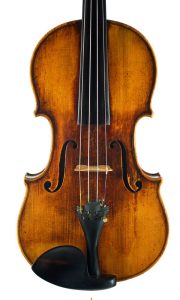
Auction Price History
Highest auction price
36 results
| Type | Details | Auction house | Sold | Price |
|---|---|---|---|---|
| Violin | Bearing the maker's label, fair condition Lot 175 | Laurent | June 2024 | £36,164est. € 15.000-20.000 |
| Violin | Labelled J.P. Thibout Lot 325 | Vichy | November 2023 | £16,684est. € 15.000-18.000 |
| Violin | Bearing the maker's label Lot 353 | Vichy | November 2023 | £18,812est. € 15.000-18.000 |
| Violin | Bearing the maker's label Lot 313 | Vichy | December 2021 | £4,222est. € 4.000-5.000 |
| Violin | Bearing the maker's label Lot 270 | Vichy | December 2020 | £22,399est. € 15.000-20.000 |
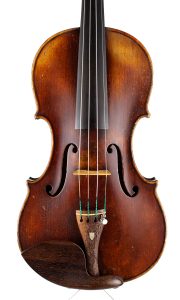
| Violin | A violin by Jacques-Pierre Thibout, Paris, 1837 Lot 86 | Amati | March 2020 | £26,544est. £ 10,000-15,000 |
| Violin | Bearing the maker's label Lot 225 | Vichy | June 2019 | £19,131est. € 20.000-25.000 |
| Violin | Labelled J.B. Vuillaume Lot 16 | Tarn | December 2017 | £4,277est. € 2.500-3.000 |
| Violin | Labelled Nouveau procédé approuvé par l'institut, Thibout luthier du Roi, rue Rameau no.8 à Paris 1845 Lot 181 | Tarisio | March 2017 | £26,400est. £ 18,000-22,000 |
| Violin | Labelled Lupot Lot 260 | Vichy | December 2016 | £8,022est. € 10.000-12.000 |
| Violin | Bearing an original label Lot 73 | Brompton’s | March 2016 | £12,000est. £ 10,000-15,000 |
| Violin | Labelled Thibout, Luthier, rue Rameau, No. 8, pres l'Opera, a Paris, 1821, signed Lot 81 | Brompton’s | March 2016 | £21,600est. £ 18,000-25,000 |
| Violin | Bearing the maker's label Lot 75 | Vichy | June 2015 | £14,890est. € 18.000-20.000 |
| Violin | Bearing an original label Lot 287 | Brompton’s | March 2013 | £12,000est. £ 12,000-18,000 |
| Violin | Lot 19 | Bonhams | March 2012 | £6,875 |
| Violin | Labelled by the maker, some bold narrow curl and medium grain, of an orange brown colour Lot 19 | Bonhams | March 2012 | £6,875est. £ 6,000-8,000 |
| Violin | 35.7 cm Paris, 1829 | — | June 2011 | £18,185 |
| Violin | 35.7 cm Paris, 1825 | — | March 2010 | £10,000 |
| Violin | 35.8 cm Paris, 1829 | — | June 2009 | £17,632 |
| Violin | Paris, 1840 c. | — | February 2005 | £9,560 |
| Violin | 1837 | — | December 2002 | £7,037 |
| Violin | 1827 | — | March 2002 | £9,000 |
| Violin | 1820 | — | November 2001 | £3,800 |
| Violin | 1821 | — | March 2001 | £8,225 |
| Cello | 1855 | — | November 2000 | £34,500 |
| Violin | 1844 | — | June 1998 | £9,775 |
| Violin | 1830 | — | November 1997 | £7,475 |
| Violin | 1840 | — | March 1997 | £13,225 |
| Cello | 1854 | — | March 1996 | £12,650 |
| Violin | 18-- | — | October 1994 | £2,875 |
| Violin | 1820 c. | — | March 1990 | £2,750 |
| Violin | 1829 | — | June 1989 | £12,100 |
| Viola | 38.1 cm 1822 | — | March 1988 | £2,420 |
| Violin | 1827 | — | December 1982 | £3,740 |
| Violin | 1845 | — | November 1981 | £3,300 |
| Violin | 1800-50 | — | January 1981 | £2,933 |
No results match those filters.
Maker Overview
Life
Jacques-Pierre THIBOUT (b. September 16, 1777, Caen; d. December 4, 1856, Saint-Mandé, near Paris) first worked in Caen before moving to Paris in 1796, where he worked for Koliker. He married in 1800 and established his own independent workshop in 1807 at 24 rue Montmartre. In 1810, he relocated his business to 8 rue Rameau, operating under the sign 'Au Roi David'. Thibout was appointed luthier to the Opéra, the conservatoire, and the royal court, and was also known as 'luthier de l'Académie Royale de Musique' and 'luthier du roi'. was a well-known dealer in rare Italian instruments and played a crucial role in encouraging Luigi Tarisio to bring his Cremonese instruments to Paris, prevailing upon him to visit the French capital with his valuable wares. His son, Gabriel Eugène Thibout, assisted him in his work.
Characteristics
- Models
- Thibout's instruments often followed Stradivari models in the style of Lupot, though he also developed his own model. He was known for constant experimentation with both model and varnish, which sometimes led to inconsistency in his work.
- Workmanship
- He was considered an excellent workman, and his instruments are highly esteemed. His work is described as uncommonly clean and beautiful, with some of his instruments being among the finest of the French School. However, some pieces have a heavy aspect, mainly due to flattened ribs at their junction with the corners. He employed a specific treatment of the sides to achieve an improved pattern and excellent tone quality.
- Materials
- He utilized first-class materials in his instrument construction.
- Varnish
- Thibout used a wide range of colors for his varnish, often described as excellent. Notable examples include a red varnish on an amber ground, and a rich coloring on two magnificent violins. The varnish is sometimes described as amber on a reddish ground.
- Innovation
- He was associated with a 'nouveau procédé approuvé par l’Institut' (new process approved by the Institute).
- Reputation
- His best instruments are of a very high order and were often given false Lupot labels due to their quality. His instruments' workmanship and varnish were so beautiful that they could bear comparison with the best Italian work.
- Specialization
- He was also a significant bridge carver.
- Nouveau procédé approuvé par l’Institut
Thibout, Luthier, rue Rameau
No. 8, à Paris, 1835John Dilworth - T.J.P. Au Roi David
Thibout, Luthier de l’Académie Royale de Musique
Rue Rameau, No. 8, à ParisJohn Dilworth
Influence and legacy
- Training: Jacques-Pierre Thibout worked under Koliker in Paris starting in 1796, where he developed into a very fine connoisseur.
- Awards: Thibout received several accolades, including medals in the Paris expositions of 1827, 1844, and 1855. Specifically, he was awarded a silver medal in 1827, another silver medal in 1844, and a first-class medal at the Paris Exhibition in 1855 for an excellent violoncello.
- Museum Collections: A particularly excellent instrument by Thibout (No. 45) is housed in the Museum of the Paris Conservatorium.
- Family Continuity: His son, Gabriel Eugène Thibout, assisted him in his workshop.
Further Information
- Workshop Locations: He first established his independent workshop at 24 rue Montmartre in Paris, moving to 8 rue Rameau in 1810.
- Workshop Sign: His workshop at rue Rameau operated under the sign 'Au Roi David'.
- Labels: Examples of his labels include: 'Nouveau procédé approuvé par l’Institut / Thibout, Luthier, rue Rameau / No. 8, à Paris, 1835 T.J.P.'; 'Au Roi David / Thibout, Luthier de l’Académie Royale de Musique / Rue Rameau, No. 8, à Paris'; and 'Nouveau procede approuve par l’Institut. Thibout, luthier du roi, rue Rameau, no. 8, a Paris, 1825.'
- Historical Value: His violins quickly gained notice, with prices ranging from £10 to £14, which was considered high for the period. Later, his instruments were valued at approximately 1000 Marks.
Biographies
The overview above is drawn from the following published accounts. Read them in the original:
John Dilworth+
Jacques-Pierre Born 1779 Caen, died 1856 Paris. Worked for Koliker in Paris from 1796. Established independently there at 24 rue Montmartre in 1807. Moved to the rue Rameau 1810, at the sign ‘Au Roi David’. Appointed luthier to the Opéra, conservatoire, and royal court. Awarded medals in the Paris expositions of 1827, 1844, and 1855. Assisted by his son Gabriel Eugène Thibout, above. Stradivari models in the Lupot style, although inconsistent. Experimented constantly with model and varnish, but the best are of a very high order and often given false Lupot labels. First class materials. Nouveau procédé approuvé par l’Institut / Thibout, Luthier, rue Rameau / No. 8, à Paris, 1835 T.J.P. Au Roi David / Thibout, Luthier de l’Académie Royale de Musique / Rue Rameau, No. 8, à Paris
Cecie Stainer+
b. Sept 16, 1777, at Caen ; d. Dec. 4, 1856, at Saint-Mande, near Paris. First worked at Caen, then, in 1796, under Koliker at Paris; was married in 1800, and in 1807 established himself at 24, rue Montmartre, after 1810 moving to 8, rue Rameau. He was a remarkable maker and his instruments are much liked ; his violins soon came into notice, for by a certain treatment of the sides he gained an improvement in the pattern which produced an excellent quality of tone. The price varied from £10 to ; £14, relatively high for that period, but greatly below their present value. The workmanship and varnish were so beautiful that his instruments will bear comparison with the best Italian work ; two magnificent violins of his show peculiar richness of colouring in the varnish—a red on an amber ground. He was awarded a silver medal, 1827 ; a silver medal, 1844 ; and a first class medal at the Paris Exhibition in 1855 for an excellent violoncello. Label; ” Nouveau procede approuve par l’Institut. Thibout, luthier du roi, rue Rameau, no. 8, a Paris, 1825.”
George Hart+
A well-known dealer in rare Italian instruments. To him belongs the merit of having encouraged Luigi Tarisio to bring to Paris his Cremonese gems. When Tarisio paid his first visit to Paris, the reception that he met with was not of such a nature as to warrant his returning ; but having ultimately decided upon once more visiting the French capital, he met with Thibout, who, by earnest solicitation, prevailed on him to remove his rich wares to Paris. Jacques Pierre Thibout was an excellent workman, and his instruments are highly esteemed.
Willibald Leo Lütgendorff+
Wahrscheinlich ein Sohn von »Thibout fils«. Er kam 1796 nach Paris, wo er bei Koliker arbeitete. Er verheirathete sich 1800 und eröffnete 1807 in der Rue Montmartre No. 24 seine eigene Werkstatt, die er 1810 in die Rue Rameau No. 8 verlegte, wo er das Ladenschild »Au Roi David« führte, Er war der bedeutendste Geigenmacher seiner Familie und hatte sich bei Koliker zu einem sehr feinen Kenner entwickelt. Er bildete sich ein eigenes Modell; seine Arbeit ist ungemein sauber und schön, der Lack (Bernstein auf röthlichem Grund) vortrefflich und der Ton fast den Italienern gleich, so dass seine Violinen schon jetzt durchschnittlich mit 1000 M. bezahlt werden. Auch als Stegschnitzer war er von Bedeutung. Er besass viele Medaillen und Auszeichnungen und war »luthier de 1’Académic royale de musique«. Ein ganz vorzügliches Instrument von ihm besitzt das Museum des Pariser Conservatoriums (No. 45).
Henri Poidras+
Born at Caen. « Au Roi David ». Pupil of Koliker. Some instruments by this master maker are among the finest of the French School. In spite of the fact that he has been unequal in his work and has varied his patterns and varnishes, he always claims attention. If some of his instruments have a heavy aspect, it is mainly due to the flattened ribs at their junction with the corners. For his varnish, he has used the whole range of colours. He was established rue Rameau.
Sell your instrument with Amati
Get started by uploading photos of your instrument for our experts to review.
Sell your instrument with Amati
Get started by uploading photos of your instrument for our experts to review.