Martin Leopold (Leopold II) Widhalm
Nuremberg, 1747–1806
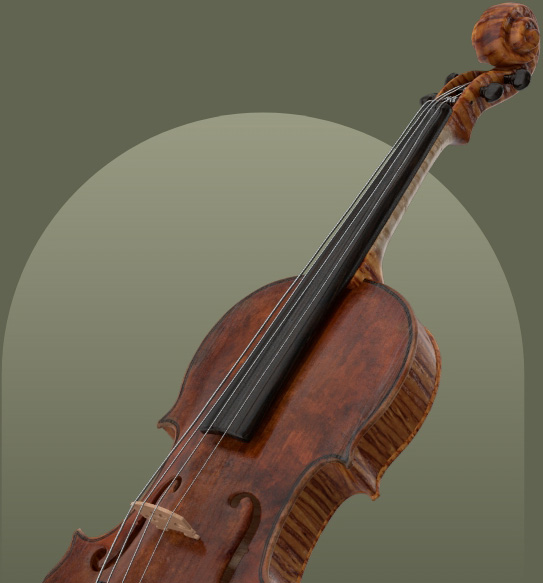
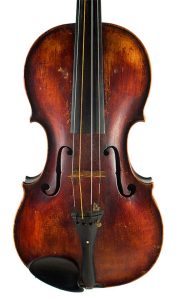
Martin Leopold (Leopold II) WIDHALM (1747-1806) was a prominent German luthier from Nuremberg, known for his diligent craftsmanship and instruments inspired by Jacob Stainer. As the son and pupil of Leopold Widhalm, he continued the family tradition, producing violins, lutes, harps, and violas. His work is characterized by clean execution, elegant arching, and a distinctive dark reddish-brown or pale red varnish. Despite some conflicting historical dates, his instruments, often branded 'L. W.', remain highly regarded and are found in significant collections.
Request an expert valuation or learn how our global auctions achieve the highest prices for your instruments.
Auction Price History
Highest auction price
27 results
| Type | Details | Auction house | Sold | Price |
|---|---|---|---|---|
| Violin | Labelled Widhalm geigenmacher in ..., one-piece back, varnish of a dark brown colour, partially restored Lot 2840 | Hargesheim. | March 2026 | £5,306est. Estimate € 5.000 |
| Violin | Labelled Leopold Widhalm Lauten-und Geigenmacher in Nürnberg. fecit A. 1793 and Repariert von K. ... Lot 155 | Tarisio | May 2025 | £7,571est. $ 8,000-12,000 |
| Violin | Labelled Leopold Widhalm, Lauten-und-Geigenmachli in Wien, Strad Model, Anno, 1929 Lot 2430 | Gardiner Houlgate | December 2022 | £732est. £ 300-500 |
| Cello | Labelled Leopold Widhalm lauten und, geigenmacher in Nürnberg fecit a 1781, branded L. W. Lot 33 | Tarisio | March 2019 | £11,800est. £ 15,000-22,000 |
| Violin | René Quenoil collection, later German head Lot 314 | Vichy | June 2017 | £11,484est. € 4.000-5.000 |
| Small Violin | 1/2 size violin, labelled Leopold Widhalm lauten-und, Geigenmacher in Nurnberg fecit a... Lot 89 | Tarisio | October 2016 | £7,200est. £ 6,000-9,000 |
| Cello | Unlabelled, branded to the inside back L.W., head later Lot 62 | Tarisio | October 2016 | £38,726est. $ 40,000-60,000 |
| Violin | Labelled Leopold Widhalm Lauten und Geigenmacher in Nurnberg, fecit A. 1784, branded LW Lot 150 | Tarisio | November 2015 | £5,900est. £ 8,000-12,000 |
| Violin | Labelled Leopold Widhalm Lauten- und Geigenmacher in Nurnberg, fecit A 17... Lot 194 | Tarisio | June 2015 | £4,583est. $ 2,500-4,000 |
| Violin | Labelled Leopold Widhalm lauten und geigenmacher in Nurnberg fecit A 1800 Lot 456 | Brompton’s | June 2015 | £9,000est. £ 4,000-6,000 |
| Violin | Labelled Leopold Widhalm Lauten - und Geigenmacher in Nurnberg, fecit A. 178..., branded, head later Lot 196 | Tarisio | February 2015 | £1,010est. $ 1,000-1,500 |
| Violin | Labelled Leopold Widhalm, Lauten-und-Geigen macher in ..., head later Lot 252 | Tarisio | August 2014 | £3,204est. $ 2,000-3,000 |
| Violin | Labelled Leopold Widhalm Lauten - und Geigenmacher in Nurnberg, fecit A. 1795 Lot 166 | Tarisio | June 2014 | £1,946est. $ 600-900 |
| Viola | Bearing the maker's label and brand Lot 213 | Vichy | December 2013 | £1,991est. € 2.000-2.200 |
| Violin | Labelled Lèopold Widhalm and branded L.W. Lot 305 | Vichy | June 2013 | £3,468est. € 4.000-5.000 |
| Violin | Labelled Leopold Widhalm, 1785 and Geprepareerd 1954, Jo. Stüber, Den Haag, branded L W Lot 206 | Tarisio | May 2013 | £6,550est. $ 8,000-12,000 |
| Small Violin | Small Violin, 1798 Lot 239 | Bonhams | May 2013 | £6,500est. £ 1,000-1,500 |
| Violin | Labelled Leopold Widhalm, Lauten und geigenmacher in Nürnberg, fecit A. 1817, branded L. W. Lot 255 | Tarisio | April 2012 | £4,820est. $ 5,000-8,000 |
| Violin | 35.6 cm Nuremberg, 1785 c. | — | October 2007 | £5,250 |
| Violin | 35.6 cm Nuremberg, 1780 c. Probably by | — | July 2006 | £1,440 |
| Violin | 35.6 cm 1790 | — | June 2006 | £1,680 |
| Viola | 40.3 cm Nuremberg, 1766 Probably by | — | February 2006 | £1,560 |
| Violin | Nuremberg, 1783 (head later) | — | November 2005 | £3,600 |
| Violin | Germany, 1796 c. | — | April 2005 | £940 |
| Cello | Nüremberger, 1792 | — | February 2005 | £9,000 |
| Violin | Nüremberger, 1780 c. | — | February 2005 | £1,560 |
| Violin | Nurnberg, 1785 c. | — | April 2004 | £4,039 |
No results match those filters.
Maker Overview
Life
Martin Leopold (Leopold II) WIDHALM (1747-1806) was a skilled German master of the 18th century., he was active around 1720 and possibly after 1800, though Lütgendorff notes that this is uncertain due to frequently falsified dates on his labels, which would suggest an impossibly long life. John Dilworth, however, states that Martin Leopold Widhalm was born in 1747 and died in 1806 in Nuremberg, Germany. He resided in the Nuremberg suburb of Wöhrd in 1788 and is said to have worked extensively for monasteries. He was highly regarded in his time, and his well-sounding violins remain sought after today.
Characteristics
- Model
- He adopted Jacob Stainer as his model, utilizing a large model for his instruments. For his violas, he retained the older model with a flat back.
- Workmanship
- His work was very clean and careful, with elegant arching and well-chosen wood. The scroll, often made of pearwood, was impeccably carved. John Dilworth notes that his work was generally less refined than his father's, featuring higher arching and slightly uneven purfling. The scroll was markedly wide across the eyes.
- Varnish
- The varnish was thinly applied, dark reddish-brown in color, and possessed a high luster. George Hart describes the varnish as excellent, though lacking the delicacy of Stainer's, and mostly pale red. Dilworth mentions that he retained a fine varnish, although some instruments appear to have a thinner, harder recipe.
- Instruments
- Besides violins, he also crafted various types of lutes and even harps, which were reportedly very good. He was very diligent, and many of his works are still found today. The Germanisches Museum in Nürnberg possesses a theorbe from 1757 and a violin from 1769. A beautiful, large alto from 1777 is part of the Snoeck collection in Berlin.
- Branded internally, with or without double-headed eagle: ‘LW’ Leopold Widhalm Lauten- und
Geigenmacher in Nürnberg, fecit A. 1789John Dilworth
Influence and legacy
- Mentorship: He was the son, pupil, and successor of Leopold Widhalm.
- Inspiration: He took Jacob Stainer as his primary model for instrument construction.
- Continuity: He was the successor to his father, Leopold Widhalm, and continued using his father's label.
- Collections: His instruments are held in notable collections, including a theorbe from 1757 and a violin from 1769 in the Germanisches Museum in Nürnberg, and a large alto from 1777 from the Snoeck collection in Berlin.
- Reputation: His instruments are still sought after today due to their good sound.
Further Information
- Branding: He used various labels and also employed the brand mark 'L. W.' internally, sometimes with or without a double-headed eagle. An example label cited by John Dilworth reads: 'Leopold Widhalm Lauten- und / Geigenmacher in Nürnberg, fecit A. 1789'.
- Residence: In 1788, he lived in the Nuremberg suburb of Wöhrd.
Biographies
The overview above is drawn from the following published accounts. Read them in the original:
John Dilworth+
WIDHALM, Martin Leopold (Leopold II) Born 1747, died 1806 Nuremberg Germany. Son, pupil, and successor of Leopold Widhalm, above. Continued with his father’s label. Work in general less refined than that of his father, with higher arching and slightly uneven purfling. Scroll markedly wide across the eyes. Retained the fine varnish, although some instruments appear to have a thinner harder recipe. Branded internally, with or without double-headed eagle: ‘LW’ Leopold Widhalm Lauten- und / Geigenmacher in Nürnberg, fecit A. 1789
George Hart+
One of the best imitators of Stainer. The wood is frequently handsome, the work finished with great care. Varnish, although wanting the delicacy of Stainer, is excellent; its colour is mostly pale red. Nearly all his instruments are branded with the initials inside. His name has hitherto been spelt Withalm.
Willibald Leo Lütgendorff+
Ein tüchtiger deutscher Meister des 18. Jahrhunderts. Er soll schon um 1720 und soll noch nach 1800 gelebt haben, doch ist dies noch nicht sicher festgestellt; eine gewisse Verwirrung ist wohl dadurch entstanden, dass auf seinen echten Zetteln häufig gefälschte Jahreszahlen vorkommen, nach denen er ein übermenschlich hohes Alter erreicht haben müsste. Er nahm sich Stainer zum Vorbild, hatte ein grosses Modell und arbeitete sehr sauber; die Wölbung ist elegant, das Holz gut gewählt, die Schnecke (meist aus Birnbaum) tadellos geschnitten. Der Lack ist dünn aufgetragen, von dunkelrothbrauner Farbe und hohem Glanz. Er wohnte 1788 in der Nürnberger Vorstadt Wöhrd und soll viel für Klöster gearbeitet haben. Bei seinen Violen behielt er das alte Modell mit flachem Boden bei. Ausser Geigen machte er auch alle Arten von Lauten und selbst Harfen, die sehr gut gewesen sein sollen. Da er sehr fleissig war, findet man noch häufig Arbeiten von ihm; u. A. besitzt das Germanische Museum in Nürnberg eine Theorbe von 1757 und eine Geige von 1769; ein schöner, grosser Alto von 1777 findet sich aus der Sammlung Snoeck in Berlin. Ausser verschiedenartigen Zetteln gebrauchte er auch die Brandmarke L. W. Er stand seiner Zeit in hohem Ansehen, und da seine Geigen gut klingen, sind sie auch heute noch gesucht. Vgl. auch Meusel’s Künstlerlexikon.
Sell your instrument with Amati
Get started by uploading photos of your instrument for our experts to review.
Sell your instrument with Amati
Get started by uploading photos of your instrument for our experts to review.