Charles Boullangier
London, Mirecourt, 1823–1888
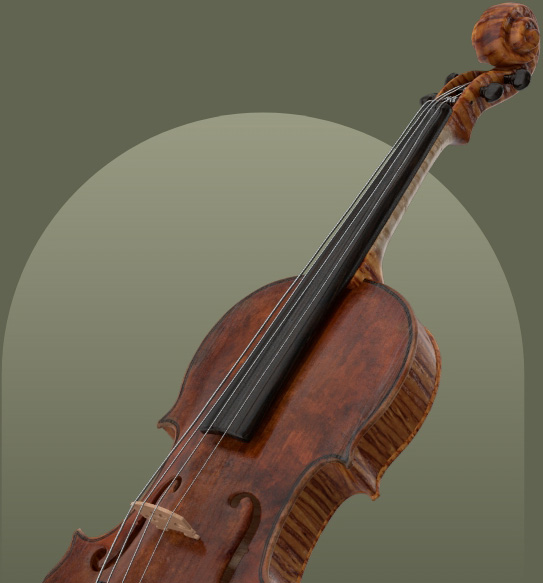
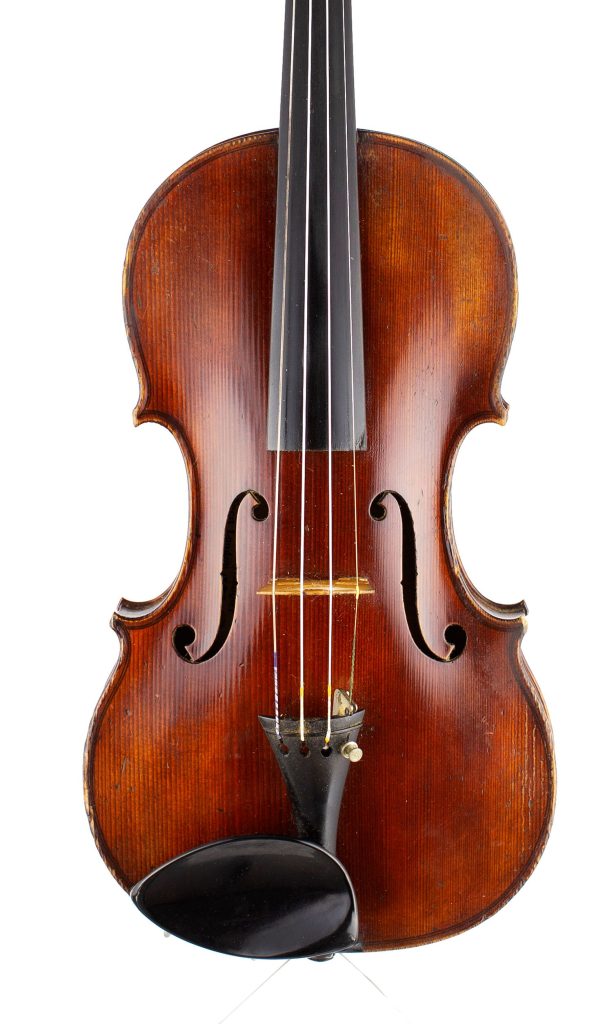
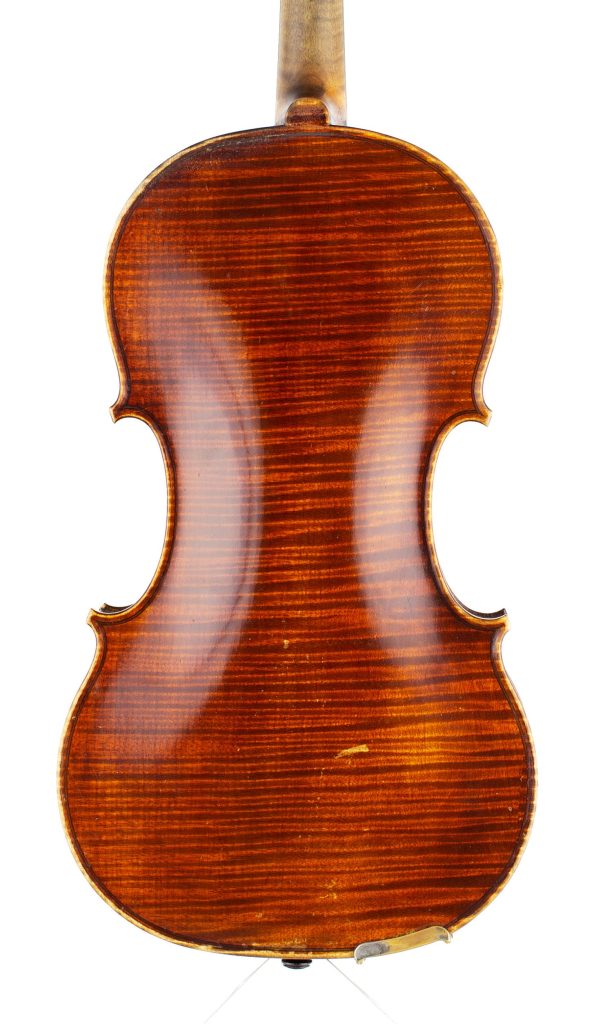
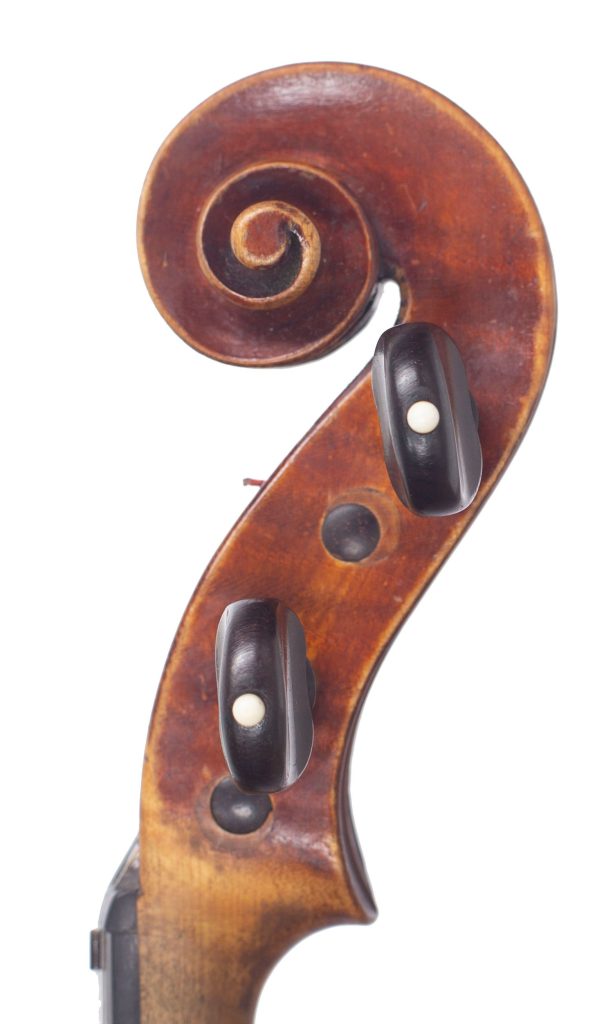
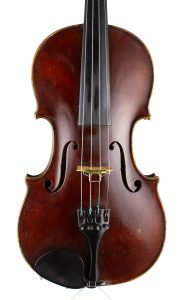
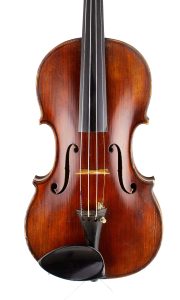
Charles Boullangier (1823-1888) was a French-born violin maker who established a significant career in London. After training in Mirecourt and working with esteemed Parisian makers like Vuillaume and Gand & Bernardel, he moved to London in 1849, initially working for Edward Withers before opening his own successful business in 1856. Known for his excellent workmanship, he crafted numerous violins, violas, and violoncellos, often copying Cremonese, Stradivari, and Guarneri models, and was noted for his dark-red varnish and fine quality woods. He received several awards at London Exhibitions and was appointed violin maker to the Duke of Edinburgh. His business was continued by his daughter and son-in-law after his death.
Instruments
Auction Price History
Highest auction price
50 results
| Type | Details | Auction house | Sold | Price |
|---|---|---|---|---|
| Violin | Labelled Charles Boullangier Fecit London 1883, inscribed CB internally on the back Lot 35 | — | March 2026 | £9,600est. Estimate £ 10,000-15,000 |
| Violin | A violin by Charles Boullangier, London, 1882 Lot 75 | Amati | January 2024 | £8,848est. £ 5,000-10,000 |
| Violin | Labelled Charles Boullagier Fecit London 1888, inscribed CB, 316 on the label and CB on the back Lot 38 | Ingles & Hayday | October 2023 | £8,400est. £ 7,000-10,000 |
| Violin | A violin by Charles Boullangier, London, 1884 Lot 68 | Amati | June 2023 | £17,696est. £ 5,000-10,000 |
| Violin | Labelled Charles Boullangier fecit London 1878, inscribed to the inside back C.B. Lot 122 | Tarisio | October 2021 | £10,978est. € 12.000-18.000 |
| Viola | Labelled By Special Appointment to ... Lot 88 | Brompton’s | June 2021 | £4,800est. £ 4,000-6,000 |
| Violin | Labelled Charles Boullangier Fecit London 1878 Lot 4 | Ingles & Hayday | October 2018 | £14,400est. £ 10,000-15,000 |
| Viola | Labelled Charles Boullangier, Fecit London 1888, numbered 322 on the label Lot 81 | Ingles & Hayday | October 2014 | £14,400est. £ 12,000-18,000 |
| Cello | Inscribed by the maker, fine work in the manner of J.F. Lott, of a red colour Lot 197 | Bonhams | October 2014 | £2,875est. £ 12,000-18,000 |
| Violin | After del Gesù, labelled George Panormo fecit 1849 High St Bloomsbury, scroll possibly by another hand Lot 203 | Brompton’s | March 2014 | £14,400est. £ 12,000-18,000 |
| Violin | Bearing an original label Lot 106 | Brompton’s | June 2013 | £5,040est. £ 5,000-7,000 |
| Violin | Lot 342 | Bonhams | October 2012 | £7,500 |
| Violin | After Del Gesù, labelled C. Boullangier, by ..., of an orange brown colour Lot 342 | Bonhams | October 2012 | £7,500 |
| Violin | 35.3 cm London, 1860 c. | — | June 2011 | £28,800 |
| Violin | 35.6 cm London, 1888 n°323 | — | March 2011 | £7,800 |
| Cello | 77.0 cm London, 1864 | — | December 2010 | £10,800 |
| Violin | 35.6 cm London, 1881 | — | October 2010 | £15,000 |
| Violin | 35.8 cm London, 1880 | — | June 2010 | £9,838 |
| Violin | 35.9 cm 1800 c. | — | March 2010 | £10,200 |
| Cello | 76.2 cm London, 1888 | — | March 2009 | £27,500 |
| Violin | 35.5 cm London, 1888 #302 | — | May 2008 | £10,178 |
| Violin | 35.7 cm London, 1877 | — | February 2007 | £10,800 |
| Cello | London, 1880 c. | — | March 2004 | £16,800 |
| Violin | 1885 | — | June 2002 | £4,541 |
| Violin | 1886 | — | June 2002 | £10,920 |
| Viola | 43.0 cm 1882 | — | November 2001 | £4,600 |
| Violin | 1881 | — | March 2001 | £4,715 |
| Violin | 1877 | — | November 2000 | £5,760 |
| Violin | 1881 | — | November 2000 | £4,600 |
| Violin | 1892 | — | May 1999 | £1,058 |
| Violin | 1881 | — | March 1999 | £9,775 |
| Violin | 1884 | — | March 1999 | £4,200 |
| Violin | 1886 | — | November 1998 | £3,680 |
| Violin | 1876 | — | April 1998 | £1,955 |
| Violin | 1876 | — | November 1997 | £4,370 |
| Cello | 1878 | — | March 1997 | £18,400 |
| Violin | 1876 | — | June 1996 | £8,625 |
| Viola | 39.1 cm 1877 | — | March 1996 | £5,175 |
| Viola | 39.7 cm 1860 c. | — | March 1996 | £12,650 |
| Violin | 1883 | — | March 1994 | £1,725 |
| Cello | 1884 | — | June 1992 | £9,680 |
| Viola | 1885 | — | September 1991 | £7,150 |
| Violin | 1883 | — | September 1991 | £4,730 |
| Viola | 40.6 cm 1870 c. | — | July 1991 | £2,970 |
| Violin | 1880 | — | June 1991 | £3,520 |
| Violin | 1850 c. | — | April 1991 | £4,840 |
| Violin | 1870 c. | — | March 1991 | £4,730 |
| Violin | 1860 c. | — | January 1991 | £2,860 |
| Viola | 43.2 cm 1867 | — | April 1983 | £3,410 |
| Viola | 41.3 cm 1865 | — | July 1980 | £7,285 |
No results match those filters.
Maker Overview
Life
Charles Boullangier (1823-1888) was born in 1823 in Mirecourt, France, and died in October 1888 in London, UK. He learned his trade in Mirecourt until 1843. Subsequently, he worked in Paris with Vuillaume for three years until 1846, and then spent three more years with Gand and Bernardel from 1846 up to 1849. In March 1849, he moved to London, where he made violins for Edward Withers until 1856. He established his own business in London in 1856, operating from 87 Charlotte Street from 1858, 27 University Street from 1861, 40 Dean Street from 1862, and finally at 16 Frith Street from 1878 until his death. He was appointed violin maker to the Duke of Edinburgh and was awarded diplomas at the London Exhibitions of 1862, 1872, and 1888, including two diplomas and a silver medal.
Characteristics
- Workmanship
- He was known for his excellent workmanship and was very diligent in his craft.
- Models
- He built many violins, violas, and violoncellos, generally copying Cremonese models, often showing a fertile mixture of Parisian and London styles. He frequently based his instruments on Stradivari and Guarneri patterns.
- Varnish
- He used a dark-red or orange-red varnish, described as a beautiful red lacquer.
- Materials
- He utilized very fine quality woods for his instruments.
- Specialties
- His violoncellos are particularly valued and esteemed.
- Signatures
- Many instruments labelled 'Withers' bear Boullangier's signature on the interior.
- Charles Boullangier
Fecit London, 1888
319 Charles Boullangier. London
C.B. 87 Charlotte Street. Fitzroy Sq., 1858John Dilworth - Charles Boullangier
Frith Street, London, 1888John Dilworth
Influence and legacy
- Training: He received his initial training in Mirecourt until 1843.
- Mentorship: He worked under prominent Parisian makers, including Vuillaume for three years and Gand & Bernardel for another three years. He also worked for Edward Withers in London.
- Influences: His work was particularly influenced by John Lott.
- Awards: Charles Boullangier received diplomas at the London Exhibitions of 1862, 1872, and 1888, including two diplomas and a silver medal.
- Appointments: He held the prestigious position of violin maker to the Duke of Edinburgh.
- Succession: After his death in 1888, his business was taken over by his daughter Josephine and son-in-law George White, who continued to sell instruments labelled after his death.
- Family Misconception: Earlier writers mistakenly assumed his son, Charles Edward, was the successor to the shop and the author of these instruments, but Charles Edward was still in infancy during this period.
Further Information
- Workshop Locations: After establishing his own business, he operated from 87 Charlotte Street (from 1858), 27 University Street (from 1861), 40 Dean Street (from 1862), and 16 Frith Street (from 1878 until his death).
- Labels: Examples of his labels include "Charles Boullangier / Fecit London, 1888 / 319", "Charles Boullangier. London / C.B. 87 Charlotte Street. Fitzroy Sq., 1858", and "Charles Boullangier / Frith Street, London, 1888. No. 317".
Biographies
The overview above is drawn from the following published accounts. Read them in the original:
John Dilworth+
BOULLANGIER, Charles Born 1823 Mirecourt France, died 1888 London UK. Worked in Paris with Vuillaume for three years, and subsequently spent three more years with Gand and Bernardel up to 1849. Moved to London in that year to work for Edward Withers. Established his own business, located at 87 Charlotte Street from 1858, 27 University Street from 1861, 40 Dean Street from 1862, and finally at 16 Frith Street from 1878 until his death. Appointed violin maker to the Duke of Edinburgh, awarded diplomas at the London Exhibitions of 1862, 1872, and 1888. Excellent workmanship; copies of Cremonese models showing a fertile mixture of Parisian and London styles, influenced by John Lott in particular. Dark-red or orange-red varnish and very fine quality woods. Many instruments labelled ‘Withers’ have Boullangier’s signature on the interior. Other instruments labelled after his death in 1888 were sold by his daughter Josephine and son-in-law George White, who took over the business. Charles Edward, his son who was assumed by earlier writers to have been the successor to the shop and the author of these instruments, was in fact still in infancy in this period. Charles Boullangier / Fecit London, 1888 / 319 Charles Boullangier. London / C.B. 87 Charlotte Street. Fitzroy Sq., 1858 Charles Boullangier / Frith Street, London, 1888. No. 317
Cecie Stainer+
b. 1823, Mirecourt; d. Oct., 1888. Learnt his trade in Mirecourt till 1843. Then worked in Paris under Vuillaume till 1846, and 1846-49 under Gand and Bernardel. Went to London, March, 1849, and made violins for Edward Withers till 1856, when he started his own business. He made a great many violins, violas, and violoncellos, generally copied from Stradivari or Guarneri patterns, and used a dark red varnish. He exhibited in 1862, 1872, and 1888, and was awarded two diplomas and a silver medal.
Willibald Leo Lütgendorff+
Nachdem er in Mirecourt ausgelernt hatte, ging er 1843 nach Paris, arbeitete
drei Jahre bei Vuillaume und drei Jahre bei Gand & Bernadel und wandte sich
1849 nach London, wo er bis 1856 für Edw. Withers Geigen machte und dann
seine eigene Werkstatt eröffnete. Er war sehr fleissig, baute viele Geigen nach
Stradivari und Guarneri und verwendete einen schönen, rothen Lack. Besonders
geschätzt sind seine Violoncelli.
Sell your instrument with Amati
Get started by uploading photos of your instrument for our experts to review.
Sell your instrument with Amati
Get started by uploading photos of your instrument for our experts to review.