William Heaton
Gomersal, Gomersal Leeds, Leeds, worked 1872–1906
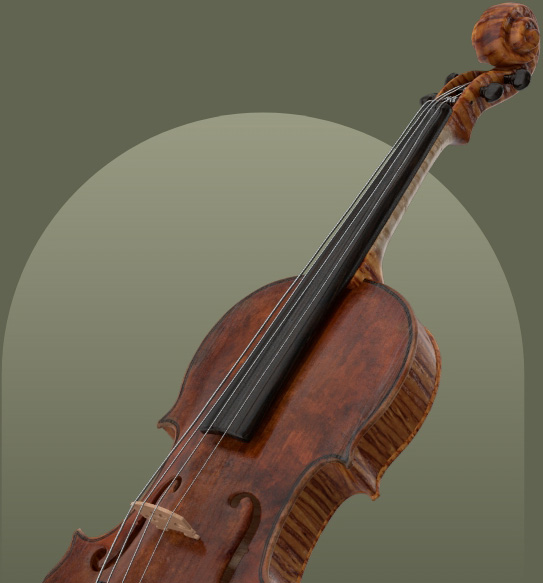
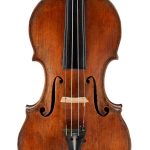
William Heaton (1827-1906) was an English violin and cello maker from Gomersal, Yorkshire. Initially trained as a joiner and cabinet-maker, he was inspired by his grandfather's Stainer model cello to begin instrument making at age fifteen. After a period, he became a prolific maker from 1892 until his death, producing approximately 200 violins, two violas, and eight cellos. Heaton developed personal models influenced by Amati, Stradivari, and Guarneri, yet infused his work with distinct originality, characterized by fine workmanship, especially in his scrolls, and a unique amber oil varnish. His instruments, particularly his cellos, were highly praised for their artistic merit and exceptional tonal qualities, with the "Chats" cello, made for Arthur Broadley, being a notable example of his craftsmanship and tonal excellence.
Auction Price History
Highest auction price
16 results
| Type | Details | Auction house | Sold | Price |
|---|---|---|---|---|
| Violin | Bearing the maker's label, signed, many table restorations including sound post and bass bar cracks Lot 520 | Laurent | December 2024 | £1,439est. € 1.500-2.000 |
| Violin | Two-piece back of broad curl, varnish of a reddish brown colour on a golden ground Lot 2423 | Gardiner | June 2024 | £976est. £ 600-800 |
| Violin | Unlabelled Lot 238 | Brompton’s | March 2020 | £960est. £ 1,000-1,500 |
| Violin | Labelled William Heaton, maker, Hill top, Gomersal, Nr, Leeds Lot 1039 | Gardiner Houlgate | December 2017 | £240est. £ 150-200 |
| Violin | Branded to the back W. Heaton Lot 229 | Tarisio | June 2014 | £637est. $ 1,200-1,800 |
| Violin | 35.7 cm Gomersal, 1890 | — | July 2011 | £1,689 |
| Violin | 35.8 cm 1890 c. | — | March 2011 | £720 |
| Violin | 1888 | — | June 1998 | £518 |
| Violin | 1885 | — | June 1996 | £437 |
| Violin | 1898 | — | March 1995 | £690 |
| Violin | 1887 | — | December 1994 | £184 |
| Violin | 1900 | — | November 1992 | £330 |
| Violin | 1897 | — | November 1992 | £220 |
| Violin | 1896 | — | July 1991 | £506 |
| Violin | 1901 | — | June 1983 | £286 |
| Violin | 1889 | — | November 1980 | £176 |
No results match those filters.
Maker Overview
Life
William Heaton (1827-1906) was born on October 6, 1827, at Hill Top, Gomersal, the son of James and Hannah Heaton. He was raised by his grandparents, Joseph and Sarah Lister, in a hamlet humorously known as the "World's End." He received an elementary education until about age eleven, at which point he began working with his father as a joiner and cabinet-maker. Both his father and grandfather were skilled craftsmen, with his grandfather, Joseph Lister, being particularly adept at small cabinet work and having made a 'cello of the Stainer model. This instrument ignited young Heaton's imagination, leading him to make his first fiddle at age fifteen, followed shortly by a more successful 'cello. After a significant hiatus, Heaton resumed instrument making at age forty-five, creating a fiddle with its back, ribs, neck, and scroll carved from a solid piece of sycamore. worked circa 1872-1906 in Gomersal, Leeds, Yorkshire, UK. From 1892, he worked consistently as a regular maker, producing approximately six instruments annually.
Characteristics
- Production
- William Heaton made about 200 violins, two violas, and eight 'cellos, producing approximately six instruments per year.
- Models
- He developed personal models derived from Amati, Stradivari, and Guarneri, some of which were of an eccentric character. He worked chiefly on Stradivari lines, but his work displayed unmistakable originality, not being a slavish imitation.
- Workmanship
- His instruments, especially those from his later period, were of the highest artistic merit and possessed tonal qualities not easily surpassed. He was a slow, patient worker.
- Varnish
- He used various shades of amber oil varnish of his own recipe. The "Chats" 'cello, for instance, was varnished a brilliant orange brown.
- Branding
- Instruments were branded internally with "Willian Heaton / Maker / Hill Top, Gomersal / Nr. Leeds."
- Violin Outline and Arching
- The outline was pure, bold, and described as masculine rather than feminine, grand and awe-inspiring. The arching was of extended equality, in the style of Maggini.
- Violin Scroll
- A fine, fairly large, and well-proportioned piece of work. The distance between boss-edge and boss-edge was 1 11/16 inches. The grooving at the last turn of the volute was more protracted and terminated nearer the center of the axis than typical in Italian copies, a picturesque feature.
- Violin Peg-box and Button
- The peg-box was wide and strong in wood, and the button was of full proportions.
- Violin Sound-holes
- Designed after Stradivari, though the curve describing the upper and lower wings was less pronounced than in Strad's golden period.
- Violin Purfling and Edges
- The inlaying of the purfle was described as perfection. The margin was of medium width, and the edges were strong, rounded, and raised, typically 1/16th of an inch in his best work.
- Violin Wood
- The wood was of excellent quality. The pine was noted as equal to the best, and the maple curl was of medium width and very regular, suggesting cuts from the same piece. The backs of his last six fiddles, known as the "Tower" fiddles, were made from maple plank seasoned in the Gomersal Church Bell tower.
- Special Violins
- He made a fiddle called the "Gouge," finished entirely with a gouge without sandpaper or file. Another, on the Guarnerius model, was named the "Patchwork," constructed from various kinds of violin wood.
- Violin Measurements
- Length 14 1/8ins, Width across upper bouts 6 13/16ins, Width across middle bouts 4 7/6ins, Width across lower bouts 8 15/16ins, Depth of ribs at bottom 1 1/4ins, Depth of ribs at top 1 5/32ins, Length of sound-holes 3ins, Distance between sound-holes at top 1 9/16ins, Highest elevation above symmetrical plane-back 17/32ins, Highest elevation above symmetrical plane-belly 15/32ins.
- 'Cello Model (The "Chats")
- The "Chats" 'cello, made for Arthur Broadley, was an original model, described as bold yet artistic and compact, with everything nicely calculated. Its outline was compared to the great English maker Banks.
- 'Cello Purfling (The "Chats")
- The purfling was placed rather further away from the edge than usual, contributing to a bold outline.
- 'Cello F-holes (The "Chats")
- The F-holes featured straight-cut, broad wings, described as "Guarnerius magnified," yet beautifully balanced.
- 'Cello Wood (The "Chats")
- The wood was very fine, well-chosen, old, and well-seasoned. The belly was made of open-grained pine, known for fine tone-producing qualities. The back and ribs were of beautifully-figured sycamore, in a whole piece, slab-cut, with a figure resembling moire silk.
- 'Cello Tone (The "Chats")
- The tone was exceedingly fine, very brilliant, and plentiful, with a notable fine quality in the A string, which became more brilliant in higher positions. The tone was very even across its entire register.
- 'Cello Measurements (The "Chats")
- Width across top 13 5/8ins, Width across middle 9 3/8ins, Width across bottom 17 1/2ins, Width of ribs, top 4 3/8ins, Width of ribs, bottom 4 3/4ins, Length of f's 5 7/8ins, Width between f's at top 4 1/2ins, Length of body 29 1/2ins, Length of vibrating string 26 3/4ins.
- Willian Heaton
Maker
Hill Top, Gomersal
Nr. LeedsJohn Dilworth
Influence and legacy
- Early Inspiration: William Heaton was first inspired to make instruments by a 'cello of the Stainer model crafted by his grandfather, Joseph Lister.
- Stylistic Influences: He derived his personal models from the works of Amati, Stradivari, and Guarneri. While working chiefly on Stradivari lines, his instruments were noted for their unmistakable originality rather than being slavish imitations.
- Comparative Models: The original model of his "Chats" 'cello was compared by Arthur Broadley to the work of the great English maker Banks.
- Artistic Merit: William Heaton's instruments, particularly those from his later period, were recognized for their highest artistic merit and exceptional tonal qualities.
- Critical Acclaim: His violoncellos were highly praised, with Arthur Broadley, a notable authority, considering them among the very best work of modern times.
- Notable Commission: The "Chats" violoncello, made to the order of Mr. Arthur Broadley in 1900, was said to possess a remarkable tone and was valued by Broadley at £50.
- Inscriptions: The "Chats" 'cello bore the maker's label and the inscription: "Built to the order of Mr. Arthur Broadley by Wm. HEATON, Gomersal 1900."
Further Information
- Workshop Location: William Heaton worked from Hill Top, Gomersal, near Leeds, Yorkshire, UK.
- Branding Details: His instruments were branded internally with the inscription: "Willian Heaton / Maker / Hill Top, Gomersal / Nr. Leeds."
- Pricing: He generally charged between £20 and £30 for his 'cellos.
- Wood Seasoning: The maple plank used for the backs of his last six fiddles, known as the "Tower" fiddles, was seasoned in the Gomersal Church Bell tower.
Biographies
The overview above is drawn from the following published accounts. Read them in the original:
John Dilworth+
HEATON, William Worked circa. 1872-1906 Gomersal, Leeds, Yorkshire UK. Made about 200 violins and a few cellos. Personal models derived from Amati, Stradivari, and Guarneri; some of eccentric character. Fine workmanship and especially well-made scrolls. Various shades of amber oil varnish of his own recipe. Branded internally. Willian Heaton / Maker / Hill Top, Gomersal / Nr. Leeds.
William Meredith Morris+
He was born October 6, 1827, at Hill Top, Gomersal. He is the son of James and Hannah Heaton, of Gomersal, and was brought up by his grandparents, Joseph and Sarah Lister, till he was about nine years of age, at a little out-wing of his native village called humorously the World’s End, on account of its outlandishness. He received elementary education till he was about eleven, at which early age he commenced work with his father as a joiner and cabinet-maker. Both his father and grandfather were excellent workmen, and especially the latter, who was very deft at turning out small and curious articles of cabinet work. Joseph Lister also made one ‘cello, of the Stainer model, and a very fair instrument it is. This instrument it was that first fired the imagination of young Heaton, and induced him to make his first instrument in his fifteenth year : it was a fiddle of no particular outline or model, but a pardonable effort. Shortly after he made a ‘cello, which was a greater success. His next instrument was not made till he was forty-five years of age. This was a fiddle having its back, ribs, neck, and scroll carved out of a solid piece of sycamore. Since 1892 Heaton has been constantly at work as a regular maker. Up to the present he has made 156 violins, two violas, and eight ‘cellos. He is a slow, patient worker, and turns out only about six instruments in the year. These — more especially those of his later period — are of the highest artistic merit, and for tonal qualities not easily surpassed.
He works on various lines, but chiefly on those of Strad. The work is not, however, a slavish imitation : it has unmistakable marks of originality about it. He has breathed Strad’s breath of life into the copies, but the body is not exactly that of Antonio. The measurements of the violins of his best period are as follows : —
Length … 14 1/8ins,
Width across upper bouts . . . 6 13/16ins,
Width across middle bouts . . . 4 7/6ins,
Width across lower bouts … 8 15/16ins,
Depth of ribs at bottom … 1 1/4ins,
Depth of ribs at top … 1 5/32ins,
Length of sound-holes … 3ins,
Distance between sound-holes at top 1 9/16ins,
Highest elevation above symmetrical plane-back … 17/32ins,
Highest elevation above symmetrical plane-belly … 15/32ins,
The outline is pure, bold, and of masculine rather than feminine qualities. It is grand and awe-inspiring rather than pretty and captivating. The arching is of extended equality, after the style of Maggini. The scroll is a fine piece of work, and is fairly large and well-proportioned. The distance between boss-edge and boss-edge is 1 11/16in. The grooving at the last turn of the volute is more protracted and terminates nearer the centre of the axis than is usual in copies of Italian work. This is a very noticeable and picturesque feature of the side of many of Heaton’s scrolls. The peg-box is wide and strong in wood — a very wise provision. The button is of full proportions, and could never be better made. The sound-holes are after Stradivari, except that the curve describing the upper and lower wings is not so pronounced as in those of Strad’s golden period. The inlaying of the purfle is perfection. The margin is of medium width, and the edges strong, rounded, and raised. In his early work Heaton raised the edges nearly an eighth, but in his best work there is no exaggeration. In a specimen now before me the edges are raised a sixteenth, nicely rounded, thawing with a smile into the gentle bed of the purfling. The wood is of excellent quality. The pine of a specimen recently examined by me was equal to the best I have seen. The curl of the maple in all the Heaton fiddles which I have seen was of medium width and very regular. It would appear as though all these backs had been cut from the same piece of maple — some on the quarter, and some whole. The backs of the last six fiddles have been taken from a maple plank which was seasoned in the Gomersal Church Bell tower, and the instruments have been ” christened ” the “Tower” fiddles. Mr. Heaton has made one fiddle which he calls the “Gouge.” It derives its name from the fact that it has been finished entirely, both inside and outside, with the gouge ; neither sand-paper nor the file having touched the wood. Another, on the Guarnerius model, is called the ” Patchwork,” and is made of various kinds of violin wood. All the Heaton instruments are well stocked with wood. The last fiddle, made a short time since, turned the scales at eighteen ounces and a half in the ” white.”
Mr. Heaton’s violoncellos are spoken of very highly. No less an authority than Mr. Arthur Broadley considers them to be among the very best work of modern times. A violoncello made to his order, and named the ” Chats ” in compliment to the popular work on ‘cello playing, is said to possess a remarkable tone. The following rather lengthy quotation is from a letter of Mr. Broadley’s to me anent this instrument. ” The instrument is of original model, and although one looks to the great Italian masters for perfection of outline and model, yet the ‘cello under notice does not suffer through comparison with classical instruments.
“Perhaps the maker more than any which the model suggests is Banks, the great English maker, and I think I am right in asserting that the earlier ‘cello of Mr. Heaton’s make were copies of this maker, but the ‘ Chats ‘ ‘cello is no copy of any instrument or any maker, but the child of Mr. Heaton’s own fancy. The outline is bold yet artistic, and the model is what one would describe as compact ; there does not seem to be any waste places — everything has been nicely calculated and the whole effect is very fine. The purfling, which is placed rather further away from the edge than usual, assists in giving a boldness to the outline which is very satisfying ; but if one must look for originality, pray look at the curves of the inner bouts, the relative width of the waist, and the cut and placing of the F holes. Of the latter, the straight-cut, broad wings are a feature — Guarnerius magnified. So beautifully balanced are the F’s that this extreme width of the wings is not at the first glance observable, but one looks and wonders how an old man long past the prime of life has had the skill to cut such clearly defined lines. Purpose — that should have been the name of the ‘cello, not ‘ Chats.’
” The whole design of the instrument is characteristic of a man who has lived his life among the breezy freshness of the Yorkshire hills.
” The wood is very fine, well chosen, old, and well-seasoned. The belly is made of rather open-grained pine, of fine tone-producing qualities ; the back and ribs are of extremely beautifully-figured sycamore. The back is in the whole piece and is made from wood cut on the slab. In this case the effect is very beautiful. The figure is best described as being like moire silk. The grain, which is very peculiar, shows up like the ‘ water-marks ‘ in the said material, and the flames seem to ‘ shimmer ‘ from every part of the surface.
“The tone of the instrument is exceedingly fine, very brilliant and plentiful. One great feature of the instrument is the fine quality of the A string, which to a soloist is of the utmost importance, and the higher up the string one plays, the more brilliant does the tone become. This is so different from the usual run of modern ‘cellos, which are generally thin in the higher positions of the A string. The tone of the instrument at every part of its register is very even, and it is the opinion of several professional friends who have seen and heard the ‘ Chats ‘ ‘cello, that a finer instrument could not be produced. It is varnished a brilliant orange brown.”
The value of the ‘cello as it stands is placed by Mr. Broadley at £50, although Mr. Heaton generally charges from £20 to £30 for ‘cellos.
The ‘cello, besides bearing the maker’s label, has the following inscription : —
Built to the order of Mr. Arthur Broadley by Wm. HEATON, Gomersal 1900.
The dimensions are as follows : —
Width across top … 13 5/8ins,
Width across middle … 9 3/8ins,
Width across bottom … 17 1/2ins,
Width of ribs, top … 4 3/8ins,
Width of ribs, bottom … 4 3/4ins,
Length of f’s … 5 7/8ins,
Width between f’s at top … 4 1/2ins,
Length of body … 29 1/2ins,
Length of vibrating string … 26 3/4ins,
WILLIAM HEATON, MAKER, HILL TOP, GOMERSAL. Nr. Leeds.
Willibald Leo Lütgendorff+
Englischer Geigenmacher aus der zweiten Hälfte des 19. Jahrhunderts.
Sell your instrument with Amati
Get started by uploading photos of your instrument for our experts to review.
Sell your instrument with Amati
Get started by uploading photos of your instrument for our experts to review.