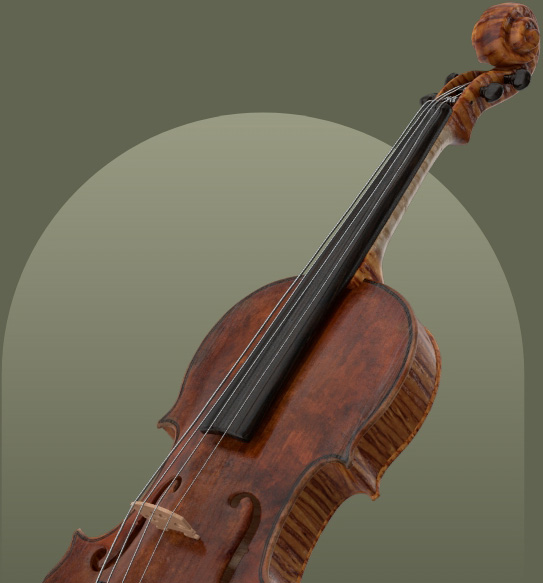
Johann Kulik
Praga, Prague, 1800–1872
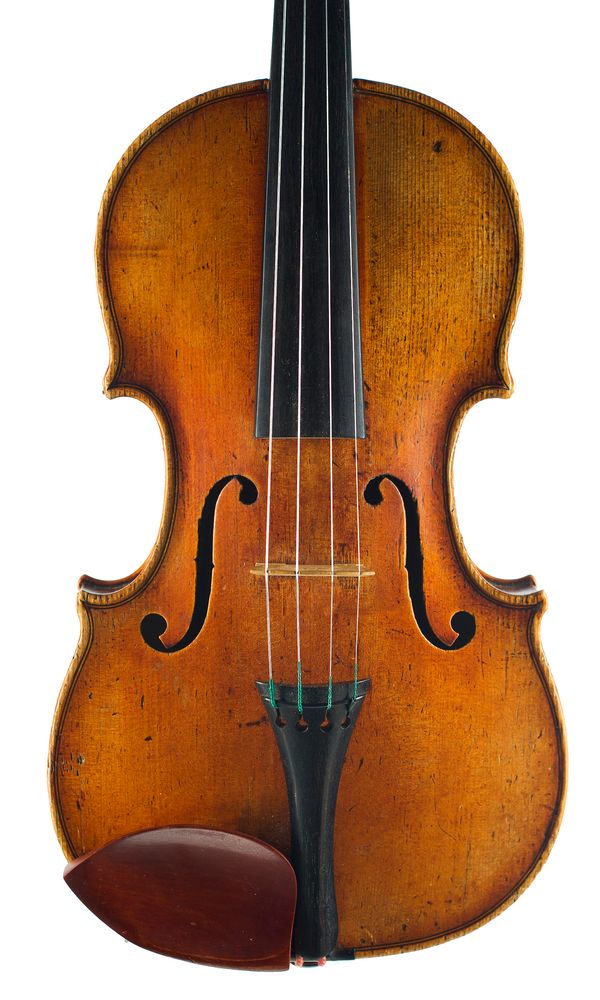
Johann Kulik (1800-1872) was a highly regarded Czech luthier based in Prague, known for his refined Cremonese models. A pupil of Schembera and Martin Stoss, he established his own workshop in 1824. Kulik's instruments, particularly his violins, often copied models by Andreas Guarneri and Antonius Stradivarius. His craftsmanship was impeccable, featuring well-carved scrolls and fine spirit varnish in golden-brown or red hues. He also produced distinctive violoncellos based on a unique model by engineer Leopold Savoi, characterized by a small pattern and high ribs. A violoncello from 1839 is part of the princely Lobkowitz collection.
Auction Price History
Highest auction price
16 results
| Type | Details | Auction house | Sold | Price |
|---|---|---|---|---|
| Violin | Labelled Genau nach Antonius Stradiuarius gemacht, von Johann Kuljk, Prag 1866 Lot 82 | Tarisio | March 2025 | £11,800est. £ 15,000-22,000 |
| Viola | Labelled Jan Kuljk, holowitel hudebnjch nástrogu., W Praze 1862 Lot 44 | Tarisio | October 2024 | £5,919est. € 6.000-9.000 |
| Violin | Labelled Genau nach Andreas Guarnerius, Alunmus, Nikolai Amati, gemacht von Johann Kulik, Prag ... Lot 127 | Tarisio | May 2024 | £11,308est. $ 12,000-18,000 |
| Violin | Illustrated in Luthiers de l'école allemande by Walter Hamma Lot 14 | Vichy | November 2023 | £10,451est. € 4.000-6.000 |
| Bearing the maker's label, good condition Lot 358 | — | December 2018 | £9,086est. € 4.000-5.000 | |
| Labelled Genau nach Joseph Guarnerius filius Andrea, gemacht von Johann Kulik. Prag, 1856 Lot 230 | — | November 2018 | £9,880est. $ 15,000-22,000 | |
| Labelled Genau nach Andreas Guarnerius, Alumnus Nikolai Amati, gemacht von Johann Kulik. Prag ... Lot 15 | — | October 2017 | £9,000est. £ 4,000-6,000 | |
| Violin | 35.8 cm Prague, 1860 | — | April 2010 | £2,839 |
| Violin | Prague, 1847 | — | November 2005 | £2,053 |
| Violin | 1862 | — | November 2000 | £5,760 |
| Violin | 1848 | — | May 2000 | £4,256 |
| Violin | 1835 | — | November 1999 | £2,185 |
| Violin | 1867 | — | November 1997 | £5,104 |
| Violin | 1866 | — | March 1991 | £4,620 |
| Violin | 1840 c. | — | November 1987 | £506 |
| Violin | 1867 | — | June 1984 | £1,026 |
No results match those filters.
Maker Overview
Life
Johann Kulik (1800-1872)
Born in 1800, Johann Kulik was the son of a master miller., he was the sole pupil of Schembera. After working with Martin Stoss in Vienna from 1820, where he perfected his art, Kulik established his own workshop in Prague in 1824. He married twice, first to Maria Anna Vyhnàlek, and later to Maria Št?stný. His residences in Prague included Miš??ská ul., Lužická ul., and Kleinseitner Platz, before he acquired a small house at No. 62 in Palackého t?ida (Karolinenthal) in 1853. He passed away in Prague in 1872.
Characteristics
- Models
- Initially, Kulik utilized models from various Italian masters. In 1850, he acquired a fine violin by Andreas Guarneri, which he subsequently copied almost exclusively. He also produced instruments, such as a violin from 1852, "Genau nach Antonius Stradivarius gemacht" (precisely made after Antonius Stradivarius), as indicated by his labels.
- Workmanship
- His work is described by Lütgendorff as "tadellos" (impeccable), utilizing good wood. His scrolls are noted as being "schöner als von den meisten anderen Prager Meister geschnitten" (more beautifully carved than most other Prague masters), a sentiment, who highlights his "Particularly well-carved scrolls."
- Varnish
- The varnish is characterized by Lütgendorff as "hübsch in der Farbe, meist goldbraun oder roth, wenn auch nur Spirituslack" (beautiful in color, mostly golden-brown or red, even if only spirit varnish). Dilworth corroborates this, mentioning "Fine spirit varnish in appropriate shades."
- Tone
- Lütgendorff observed that the tone of his violins was "ein wenig scharf" (a little sharp), and his violoncellos were "gewöhnlich hart ansprechend" (usually hard-sounding).
- Violoncellos
- Kulik crafted violoncellos based on a new model calculated by the engineer Leopold Savoi, which featured a small pattern and very high ribs. John Dilworth also notes these "eccentric small pattern instruments with deep ribs made to the suggestions of Leopold Savoi."
- Labels
- He employed various labels, including some in Bohemian language in his later years. Examples include "Genau nach Antonius Stradivarius gemacht / von Johann Kulik,1852" and "Joh. Kulik. Geigenmacher in Prag. A. 18..".
- Some eccentric small pattern instruments with deep ribs made to the suggestions of Leopold Savoi. Genau nach Antonius Stradivarius gemacht
von Johann Kulik,1852John Dilworth - Joh. Kulik. Geigenmacher in Prag. A. 18..John Dilworth
Influence and legacy
- Training: Johann Kulik was the sole pupil of Schembera and further developed his skills working with Martin Stoss in Vienna from 1820.
- Models: His work was significantly influenced by various Italian masters, particularly Andreas Guarneri, whose violin he acquired and copied extensively from 1850, and Antonius Stradivarius, whose models he also replicated.
- Collaboration: He collaborated with engineer Leopold Savoi, who calculated a new model for his violoncellos.
- Collections: A violoncello crafted by Kulik in 1839 is preserved in the princely Lobkowitz collection at Raudnitz Castle.
- Reputation: John Dilworth describes Kulik as a "Highly regarded maker of refined Cremonese models."
Biographies
The overview above is drawn from the following published accounts. Read them in the original:
John Dilworth+
KULIK, Johann Born 1800, died 1872 Prague Czech Republic Highly regarded maker of refined Cremonese models. Fine spirit varnish in appropriate shades. Particularly well-carved scrolls. Some eccentric small pattern instruments with deep ribs made to the suggestions of Leopold Savoi. Genau nach Antonius Stradivarius gemacht / von Johann Kulik,1852 Joh. Kulik. Geigenmacher in Prag. A. 18..
Willibald Leo Lütgendorff+
Er war der Sohn eines Müllermeisters und der einzige Schüler von
Schembera. Nachdem er seit 1820 bei Martin Stoss in Wien gearbeitet und
sich in seiner Kunst vervollkommnet hatte, machte er sich 1824 in Prag selbstständig
und heirathete in erster Ehe Maria Anna Vyhnàlek, in zweiter Ehe
Maria Št?stný. Er wohnte nach einander in der Miš??ská ul., der Lužická ul.
und auf dem Kleinseitner Platz, bis er sich 1853 das kleine Haus No. 62 in
der Palackého t?ida (Karolinenthal) kaufen konnte. Anfangs benutzte er die
Modelle verschiedener italienischer Meister, 1850 erwarb er jedoch eine schöne
Geige von Andreas Guarneri, die er von nun an fast ausschliesslich copirte. Seine
Arbeit ist tadellos, das Holz gut und die Schnecke schöner als von den meisten
anderen Prager Meister geschnitten. Der Lack ist hübsch in der Farbe, meist
goldbraun oder roth, wenn auch nur Spirituslack; freilich ist der Ton ein wenig
scharf. Auch seine Violoncelli sind gewöhnlich hart ansprechend; er machte
sie nach einem von dem Ingenieur Leopold Savoi berechneten neuen Modell,
das durch kleines Patron und sehr hohe Zargen auffallt. Er verwendete verschiedene
Zettel, in seinen letzten Jahren auch solche in böhmischer Sprache. Ein Violoncello von 1839 befindet sich in der fürstl. Lobkowitz’schen Sammlung auf Schloss Raudnitz mit dem nebenstehenden Zettel:
Sell your instrument with Amati
Get started by uploading photos of your instrument for our experts to review.
Sell your instrument with Amati
Get started by uploading photos of your instrument for our experts to review.