Enrico Ceruti
Cremona, 1806–1883
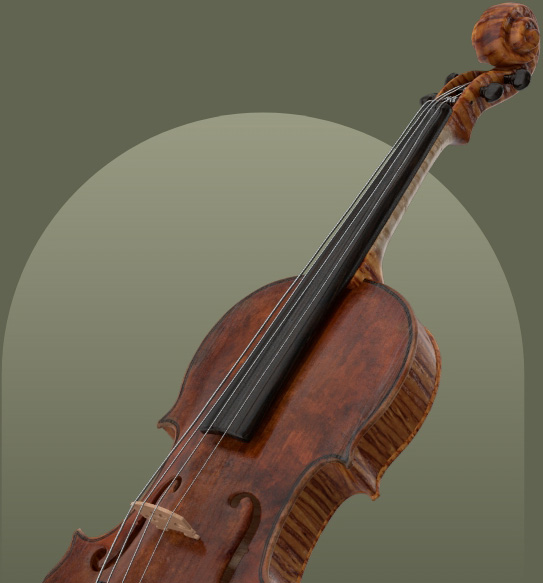
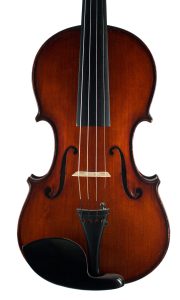
Enrico Ceruti (1806-1883) was a significant Cremonese violin-maker, son and pupil of Giuseppe Ceruti, who continued the family's legacy at his workshop at 14 via Borgo Spera. Recognized as the last in the long line of traditional Cremonese makers, he was a prolific craftsman by 1851, producing an estimated 365 to 400 instruments, including highly valued cellos. His work, characterized by a more classical style, lighter orange-red varnish, and better timber selection, earned him several medals at international exhibitions, including London, Cremona, Vienna, and Milan. Ceruti was also a custodian of Cremonese violin-making history, sharing insights with figures like Luigi Tarisio and Vuillaume, and his instruments remain highly regarded by Italian orchestral players.
Request an expert valuation or learn how our global auctions achieve the highest prices for your instruments.
Auction Price History
Highest auction price
21 results
| Type | Details | Auction house | Sold | Price |
|---|---|---|---|---|
| Violin | Bearing the maker's label Lot 170 | Vichy | June 2025 | £64,189est. € 50.000-60.000 |
| Violin | Labelled Jo. Baptista Ceruti Cremona, fecit anno 180..., inscribed to the inside back 5023 Lot 219 | Tarisio | March 2019 | £39,000est. £ 30,000-50,000 |
| Violin | Labelled Enricus Ceruti fecit Cremonae anno 1860 Lot 24 | Ingles & Hayday | March 2016 | £66,000est. £ 60,000-80,000 |
| Cello | 75.9 cm late 19th C. Attributed to | — | October 2009 | £34,850 |
| Violin | 35.8 cm Cremona, 1850 c. | — | June 2009 | £57,600 |
| Violin | 35.2 cm Cremona, 1878 | — | March 2009 | £51,650 |
| Violin | 35.6 cm Cremona, Mid 19th C. | — | October 2007 | £53,589 |
| Violin | 35.6 cm Late 19th C. Attributed to | — | October 2007 | £11,250 |
| Violin | 35.4 cm Cremona, 1843 | — | April 2007 | £30,324 |
| Violin | Cremona, 1864 | — | May 2005 | £38,400 |
| Violin | Cremona, 1840 | — | May 2005 | £43,592 |
| Violin | 1870 | — | June 2001 | £28,000 |
| Violin | 1878 | — | July 1997 | £19,000 |
| Violin | 1845 | — | November 1995 | £19,550 |
| Violin | 18-- | — | June 1993 | £31,050 |
| Violin | 1850 c. | — | March 1989 | £28,600 |
| Violin | 1863 | — | June 1983 | £11,550 |
| Violin | 1852 | — | March 1983 | £1,760 |
| Violin | 1870 | — | January 1981 | £4,889 |
| Viola | 1850 c. | — | March 1980 | £5,867 |
| Violin | 1880 | — | March 1980 | £8,311 |
No results match those filters.
Maker Overview
Life
Enrico Ceruti (1806-1883) was born in 1806 and died in 1883 in Cremona, Italy, as the son and pupil of Giuseppe Ceruti's The Brompton's Book of Violin & Bow Makers. His earliest work was likely produced with his father around 1840. By 1851, he had become a prolific and successful maker in his own right, establishing his workshop at 14 via Borgo Spera. George Hart, in The Violin, notes that Enrico Ceruti was the last in the long line of Cremonese violin-makers, holding a peculiar interest due to his role as a recipient of the traditional history passed down from Amati to Stradivari and Bergonzi, and from Bergonzi to Storioni and Ceruti. He was acquainted with Luigi Tarisio and Vuillaume, to whom he provided many interesting details concerning the great makers of his native city. Ceruti submitted his work to numerous international exhibitions, including London in 1851, 1862, and 1870, Cremona in 1863, Vienna in 1873, and Milan in 1881, where he won several important medals. His last violin was exhibited in Milan in 1881.
Characteristics
- Style
- Enrico Ceruti's instruments exhibited a slightly more classical style compared to those of his father, Giuseppe Ceruti.
- Varnish
- He utilized a lighter orange-red varnish.
- Materials
- Ceruti was known for a better selection of timber in his instruments.
- Valued Instruments
- His cellos are particularly valued, and his work is generally considered good and valuable's Die Geigen- und Lautenmacher vom Mittelalter bis zur Gegenwart and Cecie Stainer's A Dictionary of Violin Makers.
- Output
- Sources contain conflicting information regarding the total number of instruments made; George Hart and Cecie Stainer state he made about 365 instruments, while Willibald Leo Lütgendorff suggests around 400.
- Enricus Ceruti fecit
Cremonæ anno 1870John Dilworth
Influence and legacy
- Mentorship: Enrico Ceruti was the son and pupil of Giuseppe Ceruti.
- Tradition: He was a recipient of the traditional history of Cremonese violin-making, connecting him to masters such as Amati, Stradivari, Bergonzi, and Storioni, as detailed by George Hart.
- Associations: He was acquainted with prominent figures like Luigi Tarisio and Jean-Baptiste Vuillaume, sharing historical particulars of Cremonese makers with them.
- Awards: Enrico Ceruti won several important medals at international exhibitions, including silver medals at London in 1851 and 1870, and a gold medal at Cremona in 1863.
- Reputation: His instruments are highly valued, especially by Italian orchestral players.
- Historical Significance: He is recognized as the last in the long line of traditional Cremonese violin-makers.
Further Information
- Workshop Location: Enrico Ceruti's workshop was located at 14 via Borgo Spera in Cremona.
- Label: An example of his label includes "Enricus Ceruti fecit / Cremonæ anno 1870" and the initials "E. F. C."
Biographies
The overview above is drawn from the following published accounts. Read them in the original:
John Dilworth+
CERUTI, Enrico Born 1806, died 1883 Cremona Italy. Son and pupil of Giuseppe Ceruti, below. Earliest work probably made with father from around 1840. By 1851 prolific and successful maker in his own right, established at 14 via Borgo Spera. Submitted work to international exhibitions in London 1851, 1862, and 1870, Cremona 1863, Vienna 1873, and Milan 1881, winning several important medals. Slightly more classical style than his father. Lighter orange-red varnish and better selection of timber. Cellos particularly valued. Enricus Ceruti fecit / Cremonæ anno 1870 E. F. C.
George Hart+
Enrico Ceruti is the last of the long line of Cremonese Violin-makers; there is, in consequence, a peculiar interest attached to him. Independent of this, however, he is deserving of special notice from his having been the recipient of the traditional history attending the makers of Cremona, from Amati to Stradivari and Bergonzi, and from Bergonzi to Storioni and Ceruti. He was acquainted with Luigi Tarisio and with Vuillaume, to whom he gave many interesting particulars relative to the great makers of his native city. The instruments of Enrico Ceruti are much valued by Italian orchestral players. They are said to number about three hundred and sixty-five, among which are several Violoncellos. He exhibited at the London Exhibition of 1862, and at other exhibitions. The last Violin he made was shown at the Milan Exhibition, 1881.
Cecie Stainer+
Son of Giuseppe Ceruti, b. 1808; d. Oct. 20, 1883. Worked in Cremona at 14, Via Borgo Spera. Said to have made about 365 instruments, amongst others several violoncellos ; the work is good, and Italian orchestral players especially value his instruments highly.
Was awarded silver medals at London, 1851 and 1870, for his violins, and a gold medal, 1863, at Cremona. The last violins that he made were exhibited in Milan in 1881.
Willibald Leo Lütgendorff+
Sohn des Giuseppe C. und der letzte Geigenmacher der Familie. Wenn er
auch so wenig als irgend ein anderer Geigenmacher des 19. Jahrhunderts die
grossen Cremoneser Meister erreichte, so hat er doch Anerkennenswerthes geleistet; namentlich seine Violoncelli gelten als werthvolle Arbeiten. Er hat an 400 Geigen gebaut und beschickte alle grösseren Ausstellungen, die ihn mit Medaillen auszeichneten. Seine letzte Arbeit war 1881 in Mailand ausgestellt. Er wohnte Via Borgo Spera No. 14.
Sell your instrument with Amati
Get started by uploading photos of your instrument for our experts to review.
Sell your instrument with Amati
Get started by uploading photos of your instrument for our experts to review.