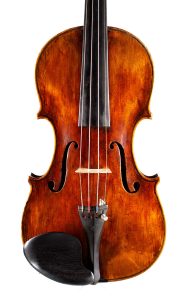
Giovanni Battista Ceruti
Cremona, Sesto Cremonese, 1756–1817
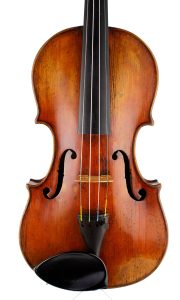
Giovanni Battista Ceruti (1756–1817), born in Sesto Cremonese and active until his death in Cremona, was a significant figure in Cremonese violin making. He is widely cited as having succeeded Lorenzo Storioni's business in the Via dei Coltellai, though the exact year (1790 or 1802) remains a point of contention among historical accounts. Ceruti was a prolific maker, producing an estimated 500 violins and violoncellos, largely based on the large Amati model, and occasionally inspired by Guarneri or Stradivari. While his training is variously attributed to Count Luigi Maggi, the Bergonzi brothers, or Lorenzo Storioni, he maintained a close association with Storioni and was noted for continually refining his style. Despite some descriptions of his work as crude in execution, he played a crucial role in sustaining Cremonese violin-making traditions during a period of decline at the turn of the nineteenth century. His instruments were highly valued for their superior tone, which reportedly improved significantly with age. Discrepancies exist in descriptions of his varnish, which is noted as varying from dark and evenly applied to light amber yellow or deep red, and in the perceived quality of his finish, with some sources noting careful execution and others describing ragged surfaces and uneven purfling.
Request an expert valuation or learn how our global auctions achieve the highest prices for your instruments.
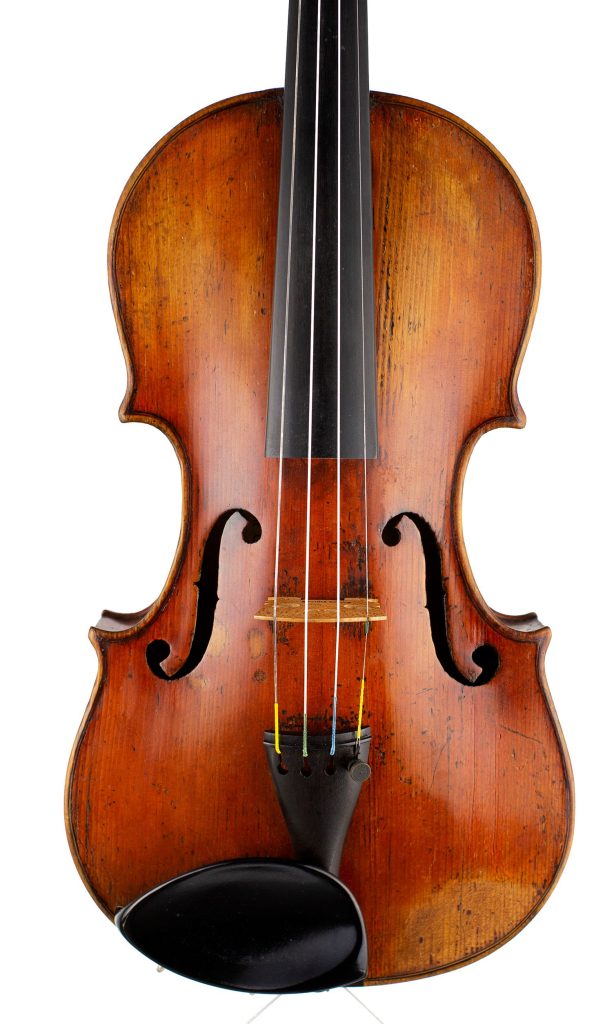
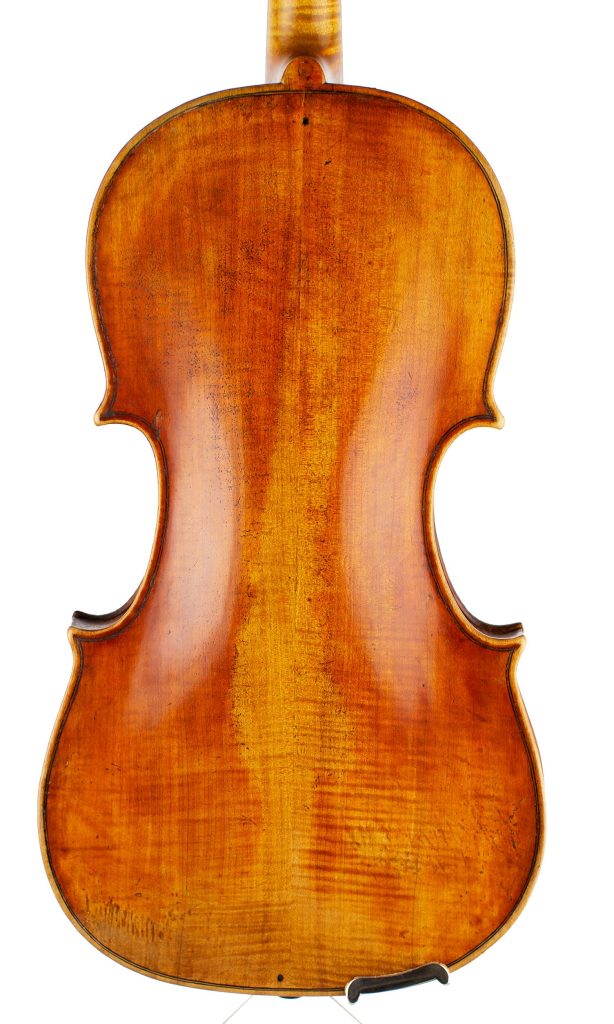
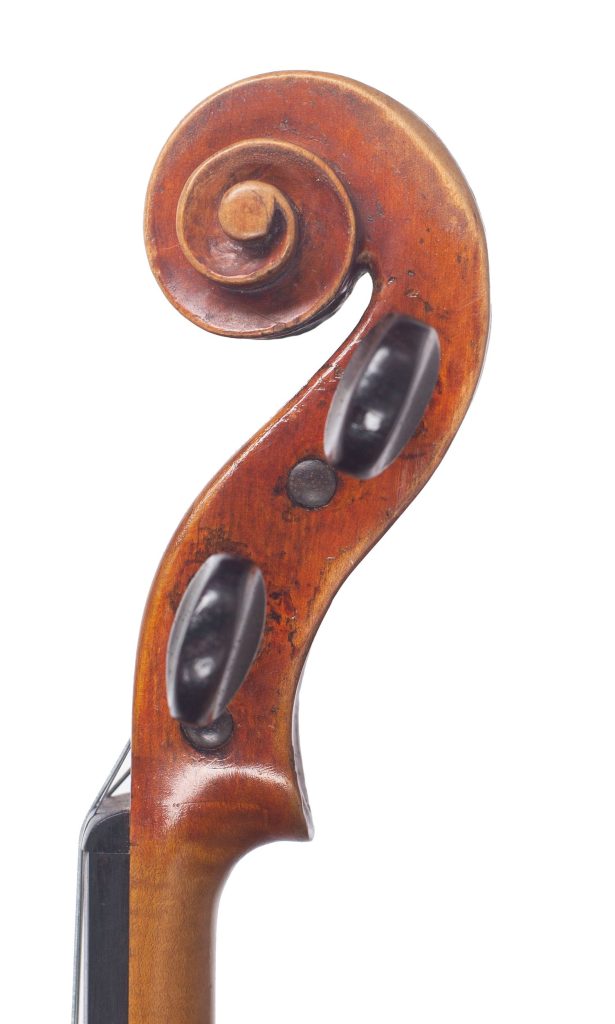
Instruments


Auction Price History
Highest auction price
37 results
| Type | Details | Auction house | Sold | Price |
|---|---|---|---|---|
| Violin | A violin by Giovanni Battista Ceruti, Cremona, circa 1795 Lot 43 | Amati | April 2026 | £69,520est. £ 50,000-70,000 |
| Violin | Labelled Jo: Baptista Ceruti Cremonae Fecit Anno 1805 Lot 105 | Tarisio | October 2024 | £177,000est. £ 150,000-220,000 |
| Violin | A violin by G. B. Ceruti, Cremona, 1802 Lot 258 | Amati | November 2023 | £75,840est. £ 60,000-80,000 |
| Violin | Rosenberg collection, labelled Francesco Rugeri dett il Per in Cremona l'anno 1675 Lot 112 | Ingles & Hayday | June 2023 | £216,000est. £ 120,000-180,000 |
| Violin | Labelled Jo:Baptista Ceruti Cremonae Fecit Anno 1803 Lot 60 | Ingles & Hayday | November 2022 | £156,000est. £ 150,000-200,000 |
| Small Violin | Labelled Jo: Baptista Ceruti Cremonensis fecit Cremonae An. 1804 GBC Lot 178 | Ingles & Hayday | March 2022 | £96,000est. £ 80,000-120,000 |
| Violin | A violin by Giovanni Battista Ceruti, Cremona, circa 1810 Lot 56 | Amati | March 2020 | £126,400est. £ 40,000-60,000 |
| Violin | Bearing the maker's label Lot 175 | Vichy | December 2018 | £76,964est. € 50.000-60.000 |
| Violin | Labelled Jo. Baptista Ceruti Cremonensis fecit Cremonae An. 1812 GBC Lot 153 | Ingles & Hayday | October 2018 | £132,000est. £ 120,000-180,000 |
| Violin | Labelled Jo Baptista Ceruti Cremonensis, fecit Cremonae An 1810 Lot 209 | Tarisio | March 2013 | £171,000est. £ 150,000-200,000 |
| Violin | 35.9 cm Cremona, 1803 | — | April 2010 | £76,717 |
| Violin | 35.2 cm Cremona, 1800 c. | — | April 2009 | £107,355 |
| Violin | 35.6 cm with Literature Ascribed to | — | October 2008 | £31,300 |
| Cello | 75.8 cm Cremona, 1800 c. Attributed to | — | March 2008 | £34,580 |
| Cello | 74.5 cm Cremona, 1790 | — | March 2008 | £46,100 |
| Viola | 39.7 cm 1900 c. Attributed to | — | March 2008 | £4,750 |
| Violin | 35.2 cm Cremona, 1815 c. | — | May 2007 | £46,085 |
| Violin | 35.6 cm Italy, Early 19th C. Attributed to | — | February 2007 | £26,400 |
| Violin | 36.1 cm 19th C. Ascribed to | — | February 2007 | £5,040 |
| Violin | 35.6 cm Cremona, 1800 | — | May 2006 | £30,658 |
| Violin | Cremona, 1810 | — | November 2005 | £45,600 |
| Viola | 39.9 cm Ascribed to | — | November 2005 | £23,986 |
| Violin | 1809 | — | November 2004 | £45,410 |
| Violin | Cremona, 1809 | — | October 2004 | £7,968 |
| Cello | 1801 (composite) | — | March 2003 | £15,317 |
| Violin | 1790 | — | November 2002 | £65,725 |
| Violin | 1790 | — | November 2001 | £52,000 |
| Violin | 1805 | — | May 2001 | £50,709 |
| Violin | 1804 | — | November 1993 | £16,100 |
| Violin | 1820 c. | — | November 1991 | £25,300 |
| Violin | 1803 | — | November 1991 | £17,600 |
| Violin | 1815 | — | November 1989 | £28,600 |
| Viola | 41.3 cm 1808 | — | March 1989 | £49,610 |
| Violin | 18-- | — | June 1988 | £20,900 |
| Violin | 1813 | — | April 1985 | £24,200 |
| Violin | 18-- | — | April 1983 | £10,260 |
| Violin | 1808 | — | November 1981 | £3,534 |
No results match those filters.
Maker Overview
Life
Giovanni Battista Ceruti (1756–1817) was born in Sesto Cremonese and died in Cremona, Italy., and Willibald Leo Lütgendorff, Ceruti succeeded Lorenzo Storioni's business in the Via dei Coltellai, near Piazza San Domenico, in 1790. However, John Dilworth states that he "probably took over the business in via de Caltellai when Storioni ceased work in 1802," presenting conflicting dates for the succession. Ceruti was a successful maker who continually refined his style and finish, and, he played a significant role in sustaining the otherwise declining school of violin making in Cremona at the turn of the nineteenth century. Due to illness, he had to hand over his workshop to his son even before his death. He made a large number of instruments, estimated at approximately 500 violins and violoncellos, and Stainer.
Characteristics
- Innovation
- Giovanni Battista Ceruti continually refined his style and finish, a hallmark of his successful career.
- Materials
- His choice of materials was variable, often comprising local wood of utilitarian rather than prime quality.
- Methods
- Ceruti's work shows influences from both the Bergonzi brothers and Lorenzo Storioni. His instruments frequently feature a scroll with a characteristically extended last turn behind the eye. Lütgendorff states that he modeled instruments after Guarneri, less often after Stradivari, but predominantly after the large Amati model, a preference also noted by Hart and Stainer. Cecie Stainer records that he adhered to his master's principles, producing very good instruments with carefully finished work. However, John Dilworth describes his execution as "often rather crude," noting "a little ragged" surfaces and "purfling unevenly inlaid," which presents a clear contradiction in historical assessments of his finish quality. His varnish is described variably: John Dilworth characterizes it as dark, slightly hard, but very evenly applied, while Cecie Stainer mentions yellow varnish, sometimes with a reddish tinge. Willibald Leo Lütgendorff provides a broader range, stating that his varnish varied from light amber yellow to the deepest red.
- Jo: Baptista Ceruti Cremonensis
fecit Cremonæ An. 1801 (Jal facs)John Dilworth
Influence and legacy
- Training and Mentorship: Accounts regarding Ceruti's training vary. Count Cozio di Salabue, as cited by John Dilworth, suggests Ceruti was a pupil of Count Luigi Maggi in Cremona, although no trace of Maggi’s work has survived. Dilworth also posits that he "may have learned his craft from Nicola and Carlo (II) Bergonzi." Conversely, both Willibald Leo Lütgendorff and Cecie Stainer identify him as a pupil of Lorenzo Storioni. John Dilworth further notes Ceruti's close association with Lorenzo Storioni.
- Schools/Tradition: Ceruti is recognized for his role in sustaining the otherwise declining school of violin making in Cremona at the turn of the nineteenth century. Lütgendorff adds that while he was 'only a weak imitator of his great predecessors,' the 'traditions of the school from which he emerged' are still recognizable in his works.
- Modern Recognition: Ceruti's instruments were highly sought after for their superior tone. Willibald Leo Lütgendorff further adds that 'the tone is noble and has naturally gained much with age.'
Further Information
- Technical Characteristics: Giovanni Battista Ceruti's instruments frequently feature a scroll with a characteristically extended last turn behind the eye. His labels are sometimes found with the inscription 'Jo: Baptista Ceruti Cremonensis / fecit Cremonæ An. 1801.'
- Historical Uncertainties: Accounts conflict regarding Giovanni Battista Ceruti's primary teacher, with some sources suggesting Count Luigi Maggi or the Bergonzi brothers, while others name Lorenzo Storioni. There is also a discrepancy in the date he took over Storioni's business, with sources citing both 1790 and 1802. Furthermore, historical descriptions of his varnish color and the overall finish quality of his instruments present contradictions.
Biographies
The overview above is drawn from the following published accounts. Read them in the original:
John Dilworth+
CERUTI, Giovanni Battista Born 1756 Sesto Cremonese, died 1817 Cremona Italy. According to Count Cozio di Salabue, Ceruti was a pupil of one Count Luigi Maggi in Cremona, although no trace of this maker’s work has survived. May have learned his craft from Nicola and Carlo (II) Bergonzi. Closely associated with Lorenzo Storioni and probably took over the business in via de Caltellai when Storioni ceased work in 1802. Successful maker continually refining his style and finish. Work reflects both the Bergonzi brothers and Storioni, and most commonly has a dark slightly hard but very evenly applied varnish. Often rather crude in execution: surfaces are a little ragged and purfling unevenly inlaid. Scroll has characteristically extended last turn behind the eye. Materials variable, but usually of poorer sort, locally sourced. Achieved a great deal to support the otherwise declining school of violin making in Cremona at the turn of the eighteenth century. Instruments in great demand for superior tone. Jo: Baptista Ceruti Cremonensis / fecit Cremonæ An. 1801 (Jal facs)
George Hart+
Ceruti made a large number of Violins and Violoncellos of the pattern of Amati. He appears to have been a prolific workman, his instruments numbering, it is said, about five hundred. His favourite model was the large Amati. Giovanni Ceruti succeeded to the business of Lorenzo Storioni in 1790, in the Via dei Coltellai, near the Piazza. St. Domenico.
Cecie Stainer+
b. about 1755, Cremona; d 1817. Pupil of Lorenzo Storioni, to whose business in the Via de Coltellai, near Piazza San Domenico, he succeeded in 1790. Following the principles of his master he made very good instruments ; altogether, violins and violoncellos, they number about 500. He copied the model of Nicola Amati, using yellow varnish, sometimes with a reddish tinge; his work was carefully finished.
Willibald Leo Lütgendorff+
Er war Lorenzo Storioni’s Schüler und Nachfolger, dessen Geschäft in der
Via di Coltellai er 1790 übernahm. Krankeitshalber musste er seine Werkstatt
schon vor seinem Tode seinem Sohne übergeben. Er baute nach Guarneri,
seltener nach Stradivari, zumeist aber nach dem grossen Amatimodell, ungefähr
500 Instrumente. Sein Lack ist verschieden, von hellem Bernsteingelb bis zum
tiefsten Roth. Er war freilich auch nur ein schwacher Nachahmer seiner grossen
Vorgänger, aber man erkennt in seinen Arbeiten doch noch die Traditionen der
Schule, aus der er hervorgegangen ist. Der Ton ist edel und hat durch das
Alter naturgemäss sehr gewonnen.
Sell your instrument with Amati
Get started by uploading photos of your instrument for our experts to review.
Sell your instrument with Amati
Get started by uploading photos of your instrument for our experts to review.
Pupils
Giuseppe Ceruti Pupil
Family
Giuseppe Ceruti Son