Jacob Ford
London, worked 1770–1795
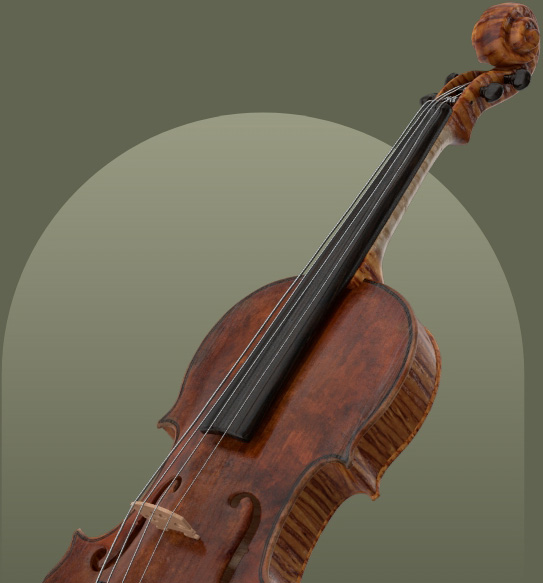
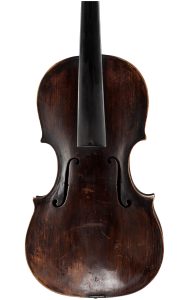
Jacob Ford was a distinguished London-based luthier who worked from approximately 1770 to 1795. Initially a Gentlemen's Servant and later a lodging-house keeper, he supplied instruments to notable makers like Duke, Simpson, and Thompson. His work, often passed off with false Italian labels, is characterized by excellent craftsmanship, a distinctive Stainer-derived model, and a rich golden-amber oil varnish. Ford's instruments feature a unique scroll design, precise purfling, and wider margins than typical Stainer copies. Though not known for a large tone, his instruments are highly valued for their quality.
Request an expert valuation or learn how our global auctions achieve the highest prices for your instruments.
Auction Price History
Highest auction price
12 results
| Type | Details | Auction house | Sold | Price |
|---|---|---|---|---|
| Violin | Labelled Jacob Ford Maker South Street Grovonor Square London 1771 Lot 103 | Tarisio | March 2026 | £4,417est. Estimate $ 6,000-9,000 |
| Violin | Violin, 1760 c. Lot 316 | Brompton’s | December 2015 | £1,920est. £ 800-1,200 |
| Violin | Bearing an original label Made and Sold by ..., further stamped beneath the button Thompsons, London Lot 263 | Brompton’s | October 2014 | £3,840est. £ 3,000-5,000 |
| Violin | Unlabelled Lot 250 | Brompton’s | March 2012 | £12,000est. £ 4,000-6,000 |
| Violin | 35.7 cm London, 1780 c. | — | April 2010 | £8,642 |
| Violin | 34.4.cm 1790 c. | — | June 2009 | £2,760 |
| Violin | London,1790 c. Attributed to | — | January 2005 | £956 |
| Violin | 1770 | — | June 2001 | £3,780 |
| Violin | 1780 c. | — | March 1997 | £4,370 |
| Violin | 1773 | — | November 1996 | £1,955 |
| Violin | 1770 c. | — | June 1990 | £2,860 |
| Violin | 1772 | — | May 1980 | £1,375 |
No results match those filters.
Maker Overview
Life
Jacob Ford (1770-1795) worked in London, UK, from 1770 to 1795. According to his labels, Ford worked from various addresses including 'corner of Davies Street and Berkeley Square' and 'South-Street, Grosvenor Square'. The Hill Archive relates that he was a 'Gentlemen's Servant' by profession and later became a 'lodging-house keeper'. He seems to have supplied work to Duke, Simpson, and Thompson, as his signature is found within instruments bearing those labels. His instruments were often given false Italian labels, having been passed off as Roman or Florentine work by unscrupulous dealers.
Characteristics
- Model
- Ford worked on a model that in British Violin Makers, very closely resembled that of Stainer. Morris notes that while Stainer was clearly in his mind, he had also encountered many Amati copies, or even original "Amatis," which influenced his ideals.
- Workmanship
- His workmanship is described as excellent, with very carefully chosen wood.
- Scroll
- John Dilworth highlights his beautifully finished scroll of a personal model, characterized by deep undercuts and a narrow chamfer; the volutes were concentric but rather broad.
- Purfling
- Dilworth notes his very precise purfling with a bright contrasting white core, laid close to the edge.
- Margins and Edges
- Morris observed that Ford's margins were wider than usual for Stainer copies, and the edges were nicely rounded and solid-looking.
- Varnish
- The varnish is described by Dilworth as a thin but complex and rich oil varnish of golden-amber colour. Morris also describes it as an oil varnish, in light or deep amber colour.
- Instruments
- Only one cello by Ford has been recorded, but small violas are encountered.
- Signature
- He often signed on the interior of the front in pencil.
- Jacob Ford
Maker
London 1792John Dilworth - Jacob Ford, Maker
South Street Gr. Sqre. London
1771John Dilworth
Influence and legacy
- Primary Influence: Jacob Ford's primary model was heavily influenced by Stainer.
- Secondary Influence: Morris also suggests that Ford had seen and handled many Amati copies, or even original "Amatis," which contributed to his evolving ideals.
Further Information
- Labels: Printed labels include "Jacob Ford / Maker / London 1792" and "Jacob Ford, Maker / South Street Gr. Sqre. London / 1771".
- Tone: William Meredith Morris noted that the tone of Ford's instruments is not large but, in some instances, is almost equal to that of Duke.
Biographies
The overview above is drawn from the following published accounts. Read them in the original:
John Dilworth+
FORD, Jacob Worked 1770-1795 London UK. According to his labels Ford worked from various addresses including ‘corner of Davies Street and Berkeley Square’ and ‘South-Street, Grosvenor Square’. The Hill Archive relates that he was a ‘Gentlemen’s Servant’ by profession and that he later became a ‘lodging-house keeper’. Seems to have supplied work to Duke, Simpson, and Thompson, as his signature is found within instruments bearing those labels. Often given false Italian labels, having been passed off as Roman or Florentine work by unscrupulous dealers. Only one cello recorded but small violas encountered. Very fine and distinctive workmanship on a broadly Stainer-derived model. Beautifully finished scroll of personal model, with deep undercuts and narrow chamfer; concentric volutes but rather broad. Very precise purfling with bright contrasting white core, laid close to the edge. Thin but complex and rich varnish of golden-amber colour. Often signed on the interior of the front in pencil. Printed labels: Jacob Ford / Maker / London 1792 Jacob Ford, Maker / South Street Gr. Sqre. London / 1771 [BVMA]
William Meredith Morris+
He worked on a model which very closely resembles that of Stainer. He evidently had Stainer in his mind, but he had also seen and handled so many Amati copies, or perhaps a few original ” Amatis,” that he had become unsettled in his ideals. The workmanship is excellent, and the wood very carefully chosen. The varnish is an oil one, in light or deep amber colour. His margins are wider than is usual in Stainer copies, and the edges are nicely rounded and solid looking. The tone is not a large one, but is almost equal, in one or two instances which have come under my observation, to that of Duke. Altogether Ford was a superior maker, and the few examples of his art which remain to-day should be more highly valued than they are. Label : —
JACOB FORD, MAKER, LONDON, 1792
Sell your instrument with Amati
Get started by uploading photos of your instrument for our experts to review.
Sell your instrument with Amati
Get started by uploading photos of your instrument for our experts to review.