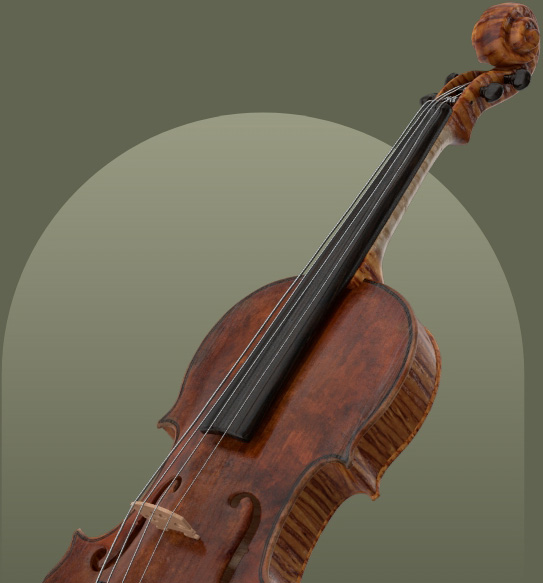
Ludwig Neuner
Berlin, Mittenwald, 1840–1897
Ludwig Neuner (1840-1897) was a highly influential German luthier, son and pupil of Johann Neuner (III), who significantly elevated the reputation of the Neuner & Hornsteiner firm.
His extensive training included working with Andreas Engleder, Gabriel Lembock, and notably, six years with J. B. Vuillaume in Paris.
After establishing branches in Berlin and Innsbruck, he returned to Mittenwald in 1883 to lead Neuner & Hornsteiner, expanding its operations to employ 200 craftsmen and produce thousands of instruments annually, ranging from student to soloist quality, including precise copies of classical Italian models.
Neuner was appointed maker to the Bavarian royal family and received numerous international awards for his craftsmanship.
Request an expert valuation or learn how our global auctions achieve the highest prices for your instruments.
Instruments
Auction Price History
Highest auction price
16 results
| Type | Details | Auction house | Sold | Price |
|---|---|---|---|---|
| Violin Bow | Silver mounted Lot 2179 | Vichy | December 2025 | £1,468est. € 500-600 |
| Violin Bow | Silver mounted Lot 2246 | Vichy | December 2025 | £714est. € 500-600 |
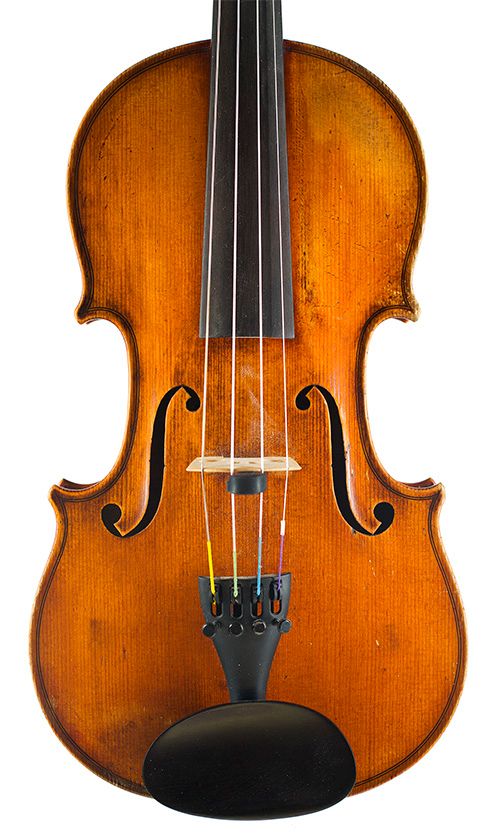
| Violin | A violin by Ludwig Neuner, Berlin, 1898 Lot 109 | Amati | October 2018 | £5,056est. £ 800-1,200 |
| Violin Bow | Gold mounted, octagonal stick stamped L. NEUNER, tortoiseshell frog engraved on the gold ferrule F D Lot 151 | Freeman's | November 2015 | £1,701est. $ 2,000-3,000 |
| Violin | Labelled Ludwig Neuner, Berlin, Anno 1895 Lot 148 | Tarisio | October 2013 | £8,260est. £ 4,000-6,000 |
| Violin | Labelled Ludwig Neuner, Berlin, Anno 1884 Lot 132 | Tarisio | June 2013 | £5,700est. £ 1,500-2,200 |
| Violin Bow | Silver mounted, round stick faintly stamped NEUNER BERLIN, tortoiseshell frog with pearl eye Lot 29 | Christie's | April 2012 | £2,936est. $ 1,500-2,500 |
| Viola Bow | S/E 59.0 g. | — | April 2010 | £3,123 |
| Cello | 75.7 cm Berlin, 1891 | — | December 2008 | £17,405 |
| Violin | 35.7 cm Berlin, 1895 | — | October 2006 | £2,912 |
| Viola | 43.0 cm 1906 | — | May 2003 | £662 |
| Violin | 1886 | — | April 1998 | £218 |
| Violin | 1888 | — | June 1994 | £2,530 |
| Violin | 1880 c. | — | June 1993 | £1,650 |
| Violin | 1890 c. | — | June 1990 | £1,320 |
| Violin | 1892 | — | June 1984 | £1,472 |
No results match those filters.
Maker Overview
Life
Ludwig Neuner (1840-1897) was born on August 21, 1840, in Mittenwald, Bavaria, as the son and pupil of Johann Neuner (III).
He studied the cello and subsequently worked for Andreas Engleder in Munich and Gabriel Lembock in Vienna, before spending six years with J. B. Vuillaume in Paris.
After a short period in London, Ludwig Neuner established a branch of the family business in Berlin in 1867, and also in Innsbruck, Austria.
He returned to Mittenwald to assume direction of Neuner & Hornsteiner in February 1883, following the death of his father, Johann.
Ludwig Neuner was appointed maker to the Bavarian royal family and died in 1897.
Characteristics
- Production Scale
- Under Ludwig Neuner's direction, the company grew to employ 200 craftsmen, producing between 15,000 and 20,000 instruments annually, which were distributed worldwide.
- Instrument Grades
- The company produced all grades of instruments, ranging from student models to soloist quality.
- Models and Copies
- Instruments included classical Italian models of all kinds, as well as close copies of individual works such as the Stradivari 1716 'Messie' violin and the 1701 'Servais' cello.
- Varnish Research
- Ludwig Neuner personally conducted research into Italian varnish.
- Bow Production
- The company also manufactured large numbers of bows in various qualities.
- Label
- Instruments bore the label "Neuner & Hornsteiner / Mittenwald in Baiern 1861".
- Neuner & Hornsteiner
Mittenwald in Baiern 1861John Dilworth
Influence and legacy
- Parentage and Early Training: Ludwig Neuner was the son and pupil of Johann Neuner (III).
- Mentorship: He received training and worked with Andreas Engleder in Munich, Gabriel Lembock in Vienna, and spent six years under J. B. Vuillaume in Paris.
- Professional Impact: His experiences, particularly with Vuillaume, were instrumental in bringing about a renaissance of the Neuner & Hornsteiner reputation.
- Royal Appointment: Ludwig Neuner was appointed maker to the Bavarian royal family.
- Awards and Recognition: He was the recipient of various medals at exhibitions throughout the world, including a silver medal in Berlin in 1879, and the large medal for Industries founded by Friedrich Wilhelm IV. His work was also commended at the Bologna Exhibition in 1888.
- Company Revival: He significantly revitalized the reputation of Neuner & Hornsteiner by applying lessons learned during his extensive training and work experience.
Further Information
- Workshop Locations: Ludwig Neuner established a business in Berlin at 6, Kurstrasse, in 1867, and also had a branch in Innsbruck, Austria, before returning to Mittenwald.
Biographies
The overview above is drawn from the following published accounts. Read them in the original:
John Dilworth+
Ludwig Born 1840, died 1897. Son and pupil of Johann Neuner (III), above. Studied the cello. Subsequently worked for Andreas Engleder in Munich and for Gabriel Lembock in Vienna, then spent six years with J. B. Vuillaume in Paris. Passed a short time in London. Established a branch of the family business in Berlin 1867; also in Innsbruck, Austria. Returned to Mittenwald to take over the direction of Neuner & Hornsteiner following the death of his father Johann 1883. Appointed maker to the Bavarian royal family. Recipient of various medals at exhibitions throughout the world. Brought about a renaissance of the Neuner & Hornsteiner reputation by applying lessons learned with Vuillaume and elsewhere. The company grew to employ 200 craftsmen. All grades of instrument from student to soloist quality produced. Classical Italian models of all kinds, and close copies of individual works such as the Stradivari 1716 ‘Messie’ violin and the 1701 ‘Servais’ cello. Ludwig himself made researches into Italian varnish. The company also made large numbers of bows in various qualities. Neuner & Hornsteiner / Mittenwald in Baiern 1861
Cecie Stainer+
b. Aug. 21, 1840, Mittenwald (Bavaria). Grandson of Mathias Neuner, also a clever maker of violins, who worked for some time in London. First learnt in his father’s workshop at Mittenwald, afterwards with Andreas Engleder in Münich and Gabriel Lembock in Vienna ; then worked for five years under J. B. Vuillaume in Paris.
Left Paris for Berlin, 1867, and there established a business at 6, Kurstrasse, working there assisted by two workmen till 1883. In February that year, through the death of his brother, became partner in the firm of Neuner und Hornsteiner, Mittenwald.
He had 200 workmen there, and from 15,000 to 20,000 instruments were yearly sent out to all parts of the world ; these all show excellent work, considering their extraordinarily low price. He himself made instruments for solo-playing, closely copied from Italian models; was awarded a silver medal in Berlin, 1879; and the large medal for Industries, founded by Friedrich Wilhelm IV. His work was commended at the Bologna Exhibition, 1888. He died 1897.
Willibald Leo Lütgendorff+
Er lernte in München, Berlin und Paris und war dort zuletzt durch sechs
Jahre bei J. B. Vuillaume thätig. Zurückgekehrt, wurde er Mitinhaber der
Firma Neuner & Hornsteiner und errichtete 1867 ein Geschäft in Berlin. Er
war ein geschickter Meister, der das Zeug dazu gehabt hatte, sein Programm:
die »Fabrikation von Saiteninstrumenten als Kunstgewerbe durch treue Nachahmung
Sell your instrument with Amati
Get started by uploading photos of your instrument for our experts to review.
Sell your instrument with Amati
Get started by uploading photos of your instrument for our experts to review.