John Priestnall
Rochdale, 1819–1899
John Priestnall (1819-1899) was a British luthier born in Saddleworth and active in Rochdale from 1840 until his death. Originally a joiner and pattern-maker, he transitioned to full-time violin making in 1870, ultimately completing 300 violins, 30 violas, six 'cellos, and eight double-basses.
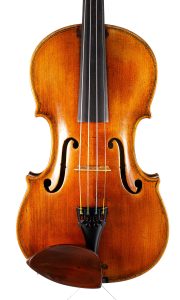
His instruments are characterized by good workmanship, originality, and a large, telling tone, though sources offer conflicting descriptions of his varnish quality. Priestnall's name was stamped on his instruments rather than using labels, and his work, initially sold for £4, has since appreciated in value.
Request an expert valuation or learn how our global auctions achieve the highest prices for your instruments.
Instruments
Auction Price History
Highest auction price
17 results
| Type | Details | Auction house | Sold | Price |
|---|---|---|---|---|
| Violin | One-piece back of wild flame, varnish of a light reddish brown colour on a golden ground Lot 2425 | Gardiner Houlgate | December 2021 | £816est. £ 600-900 |
| Violin | Branded J. Priestnall, Rochdale, 1892 to the inner back and twice on the table and back, stamped no. 152 Lot 1402 | Gardiner Houlgate | September 2015 | £336est. £ 200-400 |
| Violin | Branded J. Priestnall, Rochdale, 1889, no. 70 to the inner back and twice each on the table and back Lot 9 | Gardiner Houlgate | May 2013 | £448est. £ 400-600 |
| Viola | 39.4 cm Rochdale, 1889 n°7 | — | October 2010 | £1,081 |
| Violin | 1884 | — | March 2001 | £493 |
| Violin | 1897 | — | March 2001 | £288 |
| Violin | 1885 | — | April 1998 | £322 |
| Violin | 1895 | — | March 1996 | £690 |
| Violin | 1888 | — | April 1989 | £462 |
| Viola | 39.1 cm 1850-75 | — | March 1989 | £990 |
| Violin | 1892 | — | November 1988 | £396 |
| Violin | 1890 | — | July 1988 | £187 |
| Violin | 1893 | — | June 1987 | £198 |
| Violin | 1893 | — | April 1987 | £165 |
| Violin | 1888 | — | November 1986 | £176 |
| Violin | 1888 | — | October 1986 | £93 |
| Violin | 1894 | — | July 1985 | £330 |
No results match those filters.
Maker Overview
Life
John Priestnall (1819-1899) was born at Saddleworth, near Oldham, in November 1819, and passed away at Rochdale on January 18, 1899.
Originally a joiner and pattern-maker, he was known as an ingenious workman and for discovering several improvements in wood-working machines.
While he occasionally made violins in his early life, he began to dedicate his full time to the craft in 1870, spending the remainder of his years as a professional maker.
By the time of his death, he had completed three hundred violins, thirty violas, six 'cellos, and eight double-basses.
Priestnall w as a very genial and generous man, possessing a sense of humor, as evidenced by an anecdote where he "faked" an Italian fiddle to test a well-known London expert, inserting a Storioni ticket into it.
The instrument was returned with a certificate attesting to its authenticity, much to Priestnall's amusement over the "big gun's" credulity.
He was also an old-fashioned violin player, frequently requested at country weddings and fairs in his youth.
His instruments, initially sold for £4, have since been sold for double that price.
Characteristics
- Workmanship
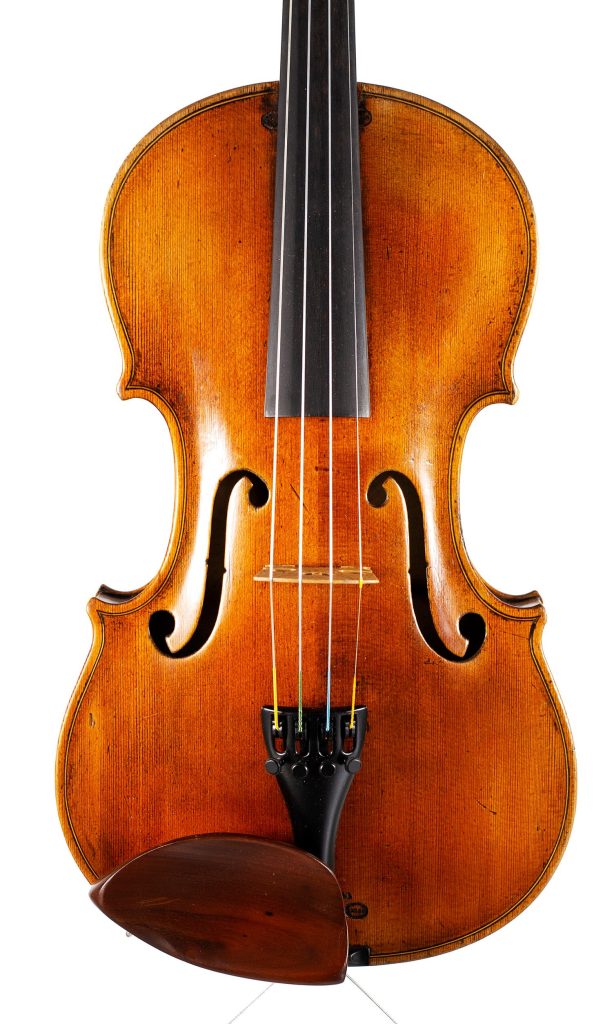
- His instruments are well finished and possess considerable originality.
- Wood
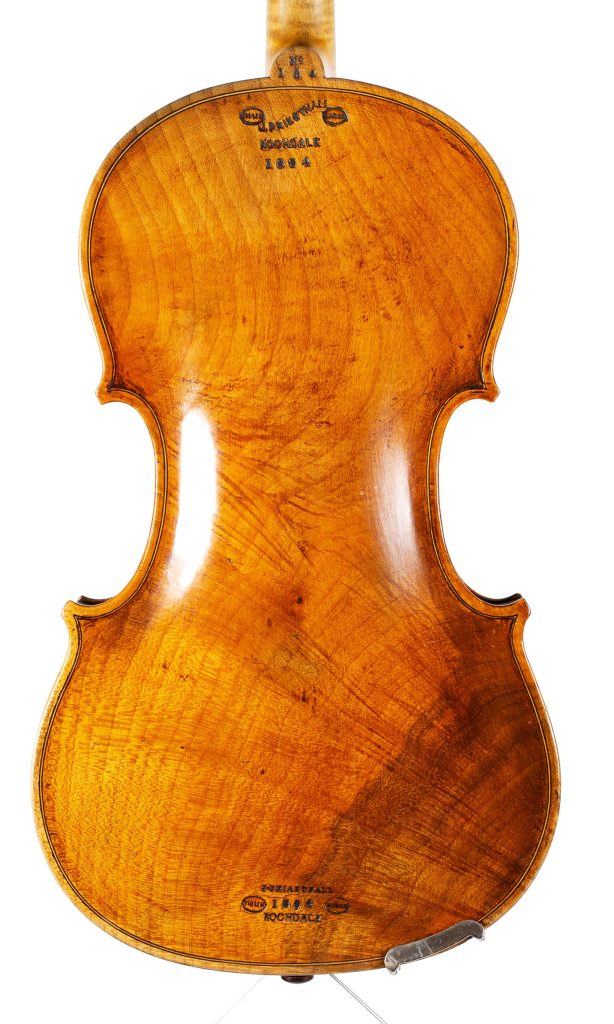
- The wood used is mostly regular in figure, cut on the quarter, with the curl running at right angles to the long axis.
- Sound-holes
- The sound-holes are described as quaint but pleasing.
- Scroll
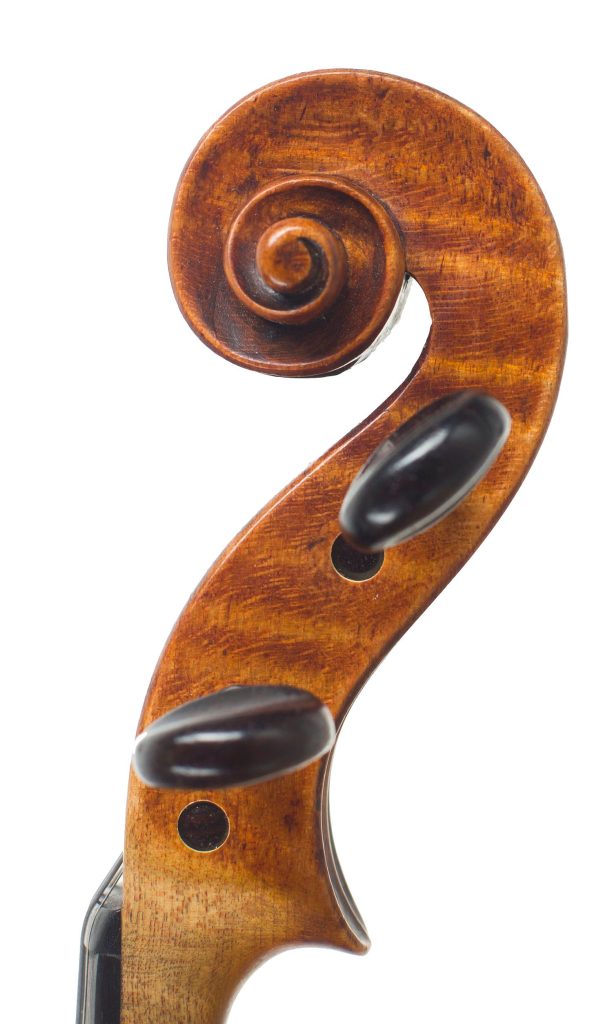
- The scroll is thrown with a decided hand.
- Edges & Purfling
- The edges are full and rounded, and the purfling is nicely inlaid.
- Varnish
- , the varnish is an oil one, deep golden amber in color, transparent, elastic, and tender, though "rather too tender" as a fiddle made in 1884 was not yet hard-dry in 1902. Morris suspected that a varnish not thoroughly setting in eighteen years would never set at all, but noted that apart from this defect, the varnish was "very beautiful," applied in about half-a-dozen coats, and nicely polished. John Dilworth, however, notes "poor varnish."
- Tone
- The tone is large and telling, possessing much of the Italian oiliness, but is noted as rather viola-like on the lower strings, a characteristic reportedly common to all his instruments.
- Marking
- His instruments bear no label; instead, the maker's name is stamped on the wood with a cold punch in several places, and the instrument's number is stamped on the button.
Influence and legacy
- Market Value: Instruments initially sold for £4 have since been sold for double that price.
Biographies
The overview above is drawn from the following published accounts. Read them in the original:
John Dilworth+
PRIESTNALL, John Born 1819, died 1899 Rochdale, Yorkshire UK. Active in Rochdale from 1840. Credited with 300 violins, 30 violas, six cellos, and eight double basses. Good workmanship but poor varnish. Branded on back button.
William Meredith Morris+
He was born at Saddleworth, near Oldham, in Nov. 1819, and died at Rochdale, Jan. 18, 1899. He was originally a joiner and pattern-maker, and noted as an ingenious workman, and the discoverer of several improvements in wood-working machines. He worked occasionally at violin-making in early life, but in 1870 he began to devote the whole of his time to it, and the remaining years of his life was spent as a professional maker. At the time of his death he had completed three hundred violins, thirty violas, six ‘cellos, and eight double-basses. His instruments are well finished, and possess considerable originality. His wood is mostly regular in figure, cut on the quarter, with the curl running at right angles to the long axis. The sound-holes are quaint, but pleasing.
The scroll is thrown with a decided hand. The edges are full and rounded, and the purfling nicely inlaid. The varnish is an oil one ; colour, deep golden amber. It is transparent, elastic, and tender — rather too tender, seeing that a fiddle which was made in 1884 is not yet quite hard-dry in 1902. One suspects that a varnish which does not thoroughly set in eighteen years will never set at all. Apart from this one defect, the varnish is very beautiful. It is laid on in about half-a-dozen coats, and nicely polished. The tone is large and telling, and possesses much of the Italian oiliness, but it is rather viola-like on the lower strings. I am told this is a characteristic of all his instruments. Nevertheless it is a highly respectable tone, and stamps Priestnall as a maker of no ordinary ability. Had he been more conversant with Italian work of the first rank, no doubt some of the three hundred odd examples of his art which he left behind him would be eagerly sought after to-day by orchestral players.
Old Mr. Hill, of Wardour Street, is reported to have said that a good maker ought to be able to make a fiddle with a knife and fork, albeit he himself used the finest tools in his repairing, made from the best metal.
Priestnall did not believe in ” knife and fork ” repairing. He would patiently spend hours over a contrivance that would methodically ensure an artistic finish to a job. There is ample room to-day for more men of his stamp. Artistic repairers are few and far between. There are not above half-a-dozen scientific repairers in Great Britain at the present time, whereas there are at least two hundred makers, professional and amateur, exclusive of manufacturers of the ordinary trade fiddle.
Priestnall was a very genial and generous man. He had the sense of humour also if the following tale be true. It is related that he once ” faked ” an Italian fiddle in order to test the powers of a well-known London expert. He carefully prepared his ” bait,” clapped a Storioni ticket into it, and sent it up for opinion. The instrument came back with a certificate duly attesting that the fiddle was genuine as labelled.
Priestnall was much amused over the credulity of the ” big gun,” as he called him. The incident is not impossible. I know a maker of ” Old Italian ” instruments residing at present not one hundred miles from Manchester, who by his cunning and deftness continually practises his black art upon the experts. He recently turned out a splendid Panormo and a Grancino which completely deceived a high priest of the art. Quis judicet ipsos criticos ?
Priestnall was an old-fashioned player on the violin, and in his young days was much in request at country weddings, fairs, &c. He sold his instruments at £4, but some of them have been recently sold at double the price.
His instruments bear no label, but the maker’s name is stamped on the wood with a cold punch in several places, and the number of the instrument is stamped on the button.
Sell your instrument with Amati
Get started by uploading photos of your instrument for our experts to review.
Sell your instrument with Amati
Get started by uploading photos of your instrument for our experts to review.