Giuseppe Gagliano
Naples, worked 1770–1800
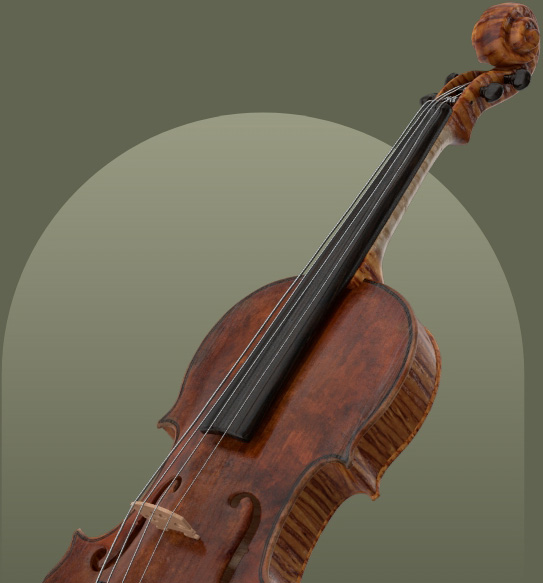
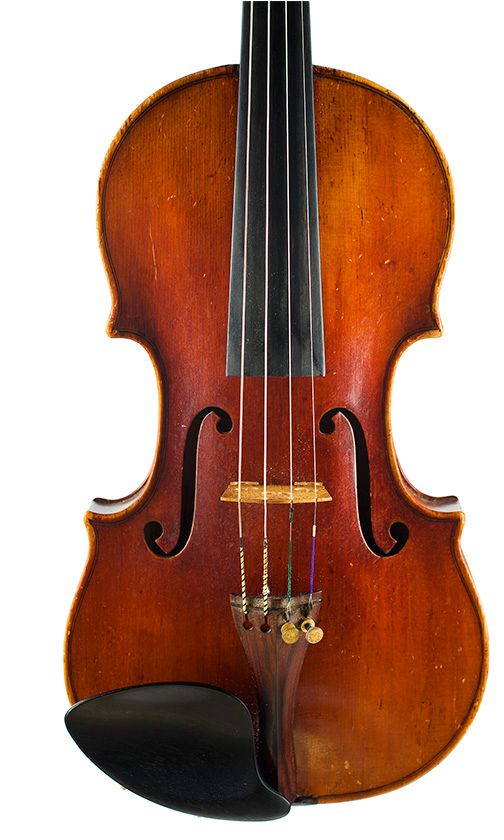
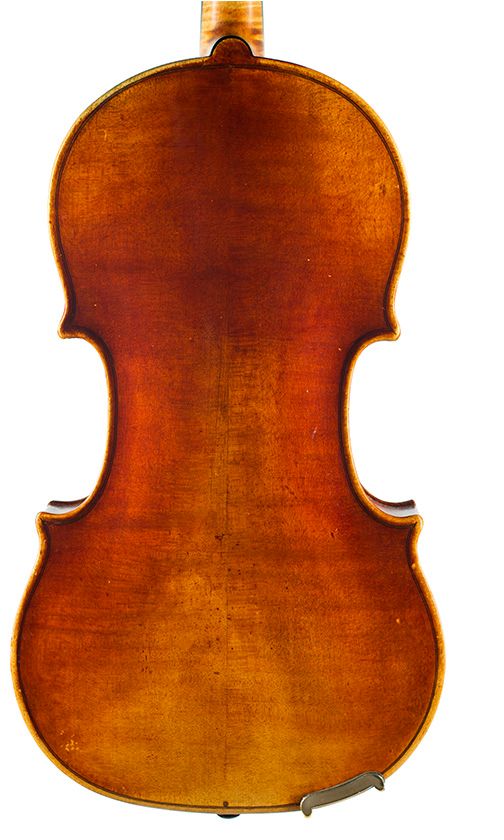
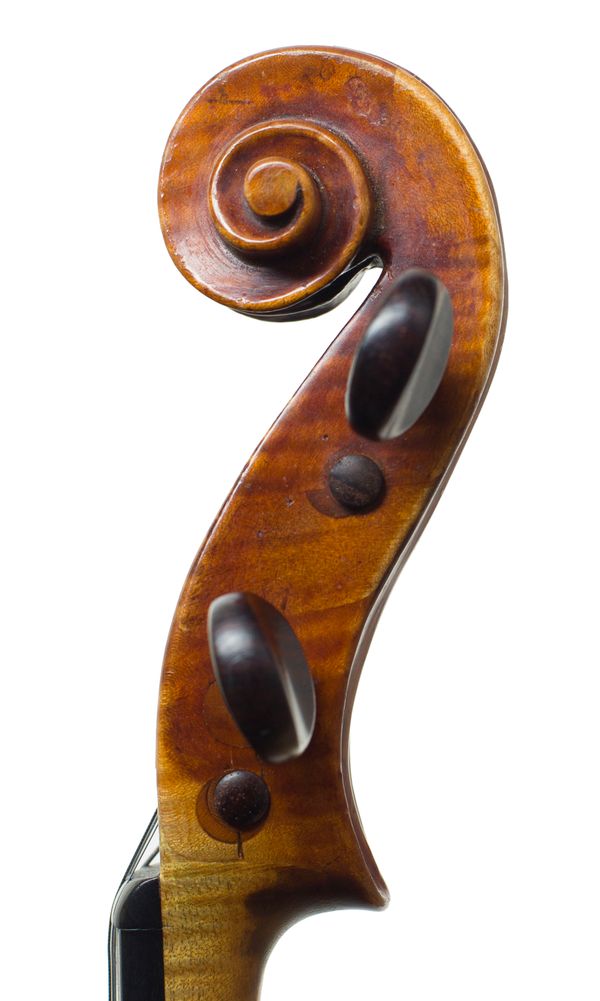
Giuseppe Gagliano (1726–1793) was a prominent Neapolitan violin maker. Identified by most sources as the son and pupil of Nicola Gagliano, though his parentage is disputed by one source who names Ferdinando as his father. He began his career as an effective and consistent maker, but his quality generally declined later, particularly during his partnership with his brother Antonio. His instruments are characterized by crudely cut scrolls with restricted throats and a thin, transparent orange to golden-brown varnish. Despite some observations of working 'without great care' on his father's models, he was noted for understanding tone well, producing violins known for their good sound, alongside highly regarded cellos, cithers, and mandolines. He utilized various labels, sometimes including religious dedications or noting his collaborative efforts with Antonio. Historical records also show some discrepancies regarding his exact working period and family relationships.
Request an expert valuation or learn how our global auctions achieve the highest prices for your instruments.
Instruments
Auction Price History
Highest auction price
81 results
| Type | Details | Auction house | Sold | Price |
|---|---|---|---|---|
| Violin | Labelled Joseph Gagliano filius Nicolai fecit Neap. 17..., upper treble rib replaced Lot 128 | Tarisio | March 2026 | £58,404est. Estimate $ 70,000-100,000 |
| Violin | Labelled Joseph Gagliano Filius Nicolai et Nepos Januarius Fecit Neapoli 1775 Lot 199 | Tarisio | November 2024 | £179,098est. $ 150,000-220,000 |
| Violin | Labelled Joseph Gagliano filius Nicolai fecit ... Lot 103 | Tarisio | June 2023 | £133,731est. € 120.000-180.000 |
| Violin | A violin by Joseph Gagliano, Naples, circa 1780 Lot 81 | Amati | October 2019 | £44,240est. £ 35,000-55,000 |
| Violin | Labelled Joseph Gagliano filius, Nicolai fecit Neap. 17... Lot 191 | Tarisio | May 2019 | £69,867est. $ 40,000-60,000 |
| Violin | Labelled Joseph Gagliano Filius / Nicolai fecit Neap.. 1774 Lot 332 | Freeman's | May 2019 | £135,852est. $ 140,000-180,000 |
| Violin | Labelled Joseph Gagliano Filius Nicolai fecit Neap. 1765 Lot 146 | Tarisio | May 2018 | £106,170est. $ 50,000-80,000 |
| Violin | Bearing the maker's label Lot 175 | Vichy | June 2017 | £144,072est. € 70.000-80.000 |
| Violin | Scroll possibly later Lot 91 | Brompton’s | October 2016 | £60,000est. £ 60,000-80,000 |
| Violin | Labelled Joseph Gagliano Filius, Nicolai fecit Neap 1760 Lot 198 | Tarisio | March 2016 | £29,500est. £ 25,000-40,000 |
| Violin | Labelled Ferdinandus Gagliano Filius Nicolai fecit Neap. 17... Lot 169 | Ingles & Hayday | March 2016 | £72,000est. £ 60,000-80,000 |
| Violin | Labelled Joseph Gagliano ..., later lower rib Lot 275 | Vichy | December 2015 | £42,594est. € 50.000-55.000 |
| Violin | Labelled Joseph filius Nicolai fecit Neap 1789 Lot 119 | Brompton’s | November 2015 | £84,000est. £ 70,000-100,000 |
| Violin | Labelled Joseph Gagliano Filius, Nicolai fecit Neap. 1774 Lot 250 | Tarisio | October 2015 | £114,751est. $ 150,000-220,000 |
| Violin | Bearing the maker's label, two-piece back Lot 290 | Skinners | November 2014 | £17,858est. $ 15,000-18,000 |
| Violin | Labelled Joseph Gagliano fecit Neap 1778 Lot 251 | Brompton’s | October 2014 | £48,000est. £ 50,000-80,000 |
| Violin | Labelled Joseph Gagliano Filius, Nicolai fecit Neap., 1782 Lot 278 | Tarisio | May 2014 | £31,317est. $ 40,000-60,000 |
| Violin | Neapolitan table in the Vinaccia style, later head Lot 220 | Vichy | June 2013 | £44,880est. € 20.000-25.000 |
| Violin | Head later, labelled Joseph Gagliano filius Nicolai fecit Neap. 17** Lot 156 | Sotheby's | October 2012 | £49,250est. £ 40,000-60,000 |
| Violin | Labelled Joseph Gagliano Filius, Nicolai fecit Neap. 17.. Lot 212 | Tarisio | October 2012 | £96,000est. £ 80,000-120,000 |
| Violin | 35.7 cm Naples, 1777 c. | — | October 2011 | £58,607 |
| Violin | 35.6 cm Naples, 1801 | — | October 2010 | £84,000 |
| Violin | 35.5 cm 1780 c. | — | October 2010 | £60,000 |
| Violin | 35.5 cm Naples, 1780 c. decorated perfling | — | October 2009 | £49,250 |
| Viola | 38.1 cm Naples, 1780 c. | — | May 2009 | £19,410 |
| Violin | 35.6 cm Naples, 1787 | — | March 2009 | £90,000 |
| Violin | 35.2 cm Naples, 1800 c. Probably by | — | October 2008 | £34,850 |
| Violin | 35.2 cm Naples, 1783, with decorated perfling | — | October 2008 | £73,250 |
| Violin | 35.7 cm Naples, 1787 c. | — | February 2007 | £57,600 |
| Violin | 35.2 cm Naples, 1765-1770 c. | — | December 2006 | £65,512 |
| Violin | 35.5 cm Attributed to | — | November 2006 | £18,084 |
| Violin | 35.4 cm Naples, 1800 c. | — | May 2006 | £9,484 |
| Violin | Naples, 1795 Child's size | — | November 2005 | £9,600 |
| Cello | Neapel, 1773 | — | November 2005 | £43,423 |
| Violin | Naples, 1770 | — | May 2005 | £13,200 |
| Violin | Naples, 1780 c. | — | May 2005 | £11,228 |
| Viola | 39.7 cm Naples, 1790 c. | — | February 2005 | £48,000 |
| Violin | 1820 c. Attributed to | — | October 2004 | £2,386 |
| Violin | Naples, 1800 c. | — | July 2004 | £16,800 |
| Violin | Ascribed to | — | May 2004 | £10,294 |
| Violin | Naples, 1795 c. | — | April 2004 | £26,928 |
| Violin | 1794 | — | October 2003 | £61,950 |
| Violin | 1785 | — | March 2003 | £42,000 |
| Violin | 1783 | — | November 2002 | £44,500 |
| Violin | 1789 | — | May 2000 | £13,734 |
| Violin | 1768 | — | October 1999 | £32,325 |
| Violin | 1773 | — | March 1997 | £28,750 |
| Violin | 1805 | — | June 1996 | £49,900 |
| Violin | 1780 c. | — | October 1995 | £45,500 |
| Violin | 1783 | — | June 1994 | £54,300 |
| Violin | 1780 c. | — | May 1994 | £18,400 |
| Violin | 1794 | — | March 1994 | £45,500 |
| Violin | 1780 c. | — | November 1993 | £33,350 |
| Violin | 1780 c. | — | July 1993 | £28,750 |
| Violin | 1797 | — | November 1991 | £28,600 |
| Violin | 1783 | — | March 1991 | £11,000 |
| Violin | 1780 c. | — | March 1990 | £25,300 |
| Violin | 1785 5/8 Size | — | March 1990 | £15,950 |
| Violin | 1820 c. | — | November 1989 | £4,950 |
| Violin | 1761 | — | November 1988 | £33,000 |
| Violin | — | June 1988 | £4,950 | |
| Violin | 1800-25 | — | March 1988 | £16,533 |
| Violin | 1813 | — | April 1987 | £18,700 |
| Violin | 1765 | — | March 1986 | £18,700 |
| Violin | 1769 | — | December 1984 | £5,546 |
| Violin | 1770-80 | — | November 1984 | £11,879 |
| Violin | 1794 | — | October 1984 | £14,300 |
| Violin | 1780 c. | — | November 1983 | £7,700 |
| Cello | 1837 | — | November 1983 | £26,820 |
| Violin | 1750-99 | — | June 1983 | £2,143 |
| Violin | 1780 c. | — | April 1983 | £14,300 |
| Violin | 1785 5/8 Size | — | April 1983 | £6,050 |
| Violin | 1784 | — | November 1982 | £17,600 |
| Violin | 1784 | — | April 1982 | £13,200 |
| Violin | 17-- | — | May 1981 | £4,620 |
| Violin | 1773 | — | March 1981 | £6,154 |
| Violin | 1783 | — | November 1980 | £6,820 |
| Violin | 1783 | — | November 1980 | £8,250 |
| Violin | 1770 | — | November 1980 | £1,320 |
| Violin | 1770 | — | May 1980 | £5,282 |
| Violin | 1780 c. | — | May 1980 | £12,650 |
No results match those filters.
Maker Overview
Life
Giuseppe Gagliano (1726–1793) was a prominent Neapolitan violin maker, born and died in Naples., he was the son and pupil of Nicola Gagliano. Willibald Leo Lütgendorff identifies him as the second son of Nicola Gagliano and brother of Ferdinando, Antonio, and Giovanni. However, George Hart states he was the son of Ferdinando. Dilworth notes that he worked circa 1770–1800, a period extending beyond his recorded death year of 1793. He was initially an effective and consistent maker (Dilworth) but later worked in partnership with his brother Antonio (Dilworth, Lütgendorff). During this collaboration, his quality generally declined (Dilworth). Labels from this partnership include: "Joseph et Antonius Gagliano / fecit anno 1787 / in Platea dicta Cerriglio" [Joseph and Antonius Gagliano made this in the year 1787, in the street called Cerriglio], and "Joseph et Antonius / Gagliano filii Nicolai / et Nepotes Ja / nuarij. F. Neap. 1770" [Joseph and Antonius Gagliano, sons of Nicola and grandsons of Januarius, made this in Naples. 1770.]. A label attributed to a workshop operating in 1815, "Fabbrica di Violini, ed altri strumenti armonici dei Fratelli Giuseppe / ed Antonio Gagliano. Napoli, 1815 / Strada Cerriglionum. 37" [Factory of Violins and other harmonic instruments of the Brothers Giuseppe and Antonio Gagliano. Naples, 1815, Cerriglio Street 37.] (Dilworth), presents a significant chronological anomaly given Giuseppe Gagliano's death in 1793, suggesting it may refer to a continuation of the family workshop under their name, or a different Giuseppe Gagliano.
Characteristics
- Innovation
- Willibald Leo Lütgendorff notes that Giuseppe Gagliano understood tone well, resulting in instruments known for their good sound.
- Methods
- Giuseppe Gagliano was initially known for being an effective and consistent maker (Dilworth). Lütgendorff, however, observed that he often worked following his father's models 'without great care,' which may refer to a less meticulous approach, especially in his later period or when collaborating. His work is characterized by crudely cut scrolls with a very restricted throat (Dilworth). Some of his examples were decorated somewhat in the manner of Stradivari (Dilworth). He crafted violins, cithers, and mandolines (Stainer), and his cellos are also highly regarded (Lütgendorff). His instruments feature a thin, transparent varnish, typically orange to golden-brown, applied over a stained ground (Dilworth). This varnish is described as characteristic of his family's tradition (Lütgendorff). He utilized a variety of labels (Lütgendorff), and an additional label with a religious dedication is often found fixed to the upper rib inner surface (Dilworth). Examples of his labels include: "Giuseppe Gaglianus filius Nicolai / fecit Neapoli. 1787" [Giuseppe Gagliano, son of Nicola, made this in Naples. 1787.], "Giuseppe Galiano di Nicola / fecit Napoli, 1781" [Giuseppe Gagliano, son of Nicola, made this in Naples. 1781.], "Joseph Gagliano filius / Nicolai et nepos Ja / nuarius fecit Neapoli / 1793" [Joseph Gagliano, son of Nicola and grandson of Januarius, made this in Naples. 1793.], and "Joseph Gagliano filius / Nicolai fecit Neap. 1761" [Joseph Gagliano, son of Nicola, made this in Naples. 1761.] (Dilworth).
- Giuseppe Gaglianus filius Nicolini
fecit Neapoli. 1787John Dilworth - Giuseppe Galiano di Nicola
fecit Napoli, 1781John Dilworth - Joseph Gagliano filius
Nicolai et nepos Ja
nuarius fecit Neapoli
1793John Dilworth - Joseph Gagliano filius
Nicolai fecit Neap. 1761John Dilworth - Joseph et Antonius Gagliano
fecit anno 1787
in Platea dicta Cerriglio Joseph et Antonius
Gagliano filii Nico
laj et Nepotes ja
nuarj. F. Neap. 1770John Dilworth - Fabbrica di Violini, ed altri strumenti armonici dei Fratelli Giuseppe
ed Antonio Gagliano. Napoli, 1815
Strada Cerriglionum. 37John Dilworth
Influence and legacy
- Training and Mentorship: He was a pupil of Nicola Gagliano (Dilworth).
- Schools/Tradition: He was a prominent Neapolitan violin maker (Stainer, Dilworth).
- Notable Associations: He worked in partnership with his brother Antonio Gagliano (Dilworth, Lütgendorff).
Further Information
- Technical Characteristics: His instruments often feature crudely cut scrolls with very restricted throats. A distinctive element is his use of a thin, transparent varnish, typically ranging from orange to golden-brown, applied over a stained ground (Dilworth).
- Historical Uncertainties: Sources present conflicting information regarding his parentage: John Dilworth and Cecie Stainer identify him as the son of Nicola Gagliano, with Willibald Leo Lütgendorff further specifying him as Nicola's second son. However, George Hart states he was the son of Ferdinando. There are also discrepancies concerning his active working period; while Stainer provides his death year as 1793, Dilworth notes he "Worked circa 1770–1800," and an attributed workshop label even dates to 1815, implying a continued presence or an error in attribution given his established death date.
Biographies
The overview above is drawn from the following published accounts. Read them in the original:
John Dilworth+
GAGLIANO, Giuseppe Worked circa. 1770-1800 Naples Italy. Son and pupil of Nicola Gagliano, below. An effective and consistent maker at first, but later worked in partnership with his brother Antonio, and quality generally declined. Crudely cut scrolls with very restricted throat. Some examples decorated somewhat in the manner of the Stradivari. Thin transparent varnish, orange to golden-brown, laid over a stained ground. Additional label with religious dedication often found fixed to upper rib inner surface. Giuseppe Gaglianus filius Nicolini / fecit Neapoli. 1787 Giuseppe Galiano di Nicola / fecit Napoli, 1781 Joseph Gagliano filius / Nicolai et nepos Ja / nuarius fecit Neapoli / 1793 Joseph Gagliano filius / Nicolai fecit Neap. 1761 Joseph et Antonius Gagliano / fecit anno 1787 / in Platea dicta Cerriglio Joseph et Antonius / Gagliano filii Nico / laj et Nepotes ja / nuarj. F. Neap. 1770 Fabbrica di Violini, ed altri strumenti armonici dei Fratelli Giuseppe / ed Antonio Gagliano. Napoli, 1815 / Strada Cerriglionum. 37
George Hart+
Son of Ferdinando.
Cecie Stainer+
Second and third sons of Nicola, lived at Naples. Giuseppe, b. 1726, Naples; d. 1793. Antonio’s dates are not known. Their work was ordinary, but they made some good cithers and mandolines ; also some violins, of which one dated Naples, 1789, was sold for £20 in 1852.
Willibald Leo Lütgendorff+
Zweiter Sohn von Nicol. G. und Bruder von Ferdinando, Antonio und Giovanni. Er arbeitete ohne Sorgfalt nach den Modellen seines Vaters, aber
er verstand sich gut auf den Ton, so dass seine Geigen alle gut klingen. In
seiner letzten Zeit arbeitete er mit seinem Bruder Antonio zusammen. Sein
Lack ist der seiner Familie. Gut sind auch seine Violoncelli. Er gebrauchte
sehr verschiedene Zettel.
Sell your instrument with Amati
Get started by uploading photos of your instrument for our experts to review.
Sell your instrument with Amati
Get started by uploading photos of your instrument for our experts to review.