Thomas Earle Hesketh
Manchester, 1866–1945
Thomas Earle Hesketh (1866-1945) was a distinguished English violin maker born in Manchester. He trained under G. A. Chanot from 1885 to 1891 before establishing his own workshop in Manchester. Known for his fine and idiosyncratic work, Hesketh crafted instruments on Stradivari, Amati, and Guarneri models, as well as his own personal patterns. He utilized his own spirit and oil varnishes, often with a shaded 'antique' finish, and employed excellent quality wood, some sourced from Craske. His instruments were praised for their pure outlines, beautiful modeling, and rich, responsive tone. Hesketh's reputation as one of the better English makers was solidified by his craftsmanship and his efforts to promote modern British instrument making through concerts.
Request an expert valuation or learn how our global auctions achieve the highest prices for your instruments.
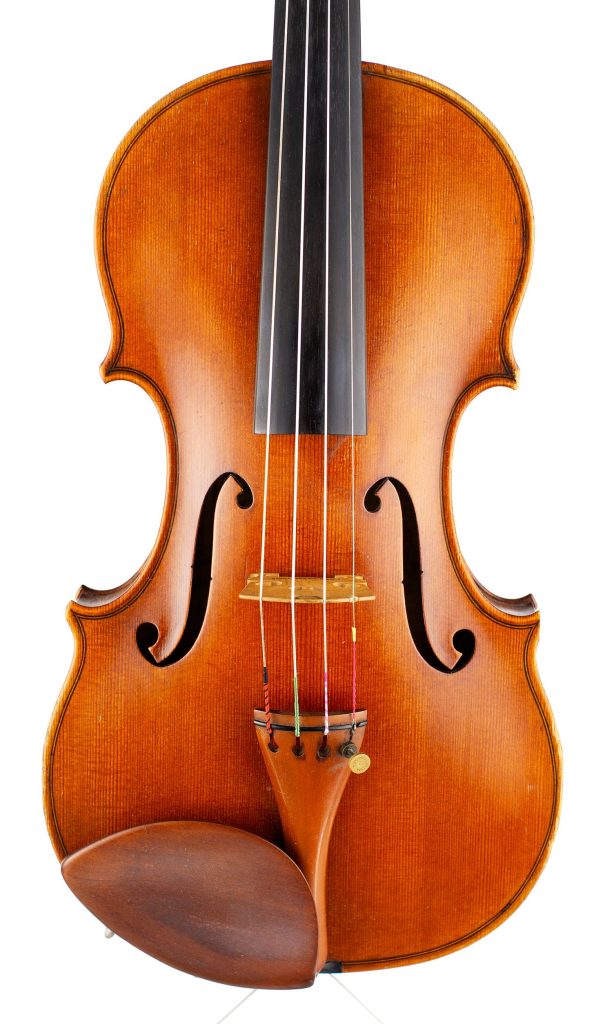
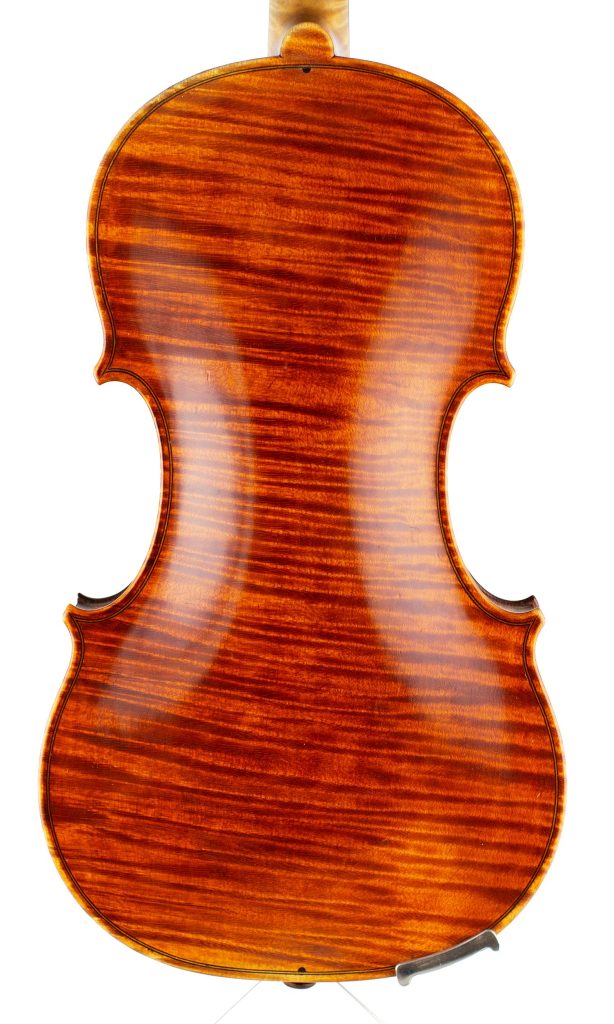
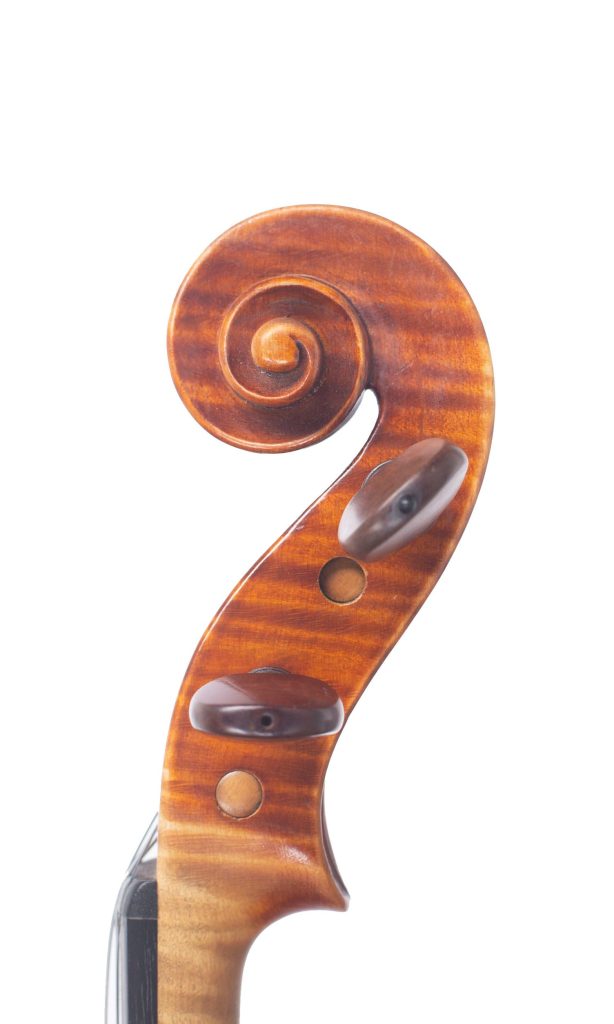
Instruments
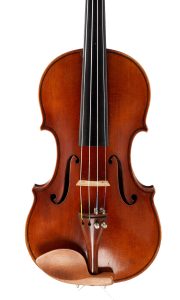
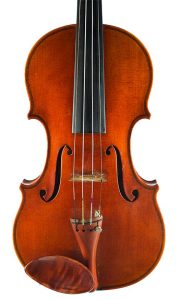
Auction Price History
Highest auction price
57 results
| Type | Details | Auction house | Sold | Price |
|---|---|---|---|---|
| Violin | Labelled "Exhibition Facsimile Model" Joseph Guarnerius del Gesu Made by T. Earle Hesketh ... Lot 159 | Tarisio | May 2025 | £7,126est. $ 8,000-12,000 |
| Violin | A violin by T. E. Hesketh, Manchester, 1931 Lot 235 | Amati | October 2024 | £6,952est. £ 4,000-6,000 |
| Violin | A violin by Thomas Earle Hesketh, Manchester, 1936 Lot 256 | Amati | November 2023 | £8,848est. £ 4,000-6,000 |
| Violin | Labelled Albert Sandler, Fac-simile Joseph Guarnerius del Gesù made by T. Earle Hesketh ... Lot 331 | Ingles & Hayday | March 2023 | £8,400est. £ 4,000-6,000 |
| Violin | Labelled T. Earle Hesketh, Manchester England 1932 Lot 20 | Tarisio | October 2022 | £5,400est. £ 3,000-5,000 |
| Violin | Varnish of a light reddish brown colour on a golden ground Lot 2457 | Gardiner Houlgate | March 2020 | £2,760est. £ 800-1,200 |
| Violin | A violin by T. Earle Hesketh, Manchester, 1935 Lot 48 | Amati | October 2019 | £5,056est. £ 4,000-5,000 |
| Violin | Labelled Thomas Earle Hesketh, Manchester fecit 1912 Lot 137 | Tarisio | October 2019 | £4,200est. £ 2,000-3,000 |
| Violin | Bearing the manuscript label Thos. E. Hesketh Manchester, 1891 ... Lot 133 | Brompton’s | June 2017 | £5,760est. £ 4,000-6,000 |
| Violin | Labelled Fac-Simile, Joseph Guarnerius del Gesù, made by, T. Earle Hesketh, N. IE Manchester 1933 Lot 97 | Tarisio | June 2015 | £5,700est. £ 4,500-6,000 |
| Violin | After Del Gesù, bearing an original label dated 1902 Lot 275 | Brompton’s | October 2014 | £1,200est. £ 1,200-1,800 |
| Violin | Lot 216 | Bonhams | May 2014 | £4,250 |
| Violin | Labelled Thomas Earl Hesketh, Manchester, fecit 1911, of a golden brown colour Lot 216 | Bonhams | May 2014 | £4,250est. £ 3,000-4,000 |
| Violin | Bearing a manuscript label Thos E. Hesketh, No. 2, Manchester, 1891 Lot 133 | Tarisio | March 2014 | £6,600est. £ 4,500-6,000 |
| Violin | Two-piece back of medium curl, table of medium width grain, varnish of a golden brown colour Lot 481 | Gardiner Houlgate | December 2012 | £3,600est. £ 3,000-4,000 |
| Violin | Two-piece back of medium curl, table of medium width grain, varnish of a golden brown colour Lot 52 | Gardiner Houlgate | March 2012 | £3,600est. £ 2,400-3,000 |
| Violin | Labelled Fac-simile, Jofeph Guarnerius del Gesu, Made by T. Earle Hesketh, No CIS Manchester 1939 Lot 178 | Brompton’s | March 2012 | £5,760est. £ 2,500-3,500 |
| Violin | 35.4 cm Manchester, 1939 | — | December 2011 | £3,840 |
| Violin | 35.4 cm Manchester, 1933 | — | October 2011 | £4,750 |
| Violin | 35.3 cm 1930 c. | — | June 2011 | £4,080 |
| Violin | 35.2 cm Manchester, 1938 | — | March 2011 | £6,600 |
| Violin | 35.3 cm 1929 | — | October 2010 | £3,840 |
| Violin | 35.3 cm Manchester, 1936 | — | October 2010 | £3,500 |
| Violin | 35.3 cm Manchester, 1938 | — | October 2010 | £3,750 |
| Violin | 35.6 cm Manschester, 1904? | — | October 2010 | £4,830 |
| Violin | 35.6 cm Manchester, 1928 n°57 | — | March 2010 | £5,040 |
| Violin | 35.3 cm Manchester, 1936 | — | March 2008 | £4,375 |
| Violin | 35.3 cm Manchester, 1938 | — | May 2007 | £5,473 |
| Violin | Manchester, 1938 | — | May 2005 | £4,560 |
| Violin | 1938 | — | November 2003 | £6,000 |
| Violin | 1935 | — | July 2003 | £5,400 |
| Violin | 1939 | — | July 2003 | £4,200 |
| Viola | 35.7 cm 1902 | — | December 2002 | £3,877 |
| Violin | 1902 | — | December 2002 | £3,795 |
| Violin | 1938 | — | November 2002 | £7,170 |
| Violin | 1895 | — | March 2001 | £5,060 |
| Violin | 1942 | — | November 2000 | £2,585 |
| Violin | 1913 | — | November 2000 | £6,000 |
| Violin | 1897 | — | September 2000 | £4,255 |
| Violin | 1898 | — | November 1998 | £4,370 |
| Violin | 1900 c. | — | November 1998 | £2,990 |
| Violin | 1907 | — | March 1998 | £1,035 |
| Violin | 1936 | — | July 1997 | £4,370 |
| Violin | 1935 | — | July 1997 | £3,220 |
| Violin | 1913 | — | July 1997 | £1,800 |
| Violin | 1932 | — | June 1996 | £2,875 |
| Violin | 1937 | — | June 1996 | £4,600 |
| Violin | 1903 | — | November 1995 | £3,220 |
| Violin | 1939 | — | November 1995 | £3,220 |
| Violin | 1902 | — | August 1995 | £6,325 |
| Violin | 1891 | — | June 1995 | £2,300 |
| Violin | 1936 | — | June 1994 | £3,105 |
| Violin | 1933 | — | March 1994 | £3,910 |
| Violin | 1932 | — | April 1993 | £2,760 |
| Violin | 1933 | — | March 1993 | £4,620 |
| Violin | 1932 | — | July 1992 | £2,090 |
| Viola | 41.1 cm 1902 | — | June 1989 | £3,520 |
No results match those filters.
Maker Overview
Life
Thomas Earle Hesketh (1866-1945) was born in Manchester, UK, on August 14, 1866, the son of William and Amelia Hastings Hesketh, both descendants of old Lancashire families. He was educated in the Board and Higher Grade Schools of his native city. He was apprenticed to Mr. G. A. Chanot on April 6, 1885, remaining as an apprentice for five years and then as a journeyman for one year. In 1891, he commenced business on his own account, initially establishing himself independently in Oxford Street, Manchester.He was married on November 2, 1889, at St. James' Church, Moss Side, to Miss Sarah Grace Yates, and they had five children: Ross Grace, Tom, Florence Gertrude, Lillian Jane, and Dorothy Yates. Hesketh was considered one of the better English makers of his time.
Characteristics
- Models
- Hesketh worked on various models including Stradivari, Joseph Guarneri, Amati, Ruggeri, Stainer, and Maggini, primarily copying the Stradivari and Joseph Guarneri patterns. He also developed two original models, which he later discarded due to their small size, and a third, more successful original model of fuller proportions.
- Varnish
- He used both his own spirit and oil varnishes, available in all the usual colors, sometimes applying a shaded 'antique' finish. The varnish was described as a rich, soft, dark, golden amber, illuminating the wood's 'flame' like watered silk seen through stained glass.
- Wood
- Hesketh utilized wood of excellent quality, possessing a considerable quantity that formerly belonged to Craske, who reportedly acquired it at Forster's sale. The maple in some instruments was plain in figure but magnificent tonally, while in others it displayed a broad 'flame'. The pine was of straight grain, moderately narrow in 'reed,' and acoustically perfect. Backs in Amati copies were typically slab-cut, while those in Stradivari and Joseph Guarneri copies were usually whole or joined.
- Workmanship
- His instruments featured a very pure outline, beautiful modeling, and graceful back lines. The arching's gentle slope melted into moderately wide margins, with full and rounded edges and full, piquant corners. Both the scroll and sound-holes demonstrated a master's touch; the scroll was in the true Stradivarian spirit, though with a slightly different volute slope and more relief in the boss. The ff-holes were a slight modification of the Brescian type, and the button was uniquely four-sided.The purfling was laid in without any tremor.
- Output
- Up to the time of documentation, he had made fifty-five instruments, exclusive of a number of three-quarter size fiddles made to order. This included several magnificent copies of an A. and H. Amati viola, one Stradivari model viola (15 3/4in.), one Ruggeri viola (16 1/8in.), one Maggini viola (15 7/8in.), and only two 'cellos on the Stradivari model.
- Branding & Labels
- Some instruments were branded 'T. E. H.'. He used a printed label that read: "Thomas Earle Hesketh TEH / Manchester. Fecit 1900".
- Employee Contributions
- Many instruments were made for him by his employee, Paul Voigt.
- Repair Work
- Hesketh repaired instruments very extensively, with the volume of old instruments requiring repair limiting his production of new ones.
- Prices
- His prices were £12, 12s. and £15, 15s. for violins, £15, 15s. for violas, and 25 guineas for 'cellos.
- Thomas Earle Hesketh TEH
Manchester. Fecit 1900John Dilworth
Influence and legacy
- Mentorship: Thomas Earle Hesketh was a pupil of G. A. Chanot, serving an apprenticeship for five years from April 6, 1885, and then working as a journeyman for an additional year.
- Employees: He employed Robert Elliot Keen, who had been with him for six years (five as an apprentice), and was described as an excellent and steady workman from Brompton. Georges Boulangeot of Mirecourt was also employed for about two years but left in 1898.
- Reputation: Thomas Earle Hesketh was recognized as one of the better English makers of his era, with his instruments' workmanship, varnish, and tone placing them among the elite of modern productions.
- Advocacy: He played both the violin and viola well and organized a series of quartette concerts. These concerts featured groups like the Rawdon Briggs Quartette, which performed on instruments made by Hesketh, with an objective to test and demonstrate the worth of instruments from the modern British school.
Further Information
- Workshop Location: After establishing his business in Oxford Street, Manchester, in 1891, his workshop was later located at 23 Lower Mosley Street in Manchester.
- Original Model Dimensions: His successful third original model had the following dimensions: Length 14 ins, Width across upper bouts 6 21/32ins, Width across middle bouts 4 19/32ins, Width across lower bouts 8 7/32ins, Length of inner bouts from corner to corner 5 5/32ins, Length of sound-holes 3 3/32ins, Distance between sound-holes at upper turns 1 5/8ins, Height of ribs 1 1/4ins, diminishing to 1 7/32ins.
- Viola Dimensions: A magnificent copy of an A. and H. Amati viola, made for Mr. Rawdon Briggs, had dimensions of: Length 16 5/8ins, Width (top) 7 7/8ins, Width (centre) 5 1/4ins, Width (bottom) 9 3/4ins, Depth of bottom ribs 1 9/16ins (diminished by 1/8ins at top).
Biographies
The overview above is drawn from the following published accounts. Read them in the original:
John Dilworth+
HESKETH, Thomas Earle Born 1866, died 1945 Manchester UK. Pupil of G. A. Chanot 1885-1891. Established independently in Oxford Street, Manchester 1891. One of the better English makers of his time. Fine and idiosyncratic work on Stradivari, Amati, and Guarneri models; also personal patterns. His own spirit and oil varnish, sometimes with shaded ‘antique’ finish in appropriate colours. Many instruments made for him by his employee Paul Voigt. Some instruments branded: ‘T. E. H.’. Printed label: Thomas Earle Hesketh TEH / Manchester. Fecit 1900
William Meredith Morris+
He is the son of William and Amelia Hastings Hesketh, and was born in Manchester on August 14, 1866. His workshop is at 23 Lower Mosley Street. His mother’s maiden name was Hilton, and both his parents were descendants of old Lancashire families. He was educated in the Board and Higher Grade Schools of his native city. He was apprenticed to Mr. G. A. Chanot, and the indentures were drawn up on April 6, 1885. He remained as apprentice for five years and as journeyman for one year. In 1891 he commenced business on his own account, and he has remained since at the above address. He was married on Nov. 2, 1889, at St. James’ Church, Moss Side, to Miss Sarah Grace Yates. The offspring of their union are : Ross Grace, Tom, Florence Gertrude, Lillian Jane, and Dorothy Yates.
He works on each of the following models : Strad, Joseph, Amati, Ruggeri, Stainer, and Maggini, but copies the two first principally. He at one time worked also on two original models, which he has now discarded, as they were on the small side. A third original model of his, of fuller proportions, is successful and gives splendid results. Its dimensions are : —
Length … 14 ins,Width across upper bouts . . . 6 21/32ins,Width across middle bouts . . . 4 19/32ins,Width across lower bouts … 8 7/32ins,Length of inner bouts from corner to corner … 5 5/32ins,Length of sound-holes … 3 3/32ins,Distance between sound-holes at upper turns … 1 5/8ins,Height of ribs 1 1/4ins, diminishing to … 1 7/32ins,
Two noticeable features of this model are the ff-holes and the button. The former are a slight modification of the Brescian type, and the latter is not of the usual form, but four-sided.
Mr. Hesketh has made several magnificent copies of an A. and H. Amati viola. One of these which I examined recently was made to the order of Mr. Rawdon Briggs, of Halle’s, the Brodsky, and other quartettes. It is of large size, and considered by its owner a superb instrument. Its dimensions are : —
Length… 16 5/8ins,Width, top … 7 7/8ins,Width, centre … 5 1/4ins,Width, bottom … 9 3/4ins,Depth of bottom ribs … 1 9/16ins, (diminished by 1/8ins, at top)
Besides the violas on the A. and H. Amati model, he has made one on the Strad model, 15 3/4in., one Ruggeri, 16 1/8in., and one Maggini, 15 7/8 in. He has made only two ‘cellos, Strad model. The total number of instruments made up to date is fifty-five, exclusive of a number of three-quarter size fiddles, made to order.
Mr. Hesketh’s wood is of excellent quality. He possesses a considerable quantity which was formerly the property of Craske. This latter maker is said to have bought his wood at Forster’s sale. The maple of two fiddles examined by me was somewhat plain in figure, but magnificent for its tonal properties. In one viola the curl was of medium width and of mathematical regularity. In another fiddle the wood had a broad ” flame ” of unsurpassable beauty. The pine is of straight grain, moderately narrow in ” reed,” and acoustically perfect. The backs in the Amati copies are usually cut on the slab, and those in the Strad and Joseph copies are, as a rule, either whole or joined.
The workmanship, varnish, and tone of Hesketh combine to give his instruments a place among the elite of modern productions, and a high seat even amongst the mighty. A brief description of a typical example of his work will suffice. This is a Vuillaume-Strad copy. The outline is very pure, and the modelling beautiful. The lines of the back are gracefulness itself. The gentle slope of the arching, as it melts into the margins, is like the swell of the well-chiselled breast of a goddess. The margins are moderately wide, and the edges full and rounded. The corners are full and piquant. The scroll and sound-holes both show the master mind and the cunning hand. The former is in the true Stradivarian spirit, although, perhaps, to be severely correct, the slope of the volute in its departure from the boss is not of the same angle, and the boss itself is in greater relief. The purfling is laid in without the suspicion of a tremor. The varnish is a rich, soft, dark, golden amber. It lights up the ” flame ” of the wood, which appears like watered silk seen through a film of stained glass. The tone is large, rich, and responsive. Hesketh uses both oil and spirit varnishes, of his own composition, and in all the usual colours.
The work is nearly all personal. One journeyman, named Robert Elliot Keen, is employed. Keen has been with Hesketh six years (five years as apprentice), and is an excellent and steady workman. He hails from Brompton, the birthplace of the Forsters. Another workman, named Georges Boulangeot, of Mirecourt, was employed for about two years, but he left in 1898. Mr. Hesketh repairs very extensively. So many old instruments come to him for repair that he is prevented from producing many new ones.
His prices are : — Violins …. £12, 12s. and £15, 15s. Violas £15, 15s. ‘Cellos 25 guineas.
Mr. Hesketh plays well on both the violin and viola. He has recently organised a series of quartette concerts, at which the Rawdon Briggs and other quartettes are the executants. These quartettes are supplied with instruments made by him, and one of the objects of the concerts is to test and to demonstrate the worth of instruments of the modern British school.
Willibald Leo Lütgendorff+
Lernte fünf Jahre bei George Adolphus Chanot und war dann noch ein Jahr lang Gehilfe bei ihm. Im Jahre 1891 eröffnete
er seine eigene Werkstatt. Er arbeitet hauptsächlich nach Stradivari und Guarneri, aber auch nach Maggini, Amati und Stainer und verwendet einen Öllack. Er gehört zu den besten englischen Geigenmachern der Gegenwart; seine Biographie veröffentlichte Meredith-Morris in der Zeitschrift »The Strad«. 1899. No. 119.
Sell your instrument with Amati
Get started by uploading photos of your instrument for our experts to review.
Sell your instrument with Amati
Get started by uploading photos of your instrument for our experts to review.