Francois (Franz Placidus) Fent
Fussen, Mittenwald, Paris, 1733–1796
Pupil of A. Gedler. Moved to Paris c.1760, working in Monmartre ‘près de la rue du Mail’ or ‘cul-de-sac St Pierre’. Altered his name to the French ‘François Fent’ but gave the description ‘Deutser’ or ‘Deitscher’ on some labels. Joined in about 1783 by his nephews Johann and Bernhard Simon. — John Dilworth
Auction Price History
Highest auction price
20 results
| Type | Details | Auction house | Sold | Price |
|---|---|---|---|---|
| Viola | Bearing the maker's label, lower rib restoration Lot 168 | Laurent | June 2024 | £5,531est. € 4.000-5.000 |
| One-piece back, varnish of a red brown colour on a golden ground, neck crack, blemishes, wear, worm Lot 51 | — | April 2021 | £2,874est. € 1.800-2.000 | |
| Two-piece back of faint medium curl, later table of medium grain, varnish of a golden brown colour Lot 2430 | — | December 2020 | £4,560est. £ 3,000-5,000 | |
| Labelled Fait par Fent, Maitre Luthier, rue Montmartre, Cul de Sac, Saint Pietre, à Paris, branded Lot 17 | — | March 2015 | £7,800est. £ 7,000-10,000 | |
| Branded internally and externally on the back Fent à Paris Lot 65 | — | March 2015 | £5,400est. £ 5,000-8,000 | |
| Unlabelled, branded to the back F. Fent A Paris Lot 89 | — | October 2014 | £4,877est. $ 2,500-4,000 | |
| Bearing the maker's label, table sound post restoration, back worm restorations Lot 362 | — | December 2012 | £5,854est. € 6.000-8.000 | |
| Bearing the maker's label, some table restorations Lot 422 | — | June 2012 | £18,438est. € 8.000-10.000 | |
| Violin | 35.6 cm Paris, 1800 c. (some restorations) | — | June 2009 | £6,223 |
| Violin | 36.3 cm Paris, 1787 c. Probably by | — | October 2007 | £3,711 |
| Violin | 35.8 cm Mittenwald, 1760 c. | — | June 2007 | £2,565 |
| Violin | 35.9 cm Paris, 1800 c. (restored soundpost crack) | — | June 2007 | £7,214 |
| Violin | 1790 | — | September 2001 | £2,400 |
| Violin | 1770 | — | November 2000 | £5,750 |
| Violin | 1795 (scroll replaced) | — | December 1999 | £7,201 |
| Violin | 1770 c. | — | March 1998 | £2,530 |
| Cello | 1780 c. | — | November 1989 | £6,820 |
| Violin | 1770 | — | November 1989 | £5,060 |
| Violin | 1770 c. | — | March 1989 | £5,500 |
| Violin | 17-- | — | June 1984 | £3,056 |
No results match those filters.
Maker Overview
Life
Francois (Franz Placidus) Fent (1733-1796) was born in Füssen, Germany, and died in Paris, France. He was a pupil of A. Gedler. Around 1760, he moved to Paris, working in Monmartre 'près de la rue du Mail' or 'cul-de-sac St Pierre'.
He altered his name to the French 'François Fent' but sometimes described himself as 'Deutser' or 'Deitscher' on his labels. His nephews, Johann and Bernhard Simon, joined him around 1783; Johann died in 1789, and Bernhard continued as his assistant until Fent's death in 1796, subsequently moving to London. Fent is known among French connoisseurs and was related to the Fendts who worked in London.
In the context of the pre-revolutionary Paris school, Fent was considered an extremely advanced and sophisticated maker, a precursor to makers like Pique and Lupot, and certainly a strong influence on them. He had the reputation of being one of the cleverest makers in Paris, carefully studying Italian instruments, particularly those of Ant. Stradivari., he was probably a master who immigrated from Tyrol. He always wrote his name as Fent, though it was often written as Fendt by others.
Characteristics
- Model
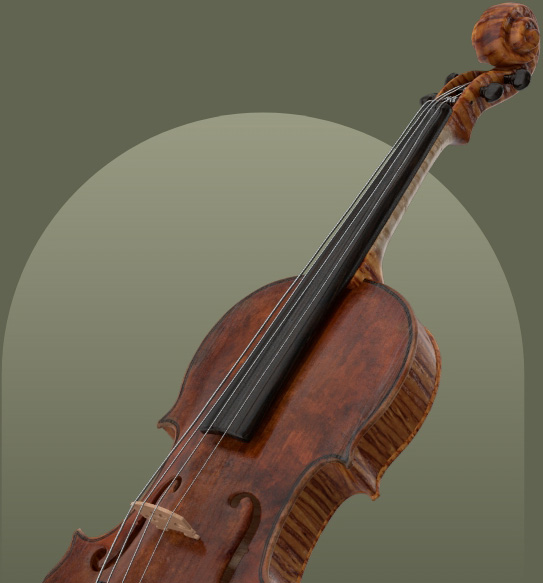
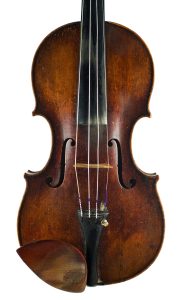
- His work is on a Stradivari model, with dimensions exactly the same as those of a violin by Ant. Stradivari.
- Workmanship
- His work is described as perhaps a little raw compared with later work, but authentic and vivid, and carefully finished.
- Soundholes
- The soundholes are noted as being a little upright and widely set.
- Varnish
- He used a rich, complex red-brown or amber varnish. Cecie Stainer describes it as a beautiful red-brown oil varnish that, with time, has become almost black. Willibald Leo Lütgendorff also notes the magnificent, beautiful red-brown varnish that has darkened and now appears almost black.
- Wood
- The wood used was excellent and magnificent.
- Tone
- His instruments have a rich and very good tone.
- Condition
- instruments are often heavily attacked by worms.
- Specific Instruments
- An alto has been seen, as well as a violin dated 1774, which was repaired by Delannoy of Lille in 1828. A violin was found with its original neck and scroll still in place.
- fait par fent
Mtre luthier Montmartre
près de la rue du Mail à Paris
Deitscher Fait par Fent
Maître Lutier, rue Montmartre
Cul-de-sac Saint Pietre, à ParisJohn Dilworth
Influence and legacy
- Training: He was a pupil of A. Gedler.
- Mentorship & Influence: Fent was a precursor of Pique and Lupot, and certainly a strong influence on them.
- Study: He carefully studied Italian instruments, particularly those of Ant. Stradivari, and understood how to imitate them excellently.
- Family Continuity: His nephew, Bernhard Simon, continued as his assistant until Fent's death in 1796 and subsequently moved to London, continuing the family's connection to instrument making.
Further Information
- Workshop Locations: He worked in Monmartre 'près de la rue du Mail' or 'cul-de-sac St Pierre', and was living at 'cul-de-sac St.-Pierre, rue Montmartre' between approximately 1763 and 1791.
- Labels: Examples of his labels include: 'fait par fent / Mtre luthier Montmartre / près de la rue du Mail à Paris /Deitscher', 'Fait par Fent / Maître Lutier, rue Montmartre / Cul-de-sac Saint Pietre, à Paris', and 'Fait par Fent, maitre luthier, rue Montmartre / cul-de-sac Saint-Pierre, a Paris'. He usually omitted the year on his labels.
Biographies
The overview above is drawn from the following published accounts. Read them in the original:
John Dilworth+
FENT, François (FENDT, Franz Placidus) Born 1733 Füssen Germany died 1796 Paris France. Pupil of A. Gedler. Moved to Paris c.1760, working in Monmartre ‘près de la rue du Mail’ or ‘cul-de-sac St Pierre’. Altered his name to the French ‘François Fent’ but gave the description ‘Deutser’ or ‘Deitscher’ on some labels. Joined in about 1783 by his nephews Johann and Bernhard Simon. Johann died in 1789. Bernhard continued as his assistant until his death in 1796 and then moved to London. In the context of the pre-revolutionary Paris school, Fent was an extremely advanced and sophisticated maker, a precursor of Pique and Lupot, and certainly a strong influence on them. His work is on a Stradivari model, perhaps a little raw compared with later work, but authentic and vivid. Soundholes a little upright and widely set with rich complex red-brown or amber varnish. fait par fent / Mtre luthier Montmartre / près de la rue du Mail à Paris /Deitscher Fait par Fent / Maître Lutier, rue Montmartre / Cul-de-sac Saint Pietre, à Paris [BVMA]
George Hart+
A maker known among French connoisseurs; related to the Fendts who worked in London.
Cecie Stainer+
Best known in France as Fent. A German maker who settled in Paris and was living there ” cul-de-sac St.-Pierre, rue Montmartre,” about 1763-91. In his time he had the reputation of being one of the cleverest makers in Paris ; he carefully studied Italian instruments, particularly those of Ant. Stradivari; he used a beautiful red-brown oil varnish which, with the progress of time, has become almost black ; his instruments are also much worm-eaten, but have a rich tone.
His label,” Fait par Fent, maitre luthier, rue Montmartre, cul-de-sac Saint-Pierre, a Paris,” was found in a violin which might be mistaken for a most beautiful Italian instrument; the dimensions are exactly the same as those of a violin of Ant. Stradivari ; the work is carefully finished, the wood excellent, and the tone very good, the original neck and scroll are still in place. An alto has also been seen and a violin, dated 1774, repaired by Delannoy, of Lille, in 1828.
Willibald Leo Lütgendorff+
Ein wahrscheinlich aus Tyrol eingewanderter Meister. Er wohnte Cul-de-sac
Saint Pierre und gilt als einer der geschicktesten Pariser Geigenmacher seiner
Zeit, der die Italiener und besonders Stradivari gut studirt hat und trefflich
nachzuahmen verstand. Ausgezeichnete Arbeit, prachtvolles Holz, schöner, rothbrauner
Lack, der jetzt freilich sehr nachgedunkelt hat und fast schwarz aussieht
Vidal macht darauf aufmerksam, dass gerade Fent’s Instrumente sehr stark vom Wurm angegriffen werden. Der Name wird oft Fendt geschrieben. Er selbst schrieb sich stets
Fent und liess gewöhnlich die Jahreszahl fehlen.
Sell your instrument with Amati
Get started by uploading photos of your instrument for our experts to review.
Sell your instrument with Amati
Get started by uploading photos of your instrument for our experts to review.