Omobono Felice Stradivari
Cremona, 1679–1742
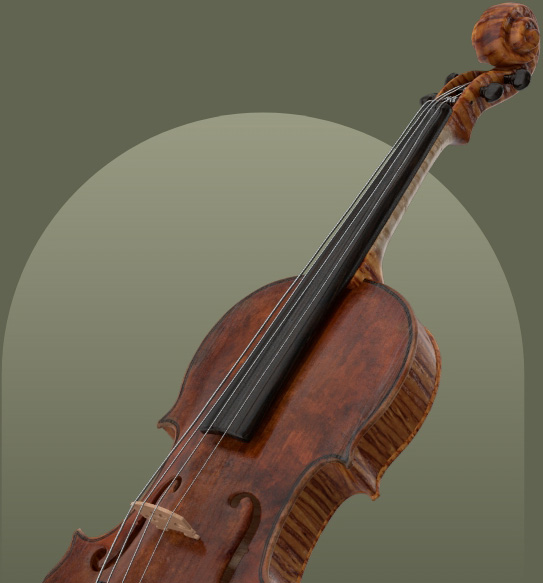
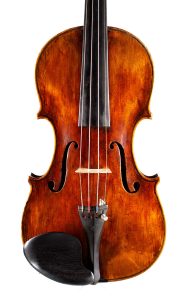
Omobono Felice Stradivari (1679-1742) was the younger son of the renowned luthier Antonio Stradivari, born and died in Cremona. He worked in his father's workshop alongside his brother Francesco, and is generally considered to have been a pupil of Antonio. While some authenticated instruments exist, such as the 'Blagrove' of circa 1700, bearing a 'sotto la disciplina di Antonio' label, sources contain conflicting information regarding the extent of his direct involvement in violin making. The Hill Brothers and Karel Jalovec expressed skepticism, noting a lack of mention of his instruments in family records and describing his work as inferior to his father's, often focusing on repair rather than new construction. Characteristics of his attributed instruments include poorly managed outlines, spindly soundholes, uneven purfling, and a paler golden-brown varnish. With his death and that of his brother Francesco, the direct lineage of Stradivari violin makers concluded.
Request an expert valuation or learn how our global auctions achieve the highest prices for your instruments.
Auction Price History
Highest auction price
2 results
| Type | Details | Auction house | Sold | Price |
|---|---|---|---|---|
| Violin | Illustrated in Capolavori Cremonesi della Royal Academy of Music; Masterpieces Italian Violin Making Lot 63 | Tarisio | March 2024 | £472,000est. £ 400,000-600,000 |
| Violin | Unlabelled, top later Lot 179 | Tarisio | May 2016 | £107,995est. $ 100,000-200,000 |
No results match those filters.
Maker Overview
Life
Omobono Felice Stradivari (1679-1742) was born in Cremona, Italy, on November 14, 1679, and died in the same city on June 8, 1742. He was the son of Antonio Stradivari. His contribution to the family workshop appears to have been less significant than that of his older brother, Francesco Stradivari, whom he predeceased. Antonio Stradivari's will indicates Omobono's extended absence in Naples, likely around 1698. During this journey, he incurred a financial debt to his father, and his legacy from Antonio was primarily the absolution of this debt almost forty years after it was incurred.
Omobono died a year before his brother Francesco. Upon Francesco's death, the family's shop in the Piazza San Domenico (now Piazza Roma) closed, marking the end of the Stradivari family's long and historic career in violin making. The shop was subsequently opened by Paolo Stradivari, a cloth merchant. The Stradivari family line continued through Paolo's son Antonio, and his grandson Giacomo, with Giacomo's son Cesare becoming a physician, leading to the present representative, Dr. Libero Stradivari, a barrister-at-law and amateur flutist.
Characteristics
- Workmanship
- , authenticated instruments by Omobono Felice Stradivari are rare, including the 'Blagrove' of circa 1700, which bears a 'sotto la disciplina di Antonio' label. The outline of these instruments is relatively poorly managed, and the soundholes are described as spindly and slightly weak compared to the characteristic Stradivari model.
- Post-Father's Death
- Of the work produced after his father's death, Dilworth notes that the purfling is relatively uneven and awkwardly managed in the corners. The soundholes are inconsistent but tend to be widely set and are almost del Gesù-like in the extension of the wings both upward and downward. The scroll is also unevenly balanced.
- Materials and Varnish
- The varnish is of a paler golden-brown than the best 'golden period' examples and somewhat plain locally sourced 'oppio' maple is extensively used.
- Repair Work
- George Hart and Cecie Stainer state that Omobono chiefly restored instruments and arranged and regulated them, making few new instruments.
- Conflicting Views on Craft
- Karel Jalovec notes that the arching of his instruments (which the Hill Brothers consider fakes, despite bearing Omobono's name) is imperfect, the sound-holes are of no particular beauty, though the rather deep-cut scrolls are well done. The instruments are coated with a golden-yellow varnish of a quality inferior to that applied by his father and brother, and their tone does not meet the demands associated with the Stradivari name.
- Purfling Mitre
- Henri Poidras highlights an important detail contrary to his father's models: the mitre of the purfling is directed away from the CC.
- Sotto la disciplina di Antonio
Stradivario fecit Cremona Omobono Stradiuarius Filius Antonij
Cremone Fecit 1740: oTsJohn Dilworth
Influence and legacy
- Mentorship: Omobono Felice Stradivari worked under the direction of his father, Antonio Stradivari, and is generally stated to have been his pupil.
- Collaboration: He worked with his brother Francesco in his father's workshop, and after Antonio's death, they continued working together.
- Conflicting Historical Accounts: Sources contain conflicting information regarding the extent of Omobono Felice Stradivari's direct involvement in violin making. The Hill Brothers, in their great work, stated they had never seen a violin by Omobono Stradivari, inferring he was not a violin maker at all. Karel Jalovec shares this view, noting that neither correspondence nor bequests mention any instruments by Omobono, despite these being reliable documents from a time when Stradivari's sons were alive.
- Family Continuity: With the deaths of Francesco and Omobono, the name Stradivari disappeared from the history of violin making, as no subsequent descendant of the master pursued the art of their great ancestor. The family line continued in other professions, such as cloth merchandising and law.
- Market Value: Karel Jalovec mentions a price range of 120,000-150,000 Kc for instruments attributed to Omobono, considering it certainly exaggerated given their perceived quality.
Further Information
- Labels: Omobono Felice Stradivari used elegantly written labels, which are traceable only after Antonio's death. Examples include 'sotto la disciplina di Antonio / Stradivario fecit Cremona' and 'Omobono Stradiuarius Filius Antonij / Cremone Fecit 1740: oTs' (Rosengard & Chiesa). Another label mentioned is 'Omobonus Stradiuarius filius Antonii Cremonae fecit, anno 1740'.
- Workshop Location: The family workshop was located in the Piazza San Domenico, now known as Piazza Roma, in Cremona.
Biographies
The overview above is drawn from the following published accounts. Read them in the original:
John Dilworth+
STRADIVARI, Omobono Felice Born 1679, died 1742 Cremona Italy. Son of Antonio Stradivari, above. His contribution to the family workshop seems to have been rather less than that of his older brother Francesco, whom he predeceased. Antonio’s will draws attention to Ombono’s extended absence in Naples (probably in 1698). He incurred a financial debt to his father during this journey and the full extent of his legacy from his father was merely to absolve this debt almost forty years after it was incurred. Authenticated instruments are rare, but include the ‘Blagrove’ of c.1700 which bears a ‘sotto la disciplina di Antonio’ label. The outline is relatively poorly managed and the soundholes are spindly and slightly weak compared with the characteristic Stradivari model. Of the work produced after his father’s death it may be said that the purfling is relatively uneven and awkwardly managed in the corners. The soundholes are inconsistent but tend to be widely set and are almost del Gesù-like in the extension of the wings both upward and downward. The scroll is also unevenly balanced. The varnish is of a paler golden-brown than the best ‘golden period’ and somewhat plain locally sourced ‘oppio’ maple is extensively used. Sotto la disciplina di Antonio / Stradivario fecit Cremona Omobono Stradiuarius Filius Antonij / Cremone Fecit 1740: oTs [Rosengard & Chiesa]
Cecie Stainer+
Son of Antonio; b. Nov. 14, 1679; d. July 8, 1742. He worked with his brother Francesco in his father’s workshop; the label they used was inscribed ” sotto la disciplina d’ A. Stradivarius, Cremona.” But he made few new instruments, and chiefly occupied himself in repairing old ones. Label: ” Omobonus Stradiuarius filius Antonii Cremonae fecit, anno 1740.”
George Hart+
Brother of Francesco. Lancetti remarks, ” Omobono chiefly restored instruments and arranged and regulated them. Francesco, it will be seen, survived his brother about thirteen months, with whom, as with Girolamo Amati, the son of Niccolo, we reach the end of the family’s long and historical career of Violinmaking. Upon the death of Francesco, the shop in the Piazza San Domenico (now named Piazza. Roma) was closed, after having been occupied by the family of Stradivari as Violin-makers for upwards of sixty-three years, and from whence was sent into cathedral, church, and royal orchestras, the largest number of Violins and kindred instruments ever made by one maker—whose works bore the indelible stamp of genius—instruments which have gladdened the sight and hearing of untold thousands. The famous shop, as previously noticed, was next opened by Paolo Stradivari, who was a cloth merchant or warehouseman. Paolo died in 1776, a year after the date of the correspondence which passed between him and Count Cozio di Salabue. Antonio, son of Paolo, born in 1738 and married in 1762, had a son Giacomo, born in 1769 and married in 1797. Cesare, the son of Giacomo, became a physician in Cremona, married in 1838, and left the present representative of the Cremonese branch of the family, Dr. Libero Stradivari, a barrister-at-law, who is an excellent amateur performer on the flute.
Willibald Leo Lütgendorff+
Jüngster Sohn erster Ehe von Antonio Str., unter dessen Leitung er auch, nachdem er ausgelernt hatte, arbeitete. Nach dem Tode des Vaters theilte er die Werkstatt mit seinem Bruder Francesco. Er erbte nur wenig von der Kunst seines Vaters, und mit ihm verschwindet der Name Stradivari aus der Geschichte des Geigenmachens, da sich seitdem kein Nachkomme des Meisters mehr der Kunst des grossen Ahnherrn zugewendet hat. Omobono gebrauchte zierlich geschriebene Zettel, die aber erst nach Antonio’s Tod nachzuweisen sind.
Henri Poidras+
Second son of Stradivarius. Same work as that of his brother Francesco with whom he was in partnership. An important detail and contrary to his father’s models is that the mitre of the purfling is directed away from the CC. Manuscript labels. With Stradivari’s two sons commences the downfall of the great master’s art, since then unsurpassed. The greater part of the lives of the sons having been spent as workmen with the master, may explain their lack of personality. Established on their own account rather late in life (Francesco was 67 at the death of his father, Omobono 61 and Bergonzi himself about 50 years old), these makers, although endowed with great artistic gifts, had no opportunity of giving full sway to their aspirations, Bergonzi, about 15 years their junior, was more fortunate, but if one may say so, it seems that he could have done even better.
Karel Jalovec+
Cremona. Born at Cremona Nov. 14, 1679, died at the same place on June 8, 1742. The Hill Brothers stated in their great work that they had never seen a violin by Omobono Stradivari, inferring that Omobono had not been a violin maker at all. We are inclined to share this view, because neither correspondence nor bequests mention any instruments by Omobono. They constitute most reliable documents, for some of them come from the time when the sons of Stradivari were still alive. Paolo, the most agile businessman, though not the most prudent member, of the family, did not mention anywhere instruments by Omobono, although he wrote about sales of violins and bows of his deceased father and brother Francesco. It is improbable that there should not have been left a single instrument by Omobono, although he died a year earlier than his brother Francesco; or is it to be supposed that Francesco provided them with his own name? It is generally stated that he was Antonio’s son and pupil. The brothers Francesco and Omobono are alleged to have assisted their father and, after the latter’s death, to have continued working together. Omobono is said to have built instruments far inferior to those created by the former two and to have devoted more of his time to repairing work than to the making of new instruments. The arching of his instruments (which Hill considers as fakes, although they are marked with Omobono’s name) is imperfect, the sound-holes are of no particular beauty, the rather deep cut scrolls, however, are well done. The instruments are coated with a golden-yellow varnish of a quality inferior to that applied by his father and brother. As for the tone, these violins also do not meet demands associated with the name. The price of 120.000-150.000 Kc is, therefore, certainly exaggerated.
Sell your instrument with Amati
Get started by uploading photos of your instrument for our experts to review.
Sell your instrument with Amati
Get started by uploading photos of your instrument for our experts to review.