Andrea Amati
Cremona, c.1505–1577
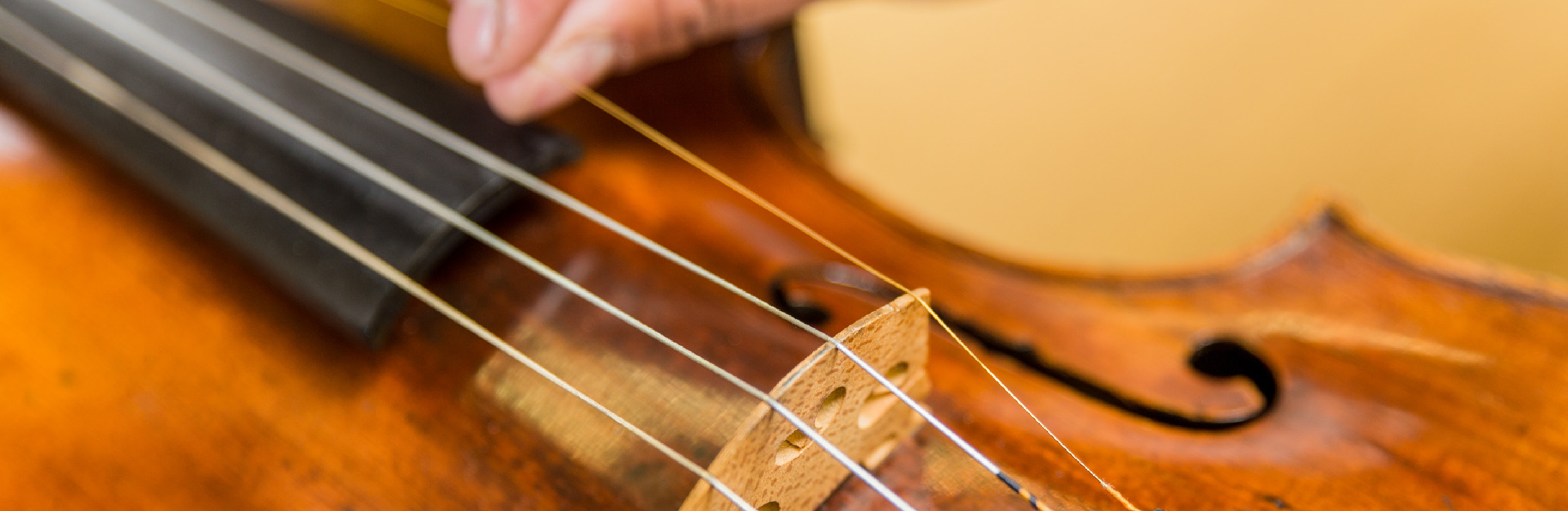
Andrea Amati stands as a pivotal figure in the history of violin making, widely recognized as the originator of the modern violin and the founder of the esteemed Cremona school. His design innovations established the fundamental form and characteristics of the violin, defining elements such as its four-cornered shape, precise proportions, purfling, scroll, f-holes, and internal construction methods. Although specific biographical details, such as his exact birth and death dates or his teachers, are subject to historical uncertainty and conflicting accounts, his profound influence is undeniable. His craftsmanship produced instruments with elegant designs, carefully selected woods, and unique varnishes, contributing to a distinctive silvery-bright and soft tone. Amati’s legacy is further cemented by commissions for patrons like King Charles IX of France, with several of these instruments surviving in museum collections today. His foundational work paved the way for future generations of Cremonese masters, including Stradivari, who, in his “golden period,” returned to Amati’s core design concepts.
Request an expert valuation or learn how our global auctions achieve the highest prices for your instruments.
Auction Price History
Highest auction price
2 results
| Type | Details | Auction house | Sold | Price |
|---|---|---|---|---|
| Violin | Rosenberg collection, unlabelled, head later Lot 193 | Ingles & Hayday | June 2023 | £264,000est. £ 40,000-60,000 |
| Violin | 1574 | — | November 1991 | £27,500 |
No results match those filters.
Maker Overview
Life
Andrea Amati (circa 1505 or 1525 – 1577 or soon after April 10, 1611) is considered a profoundly important figure, alongside Antonio Stradivari, in the history of violin making, and is credited as the originator of the modern violin. He was born circa 1505 and died in 1577 in Cremona, Italy. However, Lütgendorff notes that Andrea’s birth date could not be determined due to a lack of early church records, and his death date also could not be ascertained, suggesting he may not have died in Cremona itself. Lütgendorff and Stainer state he died soon after April 10, 1611, the death of his second wife, Angiola de Migli. Stainer places his birth about 1525 in Cremona.
Andrea Amati was descended from an ancient and noble family of Cremona, with ancestors traceable to the early Middle Ages (1097), and assumed by some sources to be of German origin (Lütgendorff, Stainer). He was living and working as a luthier from his home in Cremona by 1526, and by 1539, he was independently established in his own house and workshop in the parish of San Faustino. This location became the family home for four generations of Amati violin makers.
He married for the first time in 1554, having three children, including Antonio and Girolamo, both of whom became violin makers. If he lived beyond 1577, as some sources indicate, he married a second time around 1609 to Angiola de Migli, who died two years later (Lütgendorff, Stainer).
Characteristics
- Innovation
- Andrea Amati is credited as the originator of the modern violin, with his instruments serving as prototypes for all that followed. His groundbreaking design, without known precedent, defined the instrument as it is still made today. He established the choice of materials, varnish, four-cornered form, precise proportions, purfling, scroll, f-shaped soundholes, and the method of construction with internal blocks and linings. Few subsequent makers have significantly departed from his paradigm. He initially built instruments according to old gamba models, gradually adopting the modern violin form (Lütgendorff, Stainer).
- Materials
- He meticulously selected materials, particularly for the belly, often using sycamore or pearwood (Stainer). He used good wood in appropriate thickness, and the back is almost always cut on the slab (Lütgendorff).
- Methods
- His method of construction included internal blocks and linings. The purfling on his instruments is supremely well executed, featuring sophisticated and delicate corner mitres.
Influence and legacy
- Training and Mentorship: While it is conjectured that Andrea Amati was a pupil of Giovanni Leonardo di Martinengo in Cremona, everything said about his teachers is speculation (Lütgendorff). Lütgendorff notes it is not improbable he learned in Cremona itself and may have had connections with Brescian makers during his apprenticeship, but it is considered unsubstantiated to name Giovanni Maria del Busseto directly as his teacher or to suggest he was a pupil of Gasparo da Salò, given Amati’s age relative to the latter. Stainer also mentions Giovanni Maria del Busseto as a suggested “master” and notes that if he were a pupil of Gasparo da Salò or Maggini, he advanced far beyond them, demonstrating great originality.
- Schools/Tradition: Andrea Amati was the founder of the great Cremona school of violin making, which later included renowned names like Guarneri, Ruggeri, Bergonzi, and Stradivari (Stainer). His family home fostered four generations of Amati violin makers. Stradivari, in his “golden period” work (1710-25), returned to Andrea’s concept, particularly concerning the lower, more powerful arching scheme, which significantly contributed to the effectiveness of his instruments.
- Notable Associations: He was famously commissioned by King Charles IX of France. A set of instruments, including the ‘Charles IX’ violin (dated 1564) and the ‘Berger’ cello (dated 1566), were made for the king. Six other instruments from this set survive, mostly in museum collections in Oxford, Cremona, Carlisle, and Vermillion, South Dakota. These instruments are distinctively painted with Charles’ armorial devices, likely executed by Cremonese artists before Amati applied the final varnish. Lütgendorff notes the tradition that Andrea Amati was much employed by King Charles IX, though proof for the extent of this employment was not found, suggesting there may be truth to the old tradition. Stainer, however, states there appears to be no evidence to support the tradition that he made twenty-four elaborately decorated violins, tenors, and basses for Charles IX, or that he traveled to Paris to finish them.
- Museum Collections: Key surviving instruments include the ‘Charles IX’ violin in the Ashmolean Museum, Oxford. Other instruments from the Charles IX set are found in museum collections in Cremona, Carlisle (England), and Vermillion, South Dakota (USA).
- Famous Owners: A beautiful, genuine cello by Andrea Amati was owned by Simoutre in Paris, believed to originate from the royal court chapel in Paris (Lütgendorff).
- Modern Recognition: Andrea Amati is undeniably one of the most important figures in violin making. His name was perhaps the most misused, with many older, Italian-looking violins being falsely attributed to him (Lütgendorff).
Biographies
The overview above is drawn from the following published accounts. Read them in the original:
John Dilworth+
AMATI, Andrea Born circa. 1505, died 1577 Cremona Italy. Unquestionably the most important figure, alongside Antonio Stradivari, in the history of violin making. Although it is clear that violins existed in some form from c.1520, Andrea Amati’s instruments are the oldest that survive and are clearly the prototypes for all that followed. There is no known precedent for his design which in every detail defines the instrument as it is known and still made today, and it seems reasonable to credit Andrea as the originator of the modern violin. Choice of materials, varnish, four-cornered form, precise proportions, purfling, scroll head, and ‘f’ shaped soundholes, even the method of construction with internal blocks and linings, were all defined by Andrea. Few makers have departed from his paradigm over the intervening centuries, and it is probably true to say that those who did are generally considered eccentric. Above all his supreme craftsmanship make his violins, violas, and cellos fresh and timeless. There is nothing, aside from the painted decoration present on many of them, that appears in any way archaic or primitive. He was probably the pupil of one Giovanni Leonardo di Martinengo in Cremona; Andrea was living and working as a luthier in his home in 1526. By 1539 he was established independently in a house and workshop in the parish of San Faustino. This became the family home of four generations of Amati violin makers. Early instruments, now lost, include a two-cornered viola and a three-stringed violin dated 1546, both described by Cozio di Salabue in 1816, and another three-stringed violin dated 1542, restored by Sgarabotto and described by Strocchi (1913). The earliest dated surviving instruments are the ‘Charles IX’ violin in the Ashmolean Museum, Oxford, whose very faded but probably original label gives 1564, and the ‘Berger’ cello which has the year 1566 incorporated into the painted decoration on its back. By this date Andrea was already quite elderly, and was presumably assisted by his eldest son Antonio. Both these instruments are part of a set made for Charles IX of France, of which six others survive. These are mostly in museum collections in Oxford, Cremona, Carlisle (England) and Vermillion, South Dakota (USA). They are all distinctively painted with Charles’ armorial devices, almost certainly executed by artists in Cremona before being fully varnished by Amati. Some twenty-one instruments in all exist, in at least two other groupings of heraldic decoration, and some without painted additions. They consist of violins in two sizes (small and of accepted standard body length), and large model violas and cellos. Despite these variations in scale, the proportions are precise and definitive. The archings are full but low and entirely modern in appearance. Subsequent makers increased the height of the arch, but Stradivari essentially returned to Andrea’s concept to produce his great ‘golden period’ work of 1710-25, which depends a great deal for its effectiveness on the lower more powerful arching scheme. The purfling is supremely well executed and the delicate corner mitres are sophisticated and elegant. In only two aspects did Andrea not fully anticipate the full grandeur of the classical Cremonese violin: the soundholes have very narrow pointed wings, typical of other instruments of this period, and the raised central ridge around the scroll terminates abruptly half-way down the front face of the volute, leaving a single broad channel at the throat. The varnish is pale golden in colour, but laid over a vibrant golden ground and possessed of the same tender quality which has made Cremonese varnish one of the most emulated and enigmatic aspects of the art and craft of violin making. Labels, in red ink. Dates in roman numerals: Andrea F. Amati 1542 Andrea Amadi in Cremona 1564 Andrea Amati in Cremona 1573
Willibald Leo Lütgendorff+
Der Stammvater der berühmten Geigenmacherfamilie, deren Ahnen sich bis
ins frühe Mittelalter (1097) zurückverfolgen lassen, und die, wie Lancetti,
de Piccolellis u. A. annehmen, deutschen Ursprungs war. Andrea’s Geburtstag
zu ermitteln, gelang noch nicht, da die Kirchenbücher aus so früher Zeit nicht
mehr vorhanden sind. Auch sein Todestag liess sich nicht feststellen, er scheint
also nicht in Cremona selbst gestorben zu sein. Nach dem Wortlaut des
Todtenscheins seiner zweiten Frau muss er im Jahre 1611 noch gelebt haben.
Von seinem Leben ist nicht allzu viel bekannt. Schon 1554 ging er seine erste
Ehe ein, doch ist der Name der Frau nicht angegeben. Er hatte von ihr drei
Kinder, darunter Antonio und Girolamo. Gegen 1609 verheirathete er sich
zum zweiten Male mit der erst 18 jährigen Angiola de Migli, die schon zwei Jahre
später starb. Alles, was über seine Lehrer gesagt wird, ist nur Vermuthung.
Es ist nicht unwahrscheinlich, dass er in Cremona selbst gelernt hat, es ist
auch möglich, dass er zu den Brescianern in seiner Lehrzeit Beziehungen hatte;
aber es geht zu weit, wenn man geradezu Giammarcello del Busetto als seinen
Lehrer angiebt. Dass er ein Schüler Caspar da Salò’s gewesen sei, lässt sein
Alter schon als unglaublich erscheinen. An die Brescianer erinnern höchstens
seine weiten F-Löcher und die abfallenden Ecken, in der Hauptsache hielt er
sich an die überlieferten Modelle. Es sind übrigens nur wenige Instrumente
erhalten, die ihm mit einiger Sicherheit zugeschrieben werden können, aber
auch diese meist vielfach ausgebessert. Anfangs baute er, wie erwähnt, noch nach
den alten Gambenmodellen, und erst allmählich nahm er die jetzt gebräuchliche
Geigenform an. Er bevorzugte ein kleines Patron, wählte gutes Holz, das er
in entsprechender Stärke verwendete. Der Boden ist fast immer nach der
Schwarte geschnitten. Auch sein Lack ist in der ältesten Zeit noch der bei
Lauten- und Violenbauern des 16. Jahrh. häufig verwendete schwarz-röthliche,
später kommt er davon ab und gebraucht einen dunkelgelben oder hellbraunen
Lack, den er nur etwas zu dick aufträgt. Die Wölbung ist ziemlich hoch,
weshalb auch der Ton nicht allzuvoll klingen kann, doch ist er silberhell und
weich. Den heutigen Anforderungen entsprechen seine Violinen freilich nicht
mehr, sie werden aber immer einen hohen Sammelwerth behalten. Er war
schon bei Lebzeiten sehr berühmt und soll auch von König Karl IX. von
Frankreich viel beschäftigt worden sein. Belege hiefür liessen sich freilich
nicht finden, doch dürfte der alten Überlieferung immerhin etwas Wahres zu
Grunde liegen. Ein schönes, echtes Violoncello von ihm besitzt Simoutre in
Paris, das wahrscheinlich aus dem Besitze der kgl. Hofkapelle in Paris stammt.
Andrea war der Begründer des Ruhms seiner Familie, deren Name vielleicht am meisten missbraucht wurde. Jede ältere Geige, die nur einigermaassen Italienisch aussieht, wurde mit dem Namen eines der Amati getauft.
Cecie Stainer+
b. about 1525, at Cremona; d. soon after the death of his second wife, Angiola de Migli (d. April 10, 1611). Was descended from an ancient and noble family of Cremona, dating back as far as 1097.
Was the founder of the great Cremona school of violin making, which includes such names as the Guarneri, Ruggeri, Bergonzi, and Stradivari. At first made the older form of violin—the viola da gamba—but gradually developed the modern violin pattern, aided, no doubt, by seeing instruments made by the older school of Brescia.
While instruments of Gasparo da Salo and Gio. Paolo Maggini are still in good preservation, violins known to be the genuine work of Andrea are greatly damaged and badly restored, which makes it difficult to form correct opinions about them. They differ greatly from the Brescia pattern in arching, form, colour and transparency of varnish, but retain the stiff upright Brescian sound-hole. The whole instrument became simplified in Andrea’s hands; if, as is sometimes supposed, he was a pupil of either Gasparo da Salo or Maggini, or even worked as a pupil in Brescia, he advanced far beyond them, and shows great originality in his work. Another suggested “master” of Andrea is Giammaria del Busseto, who was probably trained in the Brescian school, although he constructed his instruments on different principles.
Andrea’s violins are small or “three-quarter” size, the outline extremely graceful, the belly and back high, strongly arched towards the centre; the wood, carefully selected, especially for the belly, was generally sycamore or pear-tree; the scroll beautifully carved, purfling very neat, and corners carefully worked; the sound-holes resemble those of Maggini and are usually too broad ; the varnish of good quality, but a little thick, varies from clear or yellow-brown to a beautiful amber colour ; the clear and silvery tone, though very sweet, lacks power, possibly because of the small size and high arching of the instrument, the fourth string being particularly weak. But at that time the strength of tone demanded at the present day was neither expected nor required. In 1878 two violins were sold for £20 and £25 respectively, but the price now varies from £50 to £150 or more, according to condition and tone.
His violoncellos, some of the earliest made in Italy, are very rare; the varnish is dark reddish-brown with a slight tinge of yellow, a colour probably copied from that of the old lutes which Mace, in his ” Musick’s Monument,” says was of a ” dark-black-reddish colour . . . the best authors did use to lay on that colour.” He gradually improved it, giving it more body, making it more transparent, of a reddish-yellow colour. A violoncello of full, rich tone, was dated 1572.
Tenors and basses are rare, are on a large pattern, with beautifully finished work, and of sweet tone. The earliest date, 1546, was found in a violin believed to be by him, in the collection of Count Cozio de Salabue. It is said that it was originally a ” rebec” with only three strings, but the father of Mantegazza altered it into an instrument of four strings, by changing the neck and scroll. A viola bastarda is dated 1551.
There seems to be no evidence in support of the tradition that he made twenty-four violins, twelve large and twelve small pattern, six tenors and eight basses, elaborately decorated on the back with the royal arms, &c., and the motto ” Pietate et Justitia,” for Charles IX. of France, or that he went to Paris with them and finished working at some of them there. There is nothing on the instruments themselves to show that they were his work. Andrea was twice married and had two sons by his first wife, Antonio and Girolamo, both violin makers.
Sell your instrument with Amati
Get started by uploading photos of your instrument for our experts to review.
Sell your instrument with Amati
Get started by uploading photos of your instrument for our experts to review.
Articles featuring Andrea Amati