Nicolo Amati
Cremona, 1596–1684
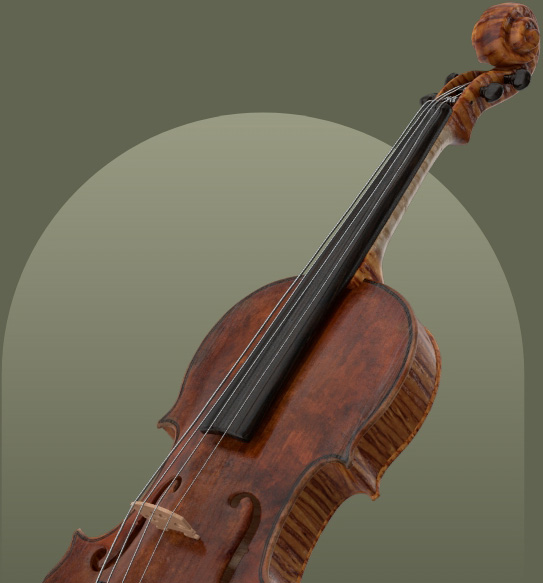
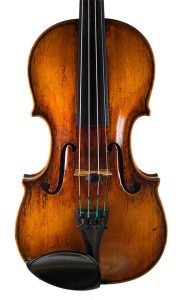
Nicolo Amati (1596-1684) stands as a pivotal figure in Cremonese violin making, renowned for his artistic mastery and significant innovations. Surviving the plague that devastated Cremona, he revitalized his family's workshop, establishing Cremona as the epicenter of violin craftsmanship. His key innovation, the 'Grand Amati' model—characterized by its increased width and sculpted archings—became a foundational standard for future makers. Nicolo Amati's influence extended through his extensive apprenticeship program, most notably with Andrea Guarneri, who later became a key figure in the Cremonese tradition. While some sources claim Antonio Stradivari as a pupil, this lacks documentary evidence. Amati's instruments, praised for their clear, sweet, and powerful tone and fine varnish, held preeminence until the early 19th century, with masterpieces like the ‘Alard’ violin preserved in museum collections.
Request an expert valuation or learn how our global auctions achieve the highest prices for your instruments.
Auction Price History
Highest auction price
42 results
| Type | Details | Auction house | Sold | Price |
|---|---|---|---|---|
| Violin | Labelled Nicolaus Amatus Cremonen ..., front late 18th century Italian, head 19th century English Lot 226 | — | March 2026 | £60,000est. Estimate £ 50,000-70,000 |
| Violin | Labelled Antonius, & Hieronymus Fr. Amati ..., showing the assistance of his son Girolamo II, head later Lot 209 | Tarisio | November 2025 | £253,174est. $ 250,000-400,000 |
| Violin | Labelled Nicolaus Amatus Cremonen Hieronymi Fil., ac Antonij Nepos Fecit. 1665 Lot 91 | Ingles & H. | March 2025 | £168,000est. £ 150,000-200,000 |
| Violin | Labelled Nicolaus Amatus Cremonen. Hieronymi, fil. an Antonij Nepos ..., Dutch table c. 1690, ribs later Lot 90 | Tarisio | March 2025 | £41,300est. £ 40,000-60,000 |
| Violin | Labelled Nicolaus Amatus Cremonen. Hieronymi Fil., ac ..., scroll later problably 19th century English Lot 303 | Ingles & Hayday | October 2023 | £156,000est. £ 100,000-150,000 |
| Violin | Labelled Antonius, & Hieronymus F. Amati Cremonen., Andreae fil. F. 1611, head later Lot 104 | Tarisio | June 2023 | £284,591est. $ 200,000-300,000 |
| Violin | Labelled Antonius & Hieronymus Amati Cremonen. Andrea fil. 1623, front and scroll later Lot 101 | Ingles & Hayday | March 2018 | £48,000est. £ 40,000-60,000 |
| Violin | top off, one rib recently doubled, head unset, all principal parts present Lot 156 | Tarisio | February 2018 | £196,390est. $ 200,000-300,000 |
| Violin | Bearing a label of A. & H. Amati, later scroll Lot 71 | Brompton’s | June 2016 | £252,000est. £ 200,000-300,000 |
| Violin | Lot 152 | Bonhams | October 2014 | £37,500 |
| Violin | Made on the grand pattern, bearing its original label Nicolaus Amatus Cremonen. Hieronymi Fil. ac ... Lot 150 | Ingles & Hayday | May 2013 | £432,000est. £ 200,000-300,000 |
| Violin | Labelled Nicolaus Amatus Cremonen Hieronymi fil., ac Antonj Nepos fecit 1682 Lot 124 | Sotheby's | March 2012 | £301,250est. £ 250,000-350,000 |
| Violin | 35.5 cm Cremona (table of period) Attributed to | — | October 2011 | £31,200 |
| Violin | 35.5 cm Cremona, 1655 | — | October 2010 | £360,509 |
| Violin | 35.3 cm Cremona, 1665-1670 c. (the scroll later) | — | April 2010 | £215,778 |
| Violin | 35.0 cm Cremona, 1660 c. Attributed to | — | March 2010 | £54,000 |
| Violin | 35.1 cm Cremona, 1648 c. | — | October 2009 | £383,591 |
| Violin | 35.1 cm Cremona, 1660 c. | — | March 2009 | £30,000 |
| Cello | 74.5 cm 1720 c. Attributed to | — | November 2007 | £84,000 |
| Violin | Cremona, 1661 c. | — | November 2007 | £75,441 |
| Violin | 35.3 cm Cremona, 1671 | — | October 2007 | £96,500 |
| Violin | 35.3 cm Cremona, 1660 c. | — | March 2007 | £120,750 |
| Violin | 35.4 cm Cremona, 1675 | — | November 2006 | £153,600 |
| Violin | 35.0 cm Cremona, 1651 | — | November 2006 | £55,200 |
| Violin | Cremona, 1682 | — | November 2004 | £100,800 |
| Violin | 1645 c. | — | November 2003 | £60,000 |
| Violin | 1665 | — | November 2002 | £65,725 |
| Violin | 1671 | — | November 2001 | £55,000 |
| Violin | 1647 | — | May 2001 | £132,624 |
| Violin | 1643 | — | May 2001 | £204,196 |
| Violin | 1676 | — | November 2000 | £75,000 |
| Violin | 1640 | — | March 1999 | £128,000 |
| Violin | 1683 | — | March 1993 | £133,500 |
| Violin | 1662 | — | June 1991 | £44,000 |
| Violin | 1656 | — | November 1989 | £44,000 |
| Violin | 1635 c. | — | November 1988 | £101,200 |
| Violin | 1664 | — | November 1988 | £132,000 |
| Violin | 1671 ? | — | November 1987 | £93,500 |
| Violin | 1661 | — | March 1987 | £55,000 |
| Violin | 1680 | — | November 1985 | £53,900 |
| Violin | 16-- | — | May 1981 | £9,900 |
| Violin | 1660 | — | May 1980 | £20,900 |
No results match those filters.
Maker Overview
Life
Nicolo Amati (1596-1684) was born on December 3, 1596, in Cremona, Italy, and died on April 12, 1684, at the age of 88, according to the registers of Cremona Cathedral (Stainer). He was the son, pupil, and successor of Hieronymus Amati, and grandson of Andrea Amati (Lütgendorff). Nicolo assisted his father from around 1610, with his hand detectable in work bearing the ‘Brothers Amati’ label from 1620.
He is considered the most celebrated maker of the Amati family (Stainer), and Willibald Leo Lütgendorff describes him as "the greatest artist from his family." Nicolo Amati fortunately survived the plague that decimated Cremona in the early 1630s. His workshop took some time to recover but was in full production by the 1640s.
He married Lucrezia Pagliari (born 1619, died November 25, 1703) on May 23, 1645. Andrea Guarneri, his pupil, was present at the ceremony and signed the register (Stainer, Lütgendorff). Of their nine children, only one, Girolamo II, became a violin maker (Stainer, Lütgendorff).
Characteristics
- Innovation
- Nicolo Amati significantly developed the Amati model, introducing higher, more dramatically sculpted archings. He also innovated the scroll's flutings by extending the central ridge to the throat, maintaining two separate flutes along the full depth of the volute's face. His most significant innovation was the ‘Grand Amati’ model, which enlarged his predecessors' patterns by increasing the overall width. This model as the "Grossen Amati-Modell" [Grand Amati model], became the standard for subsequent Cremonese makers and was widely adopted. Lütgendorff notes that his archings and wood thickness were "better conceived and more finely calculated" than those of his predecessors. Stainer adds that the arching drops somewhat suddenly from the bridge to the edges, featuring a slight groove at the purfling, characteristics said to contribute to the noted sweetness of tone.
- Materials
- He meticulously selected his wood, which Lütgendorff describes as "magnificently chosen." The 'Grand Amati' models frequently feature beautiful wood, with maple for the back and often spruce for the belly (Stainer).
- Methods
- Until about 1625 or 1645, his instruments resembled his father's model, after which they steadily improved (Lütgendorff, Stainer). His forms became nobler, and the format more graceful, with external ornamentation omitted in favor of special attention to wood and varnish selection (Lütgendorff). He produced violins, violas, and cellos, including large-sized violas and cellos which are comparatively rare (Lütgendorff). He also made "three-quarter" violins and some double-basses (Stainer). An instrument by him featuring double purfling is considered a remarkable piece of work (Stainer).
- Varnish
- Nicolo Amati's varnish is characterized as elastic and fiery, ranging in color from yellow-brown to red-gold (Lütgendorff). Stainer describes it as having a deep, rich color and being of fine quality, varying from amber to red.
- Nicolaus Amatus Cremonen Hieronymi
fil. ac Antonij Nepos, fecit 1649John Dilworth
Influence and legacy
- Training and Mentorship: To aid his workshop's recovery in the 1640s, Nicolo Amati began taking in apprentices. Andrea Guarneri was his first and most important apprentice, and was a witness at Amati's marriage (Stainer, Lütgendorff). Other documented apprentices included Christofori, Gennaro, Pasta, Rogeri, and several German craftsmen. By around 1660, his son, Girolamo II, also assisted him. Stainer lists "the Guarneri, the Ruggeri of Cremona, Montagnana of Venice, the Rogeri and Tononi of Bologna, and, greatest of all, Antonio Stradivari" as his celebrated pupils. However, John Dilworth in The Brompton’s Book of Violin & Bow Makers notes that while earlier writers often associated eminent makers such as Stradivari, Rugeri, Jacob Stainer, and Cappa with the Amati workshop, no documentary evidence has been found to support these claims.
- Schools/Tradition: Nicolo Amati played a pivotal role in securing Cremona's status as the preeminent center for violin making. His 'Grand Amati' model became the standard for subsequent Cremonese makers and was widely adopted. Lütgendorff states that he had a determining influence on the entire Cremonese school, and nearly all masters of the first rank from the early 18th century were either direct or indirect pupils of his. He integrated the best elements from the Brescian makers and his predecessors (Lütgendorff).
- Museum Collections: Nicolo Amati's masterpiece, the ‘Alard’ violin, is housed in the collection of the Ashmolean Museum, Oxford (Brompton's).
- Modern Recognition: His instruments held the undisputed first place in demand until the beginning of the 19th century (Lütgendorff). Lütgendorff asserts that Nicolo Amati's tireless striving secured his name "undying fame" in the history of violin making, even if the works of his great pupils are now sometimes preferred for modern requirements. He is widely considered the most celebrated maker of the Amati family (Stainer).
Further Information
- Technical Characteristics: His violins are regarded as perfected works of art; their tone is described as more lovely than powerful, perfectly suiting the demands of his era (Lütgendorff). Stainer notes that the tone of his instruments is clear, sweet, and powerful. A small violin dated 1668 is cited as showing some of his finest work, with a wonderfully sweet and clear tone (Stainer). Stainer also mentions that if the diminishing thickness of the belly from the center to the sides is exaggerated, it can cause the second string to have a nasal tone.
- Historical Uncertainties: Willibald Leo Lütgendorff mentions some basses carrying Nicolo Amati's name and dates ranging from 1580 to 1586. However, he suggests these are likely works by Amati with falsified dates, as he was born in 1596. As previously noted, while Stainer includes Antonio Stradivari among Amati's celebrated pupils, John Dilworth states that there is no documentation to support the traditional claim of Stradivari studying in the Amati workshop.
Biographies
The overview above is drawn from the following published accounts. Read them in the original:
John Dilworth+
AMATI, Nicolò Born 1596, died 1684 Cremona Italy. Son, pupil, and successor of Hieronymus Amati, above. Apparently assisting his father from c.1610, his hand is detectable in work bearing the ‘Brothers Amati’ label from 1620 . A precociously gifted craftsman even by the standards of his own family, it is very fortunate that he survived the plague which decimated Cremona in the early 1630s. It took some time for the workshop to recover, but by the 1640s it was in full production. To achieve this Nicolò took in apprentices, the first and most important of whom was Andrea Guarneri. This secured the status of Cremona as the home of violin making by initiating Andrea Guarneri (and in due course his descendants) into the techniques and methods of the Amati, thus increasing the flow of Cremonese work into the rest of Europe. Many other documented apprentices came and went, including Christofori, Gennaro, Pasta, Rogeri, and several German craftsmen. By c.1660 he was also assisted by his son Hieronymus (II), below. Earlier writers liberally associated other eminent makers with the Amati workshop, notably Stradivari, Rugeri, Stainer, and Cappa, but there is no evidence for this in any documentation so far discovered. Nicolò developed the Amati model with higher, more dramatically sculpted, archings and finally changed the flutings of the scroll by extending the central ridge to the throat, keeping the two flutes separate for the full depth of the face of the volute. His most significant innovation was the ‘Grand Amati’ model which took the larger sized pattern used by his father and grandfather, but increased the width overall. This model became the standard for subsequent Cremonese makers and was adopted almost universally elsewhere. Many consider his masterpiece to be the ‘Alard’ violin, now in the collection of the Ashmolean Museum, Oxford. He also produced violas and cellos of large size, but these are comparatively rare. Nicolaus Amatus Cremonen Hieronymi / fil. ac Antonij Nepos, fecit 1649
Willibald Leo Lütgendorff+
Sohn und Schüler des talentvollen Girolamo I und Enkel Andrea’s. Er war seit 1645 mit Lucreria Pagliari (geb. 1619, f 1703) vermählt. Einer seiner Trauzeugen war sein Schüler Guarneri. Von seinen neun Kindern wurde nur Girolamo II ein Geigenbauer. Nicola Amati war der grösste Künstler aus seiner Familie. Bis etwa 1625 arbeitete er ziemlich genau nach dem Modelle seines Vaters, häufiger als Violinen scheint er damals Gamben und Violen gemacht zu haben. Auf der Höhe seiner Kunst stehend, findet er allmählich sein eigenes Modell, das er schliesslich zu dem sog. »Grossen Amati-Modell« ausgestaltete. Es war dies die schönste Frucht seines rastlosen Strebens und sichert seinem Namen in der Geschichte des Geigenbaues einen unvergänglichen Ruhm, auch wenn die Werke seiner grossen Schüler jetzt vorgezogen werden, weil sie den heutigen Anforderungen besser entsprechen. Er war im Vollbesitz dessen, was man jetzt so gerne das »Geheimnis der Cremoneser« bezeichnet. Seine Arbeit verräth den denkenden Künstler, und es ist sicher, dass er seine wissenschaftlichen Kenntnisse, die er zweifellos besessen hat, nicht nur auf empirischem Wege erwarb. Wölbung und Holzstärke sind besser erdacht und feiner berechnet als bei allen seinen Vorgängern. Der Rand ist schräg abgerundet, die F-Löcher kühn im Schwung, die Schnecke meist klein, aber elegant, das Holz prachtvoll gewählt und der Lack elastisch und feurig, von gelbbrauner bis rothgoldiger Farbe. Er war von bestimmendem Einfluss auf die ganze Cremoneser Schule und fast alle Meister ersten Ranges vom Beginne des 18. Jahrhunderts waren direct oder indirect seine Schüler. Er nahm das Gute der Brescianer, sowie aller seiner Vorgänger auf. Die Formen werden bei ihm edler, das Format zierlicher, die äusserliche Verzierung fällt weg, und dafür wird der Wahl des Holzes und des Lackes besondere Aufmerksamkeit zugewendet. So sind seine Geigen vollendete Kunstwerke, der Ton ist zwar mehr lieblich als gross, entsprach aber vollkommen der Forderung seiner Zeit, und deshalb behaupteten seine Geigen den allerersten Platz bis zum Anfang des 19. Jahrhunderts unbestritten. Er baute Violinen, Violen und Violoncelli, es giebt aber auch einige Bässe von ihm, darunter solche, die seinen Namen und Jahreszahlen von 1580 — 1586 tragen. Man hat daher angenommen, dass er einen gleichnamigen Oheim gehabt haben müsse. Wahrscheinlich sind es Arbeiten von ihm mit gefälschter Jahreszahl.
Cecie Stainer+
Son of Girolamo Amati, b. Dec. 3, 1596 ; d. April 12, 1684, aged 88, according to the registers of Cremona Cathedral. Is the most celebrated maker of the Amati family. His instruments resemble those of his father till about 1645, then steadily improve. The pattern is graceful, the thicknesses and arching accurately determined, the varnish a deep, rich colour, the tone clear, sweet and powerful.
The “Grand Amati” violins are scarce and are worth £300 to £400; they are made on a large pattern, of beautiful wood, the back of maple, and the belly generally of deal, of which the thickness diminishes from the centre to the sides (this, when exaggerated, makes the second string nasal in tone); the arching drops somewhat suddenly from the bridge to the edges, with a slight groove where the purfling comes, this is said to give the noted sweetness of tone; the sound-holes are beautifully cut, the varnish is of fine quality and varies from amber to red colour. An instrument with double purfling is a remarkable piece of work.
He made numbers of tenors and violoncellos, several ” three-quarter ” violins, and perhaps three or four double-basses. Many of the small violins still exist, one dated 1668 shows some of his finest work, and the tone is wonderfully sweet and clear.
“Nicolaus Amatus Cremonensis faciebat, anno 1650” (in a large bass-viol);
Violins are known dated 1647, 1655, 1661, and 1662, and two violoncellos dated 1669 and 1670 respectively. Among Nicola’s celebrated pupils were the Guarneri, the Ruggeri of Cremona, Montagnana of Venice, the Rogeri and Tononi of Bologna, and, greatest of all, Antonio Stradivari. He married May 23, 1645, Lucrezia Pagliari (d. Nov. 25, 1703) ; Andrea Guarneri, his pupil, was present at the ceremony and signed the register. Of nine children, only one, Girolamo, became a violin maker.
Sell your instrument with Amati
Get started by uploading photos of your instrument for our experts to review.
Sell your instrument with Amati
Get started by uploading photos of your instrument for our experts to review.